Exam Board Alignment
This course covers the following Edexcel A Level Chemistry specification points. These are limited to covalent bonding, covalent structure, VSEPR theory and molecular shapes.
7
know that a covalent bond is the strong electrostatic attraction between two nuclei and the shared pair of electrons between them
8
be able to draw dot-and-cross diagrams to show electrons in covalent substances, including:
i
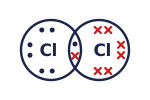
molecules with single, double and triple bonds
ii
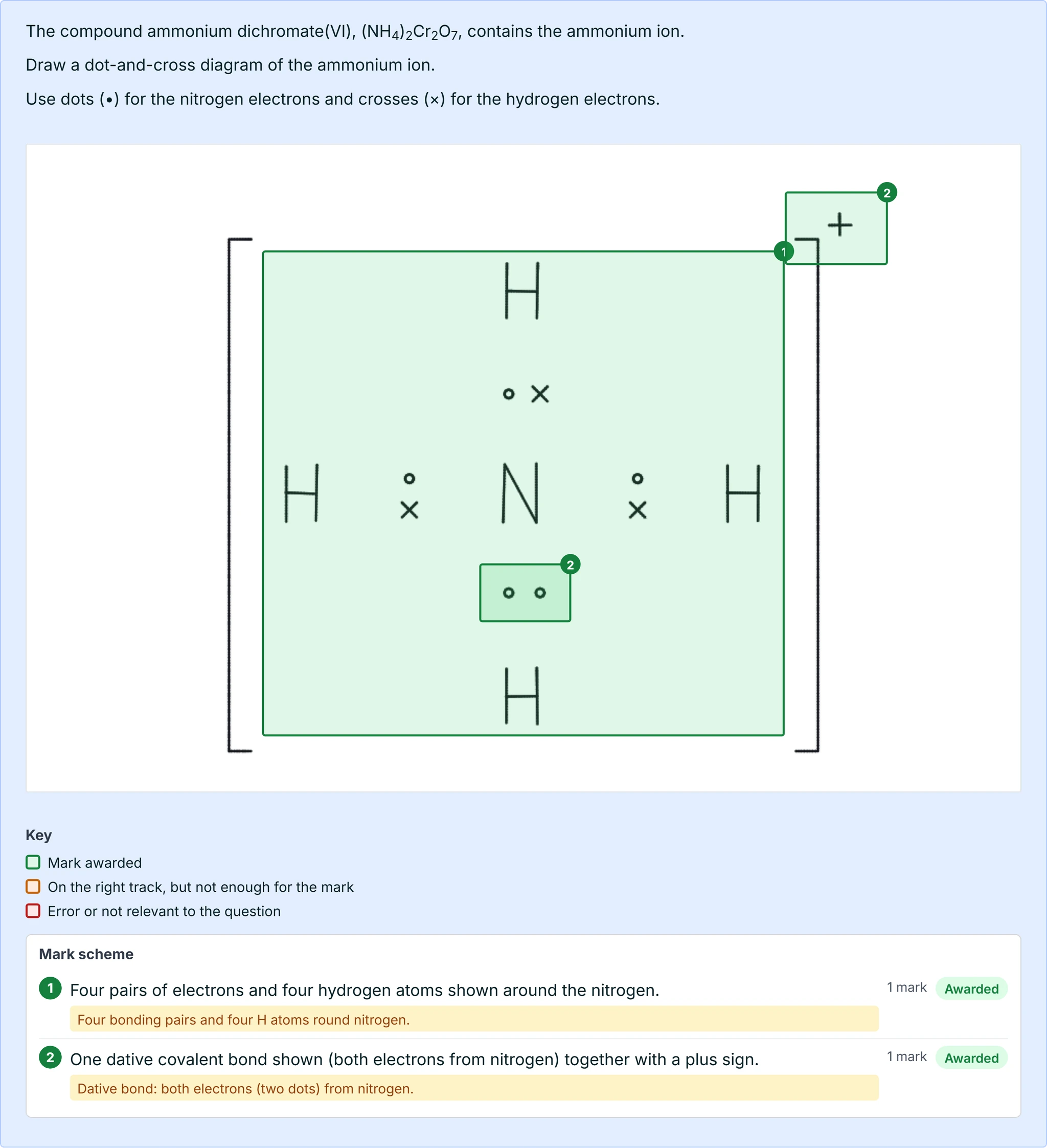
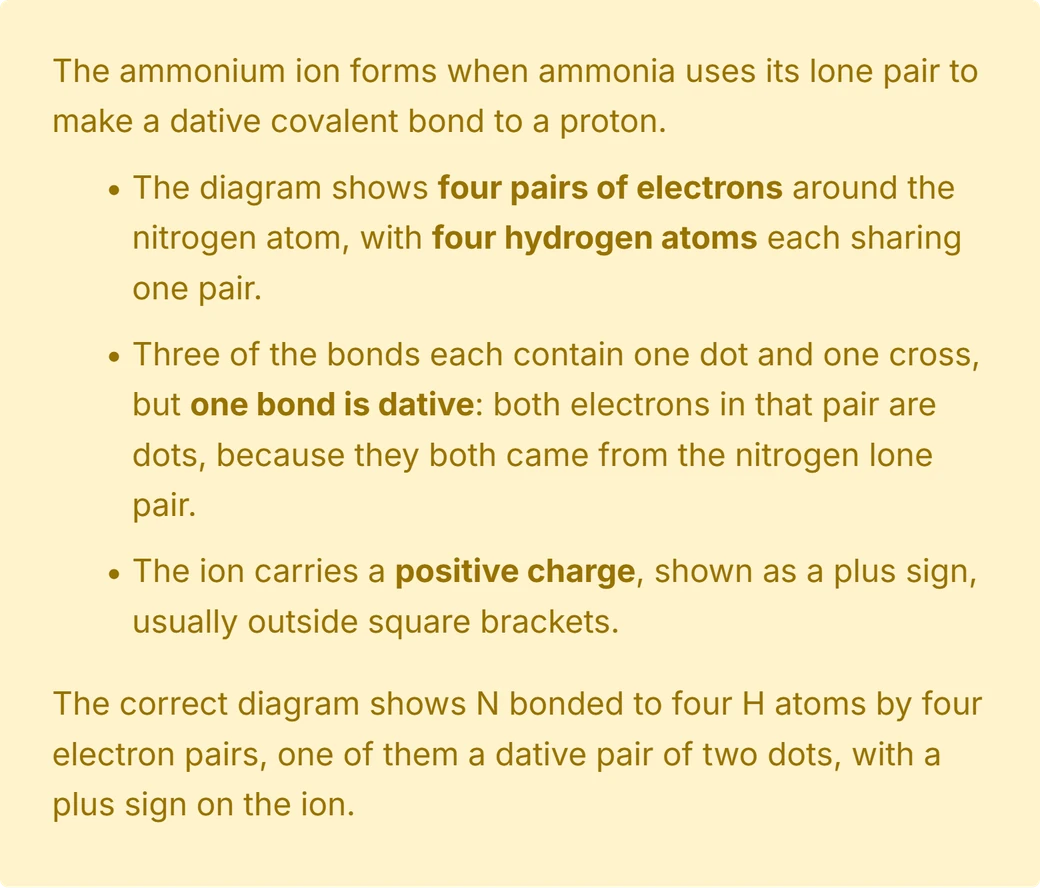
species exhibiting dative covalent (coordinate) bonding, including Al₂Cl₆ and ammonium ion
9
understand the relationship between bond lengths and bond strengths for covalent bonds
10
understand that the shape of a simple molecule or ion is determined by the repulsion between the electron pairs that surround a central atom
11
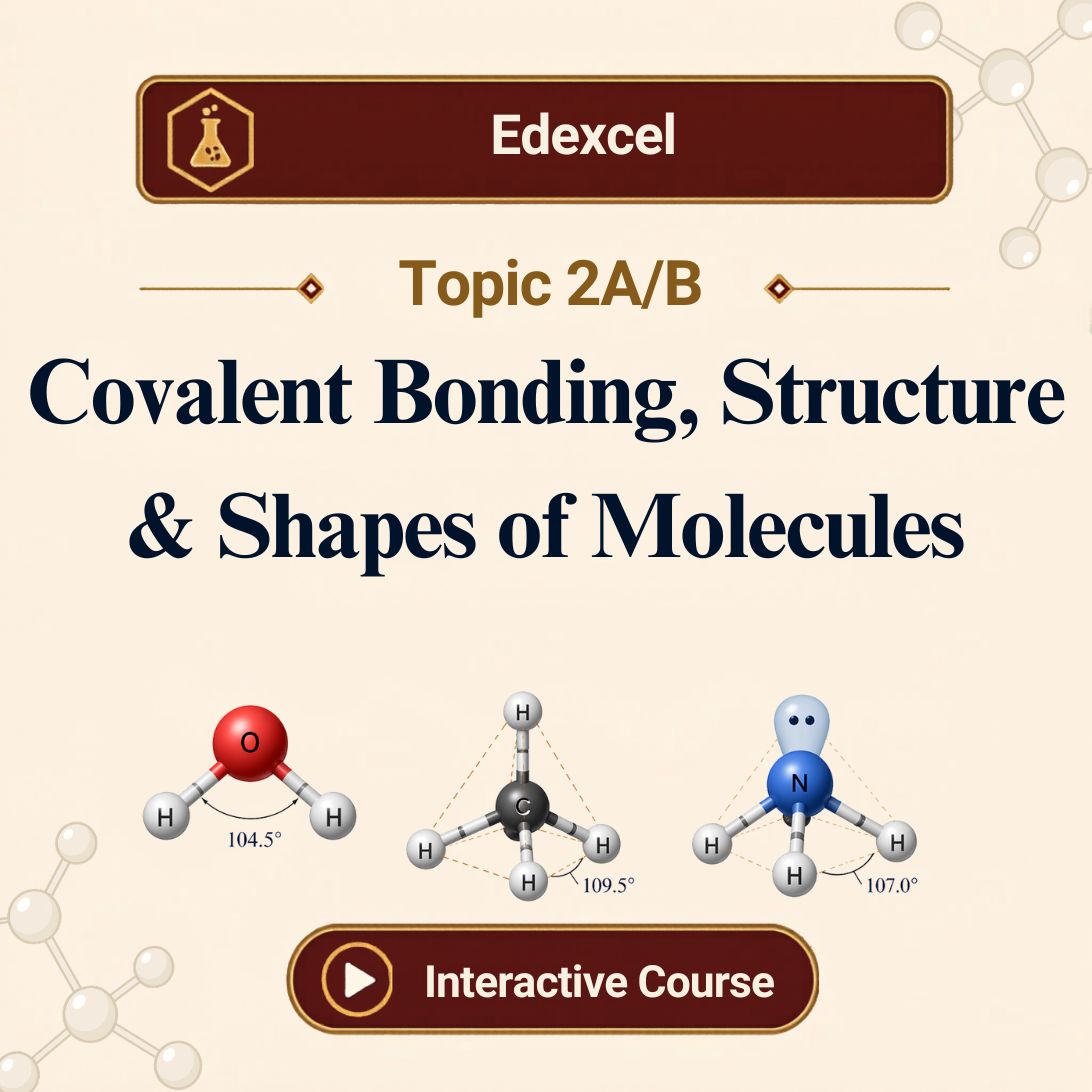
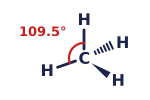
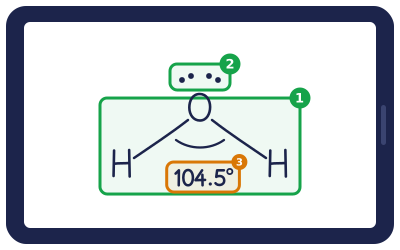
understand reasons for the shapes of, and bond angles in, simple molecules and ions with up to six outer pairs of electrons, including any combination of bonding pairs and lone pairs
Examples should include BeCl₂, BCl₃, CH₄, NH₃, NH₄+, H₂O, CO₂, PCl₅(g), SF₆(g) and related molecules and ions, as well as simple organic molecules in this specification.
12
be able to predict the shapes of, and bond angles in, simple molecules and ions analogous to those specified above using electron-pair repulsion theory
13
know that electronegativity is the ability of an atom to attract the bonding electrons in a covalent bond
14
know that ionic and covalent bonding are the extremes of a continuum of bonding type and that electronegativity differences lead to bond polarity in bonds and molecules
15
understand that molecules with polar bonds may not be polar molecules and be able to predict whether or not a given molecule is likely to be polar
23
know that giant lattices are present in:
ii
covalently bonded solids, such as diamond, graphite and silicon(IV) oxide (giant covalent lattices)
24
know that the structure of covalently bonded substances such as iodine, I₂, and ice, H₂O, is simple molecular
25
know the different structures formed by carbon atoms, including graphite, diamond and graphene
26
be able to predict the type of structure and bonding present in a substance from numerical data and/or other information
27
be able to predict the physical properties of a substance, including melting and boiling temperature, electrical conductivity and solubility in water, in terms of:
i
the types of particle present, including atoms and molecules where relevant
ii
the structure of the substance
iii
the type of bonding and the presence of intermolecular forces, where relevant
Specification Coverage
Students will be assessed on their ability to:
The following specification points are limited to covalent bonding, covalent structure, VSEPR theory and molecular shapes.
7
know that a covalent bond is the strong electrostatic attraction between two nuclei and the shared pair of electrons between them
8
be able to draw dot-and-cross diagrams to show electrons in covalent substances, including:
i
molecules with single, double and triple bonds
ii
species exhibiting dative covalent (coordinate) bonding, including Al₂Cl₆ and ammonium ion
9
understand the relationship between bond lengths and bond strengths for covalent bonds
10
understand that the shape of a simple molecule or ion is determined by the repulsion between the electron pairs that surround a central atom
11
understand reasons for the shapes of, and bond angles in, simple molecules and ions with up to six outer pairs of electrons, including any combination of bonding pairs and lone pairs
Examples should include BeCl₂, BCl₃, CH₄, NH₃, NH₄+, H₂O, CO₂, PCl₅(g), SF₆(g) and related molecules and ions, as well as simple organic molecules in this specification.
12
be able to predict the shapes of, and bond angles in, simple molecules and ions analogous to those specified above using electron-pair repulsion theory
13
know that electronegativity is the ability of an atom to attract the bonding electrons in a covalent bond
14
know that ionic and covalent bonding are the extremes of a continuum of bonding type and that electronegativity differences lead to bond polarity in bonds and molecules
15
understand that molecules with polar bonds may not be polar molecules and be able to predict whether or not a given molecule is likely to be polar
23
know that giant lattices are present in:
ii
covalently bonded solids, such as diamond, graphite and silicon(IV) oxide (giant covalent lattices)
24
know that the structure of covalently bonded substances such as iodine, I₂, and ice, H₂O, is simple molecular
25
know the different structures formed by carbon atoms, including graphite, diamond and graphene
26
be able to predict the type of structure and bonding present in a substance from numerical data and/or other information
27
be able to predict the physical properties of a substance, including melting and boiling temperature, electrical conductivity and solubility in water, in terms of:
i
the types of particle present, including atoms and molecules where relevant
ii
the structure of the substance
iii
the type of bonding and the presence of intermolecular forces, where relevant
Complete Topic Package
Learn the content, practise exam questions, and identify exactly where marks are being lost.
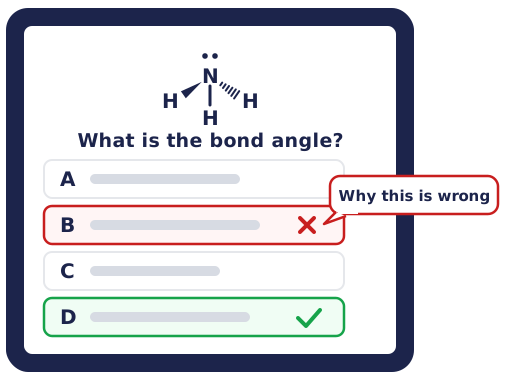
This course combines guided video teaching, diagnostic MCQs, teacher-marked written assessment, and detailed specification reporting for Edexcel A Level Chemistry.
Exam-focused learning with clear performance feedback
 Covalent Bonding78 min






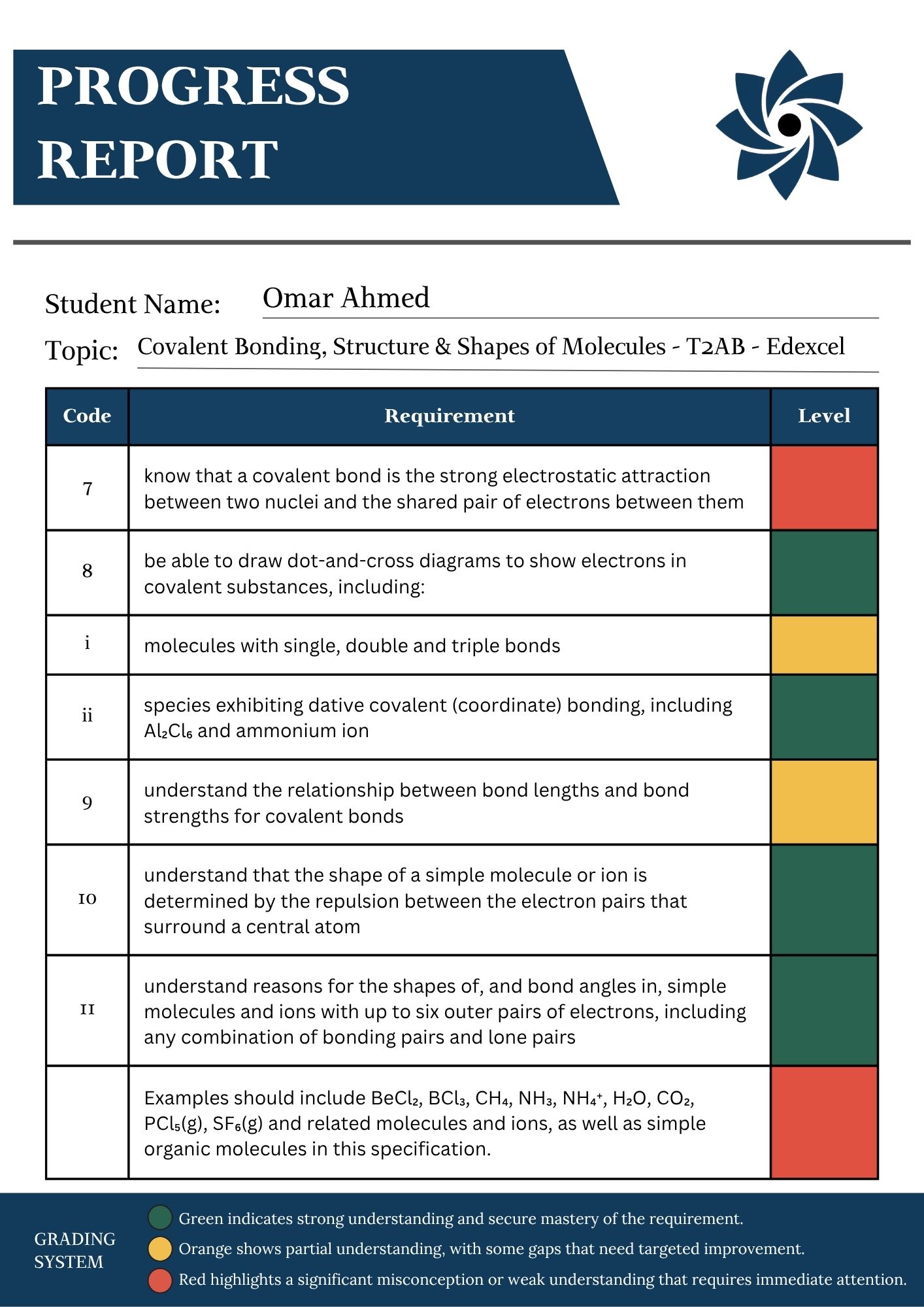
 Feeds your KASP report
 KASP drafts the marks
 Teacher decides every mark