Topic 7
Equilibria
Topic 7 covers reversible reactions and dynamic equilibrium in a closed system, Le Chatelier’s principle, the equilibrium constants Kc and Kp with mole fractions and partial pressures, the Haber and Contact processes, and the AS acids-and-bases section: Brønsted-Lowry theory, strong and weak acids and bases, pH, neutralisation, pH titration curves and the choice of indicator. Ionic equilibria (Ka, pH calculations, buffers) follow in Topic 25.
Revision Notes
6 revision notes, in the order the specification teaches them.
Dynamic Equilibrium
Dynamic equilibrium: reversible reactions, equal forward and reverse rates, constant concentrations, closed systems and the position of equilibrium.
Start revising
Le Chatelier’s Principle
Le Chatelier’s principle: temperature, pressure and concentration changes, catalysts, and the ammonia and chromate equilibria as examples.
Start revising
Equilibria in Industry
Equilibria in industry: the Haber and Contact processes, compromise temperature and pressure, catalysts and evaluating yield data.
Start revising
The Equilibrium Constant Kc
Kc: expressions, units, calculations from equilibrium amounts, the magnitude of Kc and the effect of temperature.
Start revising
Kp and Partial Pressures
Kp: mole fraction, partial pressure, Kp expressions, units and calculations for gas equilibria.
Start revising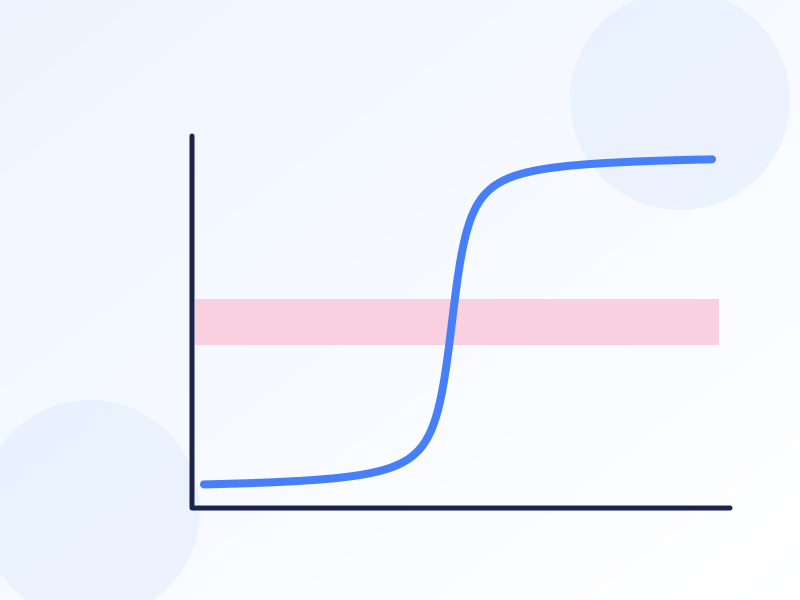
Acids, Bases and pH Curves
Acids and bases: Brønsted–Lowry theory, strong and weak acids, pH, neutralisation, titration curves and indicators.
Start revisingSummary Map
Download, print and revise the key facts of this topic at a glance.
Summary maps
Download, print and revise the key facts of this topic at a glance.

Equilibria Map
Cambridge International AS & A Level Chemistry · Topic 7 Equilibria
The whole section on one A4 page: dynamic equilibrium, Kc and Kp, concentration, pressure, temperature and catalysts, and industrial conditions, with worked examples.
Acids and Titration Curves Map
Cambridge International AS & A Level Chemistry · Topic 7 Equilibria, 7.2
All of 7.2 on one A4 page: strong and weak acids and bases, pH, neutralisation, the four titration curves and choosing an indicator.
© 2026 Online Learning System. For personal study: printing is allowed; editing, copying and redistribution are not.
Virtual Lessons
Recorded video lessons that teach the topic step by step.
The Virtual Lessons for Topic 7 Equilibria are being recorded.
MCQ Bank
Multiple-choice papers on this topic, marked the moment you submit.
The MCQ papers for Topic 7 Equilibria are being written.
SAQ Bank
Written, drawn and worked exam practice on this topic.
The exam practice papers for Topic 7 Equilibria are being written.
Revision Game
Match reagents to products, with your board's reagents and conditions.
The revision game for Topic 7 Equilibria is being built.
Study Cards
Pick a deck, then turn each card to check what you remember.
Specification
Every specification point in this topic, in the exam board's own words. Rate how confident you are with each one.
Cambridge no longer issues a data booklet: the data you need are given in each question, and the syllabus has a Data section.
Self-assessment · 42 points
Sign in to rate how confident you feel about each point. Your ratings are saved to your account, follow you to any device, and appear beside your KASP analytics, kept apart from your marks.
7.1.1
7.1.2
- 7.1.2
define Le Chatelier's principle as: if a change is made to a system at dynamic equilibrium, the position of equilibrium moves to minimise this change
Revise
7.1.3
- a
use Le Chatelier's principle to deduce qualitatively (from appropriate information) the effects of changes in temperature on a system at equilibrium
Revise - b
use Le Chatelier's principle to deduce qualitatively (from appropriate information) the effects of changes in concentration on a system at equilibrium
Revise - c
use Le Chatelier's principle to deduce qualitatively (from appropriate information) the effects of changes in pressure on a system at equilibrium
Revise - d
use Le Chatelier's principle to deduce qualitatively (from appropriate information) the effects of the presence of a catalyst on a system at equilibrium
Revise
7.1.4
7.1.5
7.1.6
- 7.1.6
deduce expressions for equilibrium constants in terms of partial pressures, Kp (use of the relationship between Kp and Kc is not required)
Revise
7.1.7
7.1.8
7.1.9
- a
state whether changes in temperature affect the value of the equilibrium constant for a reaction
Revise - b
state whether changes in concentration affect the value of the equilibrium constant for a reaction
Revise - c
state whether changes in pressure affect the value of the equilibrium constant for a reaction
Revise - d
state whether the presence of a catalyst affects the value of the equilibrium constant for a reaction
Revise
7.1.10
- a
describe and explain the conditions used in the Haber process, as an example of the importance of an understanding of dynamic equilibrium in the chemical industry and the application of Le Chatelier's principle
Revise - b
describe and explain the conditions used in the Contact process, as an example of the importance of an understanding of dynamic equilibrium in the chemical industry and the application of Le Chatelier's principle
Revise
7.2.1
7.2.2
7.2.3
7.2.4
7.2.5
- 7.2.5
appreciate that water has pH of 7, acid solutions pH of below 7 and alkaline solutions pH of above 7
Revise
7.2.6
- a
explain qualitatively the differences in behaviour between strong and weak acids including the reaction with a reactive metal
Revise - b
explain qualitatively the differences in behaviour between strong and weak acids including the difference in pH values by use of a pH meter, universal indicator or conductivity
Revise
7.2.7
7.2.8
7.2.9
7.2.10
- 7.2.10
select suitable indicators for acid-alkali titrations, given appropriate data (pKa values will not be used)
Revise
Keep this note — free
Save your progress across every Cambridge topic. A free account remembers which topics you have covered, saves your question scores, and syncs across your phone and laptop.
- Track every topic you have finished
- Keep your practice-question scores
- No payment, no card, free forever
Already registered? Log in