Alkanes as Fuel
Alkanes are widely used as fuels because combustion is exothermic and releases useful energy. These pages separate the fuel topic into combustion chemistry, pollutant formation and catalytic converter treatment so students can connect equations, reaction conditions and environmental consequences.
Revision Notes
4 revision notes, in the order the specification teaches them.
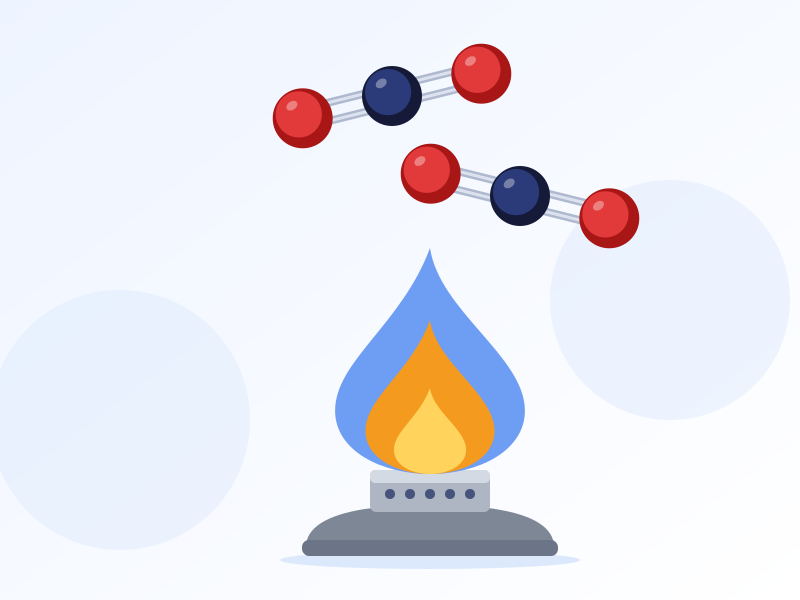
Combustion
Revise complete and incomplete combustion of alkanes, including the key products, equations and why combustion releases energy.
Start revising
Oxides of Sulfur
Learn how sulfur impurities in fuels form sulfur dioxide and how sulfur oxides contribute to acid rain and environmental damage.
Start revising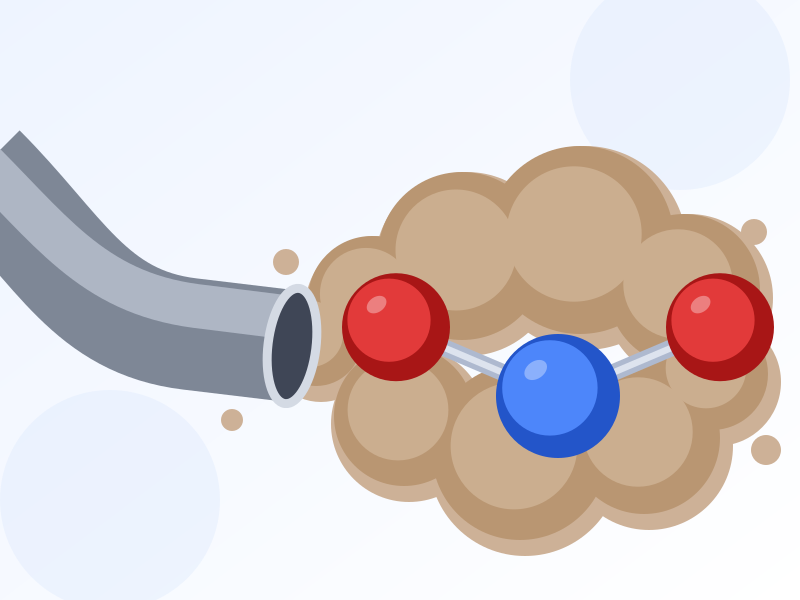
Oxides of Nitrogen
Review how high temperatures in engines allow nitrogen and oxygen from air to react, producing nitrogen oxides that cause pollution.
Start revising
Catalytic Converter
Revise how catalytic converters use transition metal catalysts to convert harmful exhaust gases into less harmful products.
Start revisingSummary Map
Download, print and revise the reactions of this topic at a glance.
Summary maps
Download, print and revise the reactions of this topic at a glance.

Alkanes Map
OCR A Level Chemistry A · 4.1.2 Alkanes
Every reaction on one A4 page: reagents, conditions and reaction type for each arrow, colour coded, with the key tests.
Alkanes Summary Map
OCR A Level Chemistry A · 4.1.2 Alkanes
The whole section on one A4 page: σ-bonds and free rotation, the tetrahedral carbon, boiling points, low reactivity, combustion and carbon monoxide, with radical substitution and its limits in a table.
© 2026 Online Learning System. For personal study: printing is allowed; editing, copying and redistribution are not.
Virtual Lessons
Recorded video lessons that teach the topic step by step.
The Virtual Lessons for 4.1.2 Alkanes are being recorded.
MCQ Bank
Multiple-choice papers on this topic, marked the moment you submit.
The MCQ papers for 4.1.2 Alkanes are being written.
SAQ Bank
Written, drawn and worked exam practice on this topic.
The exam practice papers for 4.1.2 Alkanes are being written.
Revision Game
Match reagents to products, free, with your board's reagents and conditions.

Study Cards
Pick a deck, then turn each card to check what you remember.
Specification
Every specification point in this topic, in the exam board's own words. Rate how confident you are with each one.
Self-assessment · 17 points
Sign in to rate how confident you feel about each point. Your ratings are saved to your account, follow you to any device, and appear beside your KASP analytics, kept apart from your marks.
4.1.2
- a i
alkanes as saturated hydrocarbons containing single C–C and C–H bonds as σ-bonds (overlap of orbitals directly between the bonding atoms)
Revise - b i
explanation of the tetrahedral shape around each carbon atom in alkanes in terms of electron pair repulsion (see also 2.2.2 g–h)
Revise - b ii
explanation of the bond angle around each carbon atom in alkanes in terms of electron pair repulsion (see also 2.2.2 g–h)
Revise - c i
explanation of the variations in boiling points of alkanes with different carbon-chain length, in terms of induced dipole–dipole interactions (London forces) (see also 2.2.2 k)
Revise - c ii
explanation of the variations in boiling points of alkanes with different branching, in terms of induced dipole–dipole interactions (London forces) (see also 2.2.2 k)
Revise - d i
the low reactivity of alkanes with many reagents in terms of the high bond enthalpy of the σ-bonds present (see also 2.2.2 j)
Revise - d ii
the low reactivity of alkanes with many reagents in terms of the very low polarity of the σ-bonds present (see also 2.2.2 j)
Revise - f i
the reaction of alkanes with chlorine and bromine by radical substitution using ultraviolet radiation
Revise - f ii
the mechanism of radical substitution involving homolytic fission and radical reactions in terms of initiation (see also 4.1.1 f–g)
Revise - f iii
the mechanism of radical substitution involving homolytic fission and radical reactions in terms of propagation (see also 4.1.1 f–g)
Revise - f iv
the mechanism of radical substitution involving homolytic fission and radical reactions in terms of termination (see also 4.1.1 f–g)
Revise - g i
the limitations of radical substitution in synthesis by the formation of a mixture of organic products, in terms of further substitution
Revise - g ii
the limitations of radical substitution in synthesis by the formation of a mixture of organic products, in terms of reactions at different positions in a carbon chain
Revise
Keep this note — free
Save your progress across every OCR topic. A free account remembers which topics you have covered, saves your question scores, and syncs across your phone and laptop.
- Track every topic you have finished
- Keep your practice-question scores
- No payment, no card, free forever
Already registered? Log in