Topic 7
Intermolecular Forces
Intermolecular forces decide whether a substance is a gas, a liquid or a solid, why ice floats, why alcohols boil far above alkanes of the same size and what will dissolve in what. This topic covers London forces, permanent dipole-dipole interactions and hydrogen bonding, the anomalous properties of water, boiling temperature trends and the choice of solvents, all examined in Unit 2.
Revision Notes
6 revision notes, in the order the specification teaches them.

London Forces
How moving electrons create instantaneous and induced dipoles, and why electrons and shape decide their strength.
Start revising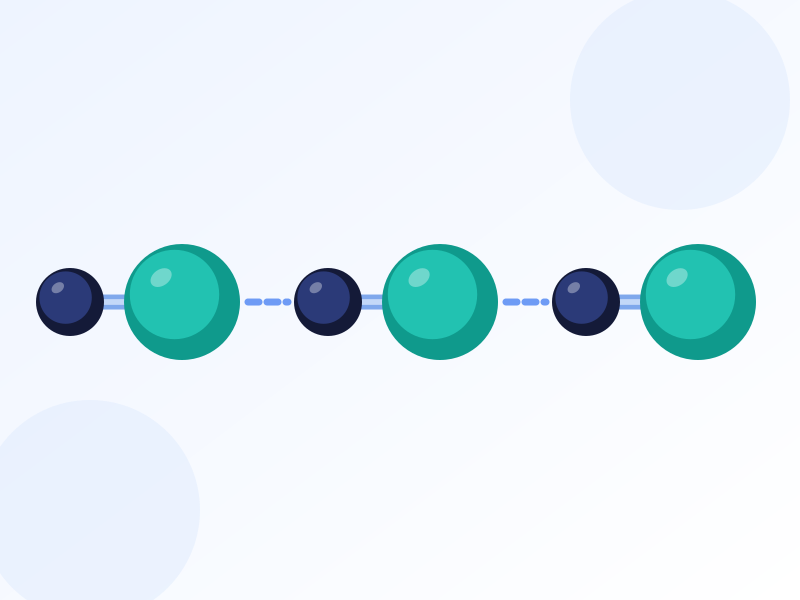
Permanent Dipole-Dipole Forces
Which molecules have a permanent dipole, how polar molecules attract, and a routine for unfamiliar molecules.
Start revising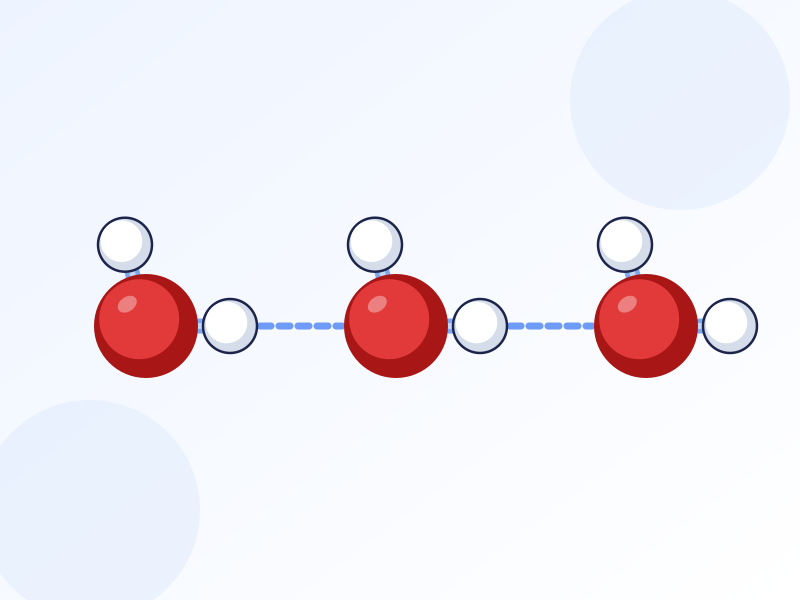
Hydrogen Bonding
The requirement, the four-feature exam diagram, water, ammonia and hydrogen fluoride, and predicting other cases.
Start revising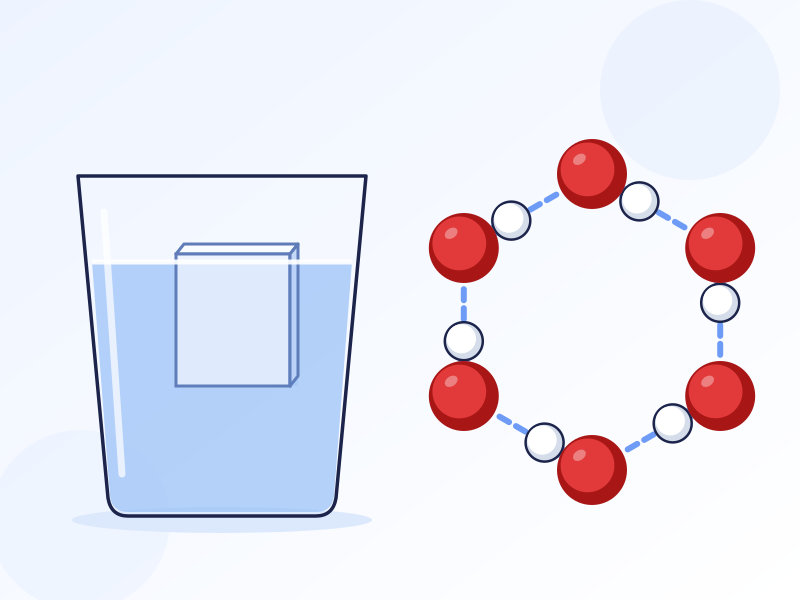
Anomalous Properties of Water
Why water boils at 100 °C, why ice floats and why water has a high surface tension.
Start revising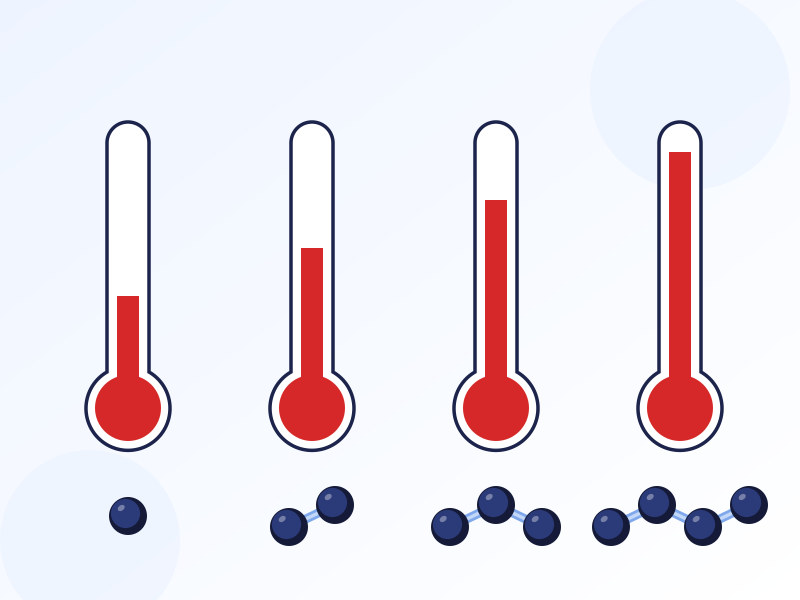
Boiling Temperature Trends
Alkane chain length and branching, alcohols against alkanes, and the hydrogen halides explained by forces.
Start revising
Choosing Solvents
Hydration of ions, alcohols in water, why halogenoalkanes do not dissolve, and non-aqueous solvents.
Start revisingSummary Map
Download, print and revise the key facts of this topic at a glance.
Summary maps
Download, print and revise the key facts of this topic at a glance.

Intermolecular Forces Map
Edexcel International A Level Chemistry · Unit 2 · Topic 7A Intermolecular Forces
The whole section on one A4 page: bonds or forces, London forces, permanent dipoles, hydrogen bonds, H₂O, NH₃ and HF, and why water is odd.
Boiling Temperatures and Solvents Map
Edexcel International A Level Chemistry · Unit 2 · Topic 7B Physical Properties
The whole section on one A4 page: chain length, branching, alcohols against alkanes, the hydrogen halides, water as a solvent and other solvents.
© 2026 Online Learning System. For personal study: printing is allowed; editing, copying and redistribution are not.
Virtual Lessons
Recorded video lessons that teach the topic step by step.
The Virtual Lessons for Topic 7 Intermolecular Forces are being recorded.
MCQ Bank
Multiple-choice papers on this topic, marked the moment you submit.
The MCQ papers for Topic 7 Intermolecular Forces are being written.
SAQ Bank
Written, drawn and worked exam practice on this topic.
The exam practice papers for Topic 7 Intermolecular Forces are being written.
Revision Game
Match reagents to products, with your board's reagents and conditions.
The revision game for Topic 7 Intermolecular Forces is being built.
Study Cards
Pick a deck, then turn each card to check what you remember.
Specification
Every specification point in this topic, in the exam board's own words. Rate how confident you are with each one.
Self-assessment · 17 points
Sign in to rate how confident you feel about each point. Your ratings are saved to your account, follow you to any device, and appear beside your KASP analytics, kept apart from your marks.
7.1
7.2
7.3
- i
understand the following anomalous properties of water resulting from hydrogen bonding: its high melting and boiling temperature when compared with similar molecules
Revise - ii
understand the following anomalous properties of water resulting from hydrogen bonding: the density of ice compared to that of water
Revise
7.4
- 7.4
be able to predict the presence of hydrogen bonding in molecules analogous to those mentioned in 7.2
Revise
7.5
- i
understand, in terms of intermolecular forces, physical properties shown by substances, including: the trends in boiling temperatures of alkanes with increasing chain length
Revise - ii
understand, in terms of intermolecular forces, physical properties shown by substances, including: the effect of branching in the carbon chain on the boiling temperatures of alkanes
Revise - iii
understand, in terms of intermolecular forces, physical properties shown by substances, including: the relatively low volatility (higher boiling temperatures) of alcohols compared to alkanes with a similar number of electrons
Revise - iv
understand, in terms of intermolecular forces, physical properties shown by substances, including: the trends in boiling temperatures of the hydrogen halides HF to HI
Revise
7.6
- i
understand factors that influence the choice of solvents, including: water, to dissolve some ionic compounds, in terms of the hydration of the ions
Revise - ii
understand factors that influence the choice of solvents, including: water, to dissolve simple alcohols, in terms of hydrogen bonding
Revise - iii
understand factors that influence the choice of solvents, including: water, as a poor solvent for compounds (to include polar molecules such as halogenoalkane), in terms of inability to form hydrogen bonds
Revise - iv
understand factors that influence the choice of solvents, including: non-aqueous solvents, for compounds that have similar intermolecular forces to those in the solvent
Revise
Keep this note — free
Save your progress across every Edexcel IAL topic. A free account remembers which topics you have covered, saves your question scores, and syncs across your phone and laptop.
- Track every topic you have finished
- Keep your practice-question scores
- No payment, no card, free forever
Already registered? Log in