Topic 9
Kinetics I
Topic 9 explains how fast reactions go and why: collision theory and activation energy, calculating rates from times and from gradients, the Maxwell–Boltzmann distribution and the effect of temperature, and catalysts, their reaction profiles, heterogeneous catalysis at surfaces and their economic benefits. Kinetics II (rate equations) follows in Topic 16.
Revision Notes
4 revision notes, in the order the specification teaches them.

Collision Theory and Rates of Reaction
Collision theory: rate of reaction, activation energy, effective collisions and the effects of concentration, pressure, surface area and temperature.
Start revising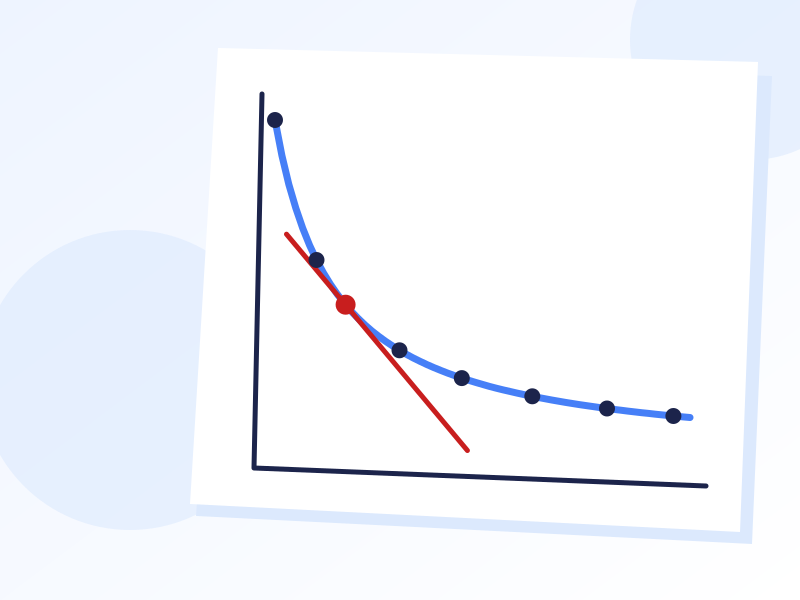
Measuring and Calculating Rates
Measuring rates: mass, gas volume and clock methods, rate = 1/time, tangents and initial rate on concentration–time graphs.
Start revising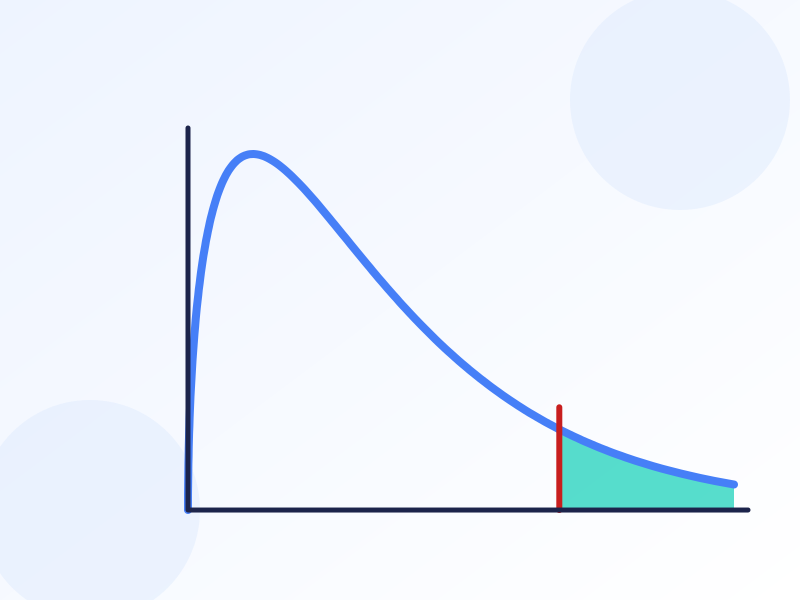
The Maxwell–Boltzmann Distribution
The Maxwell–Boltzmann distribution: shape, activation energy, the effect of temperature and the effect of a catalyst on the proportion of molecules that can react.
Start revising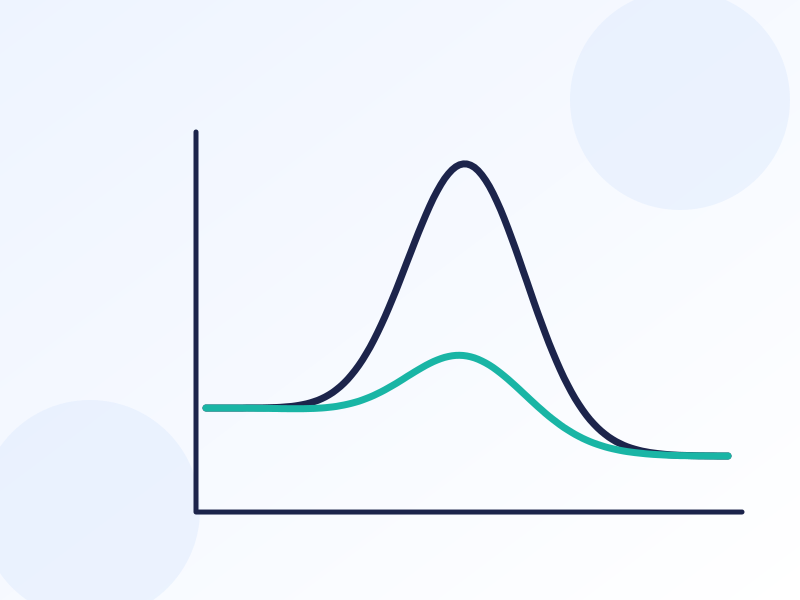
Catalysts and Reaction Profiles
Catalysts: lower activation energy, reaction profiles with the intermediate, homogeneous and heterogeneous catalysis, and the economic and environmental benefits.
Start revisingSummary Map
Download, print and revise the key facts of this topic at a glance.
Summary map
Download, print and revise the key facts of this topic at a glance.

Kinetics Map
Edexcel A Level Chemistry · Topic 9 Kinetics I
The whole section on one A4 page: collision theory, concentration and pressure, surface area, measuring rates, Maxwell–Boltzmann and temperature, and catalysts, with worked examples.
© 2026 Online Learning System. For personal study: printing is allowed; editing, copying and redistribution are not.
Virtual Lessons
Recorded video lessons that teach the topic step by step.
The Virtual Lessons for Topic 9 - Kinetics I are being recorded.
MCQ Bank
Multiple-choice papers on this topic, marked the moment you submit.
The MCQ papers for Topic 9 - Kinetics I are being written.
SAQ Bank
Written, drawn and worked exam practice on this topic.
The exam practice papers for Topic 9 - Kinetics I are being written.
Revision Game
Match reagents to products, with your board's reagents and conditions.
The revision game for Topic 9 - Kinetics I is being built.
Study Cards
Pick a deck, then turn each card to check what you remember.
Specification
Every specification point in this topic, in the exam board's own words. Rate how confident you are with each one.
Self-assessment · 14 points
Sign in to rate how confident you feel about each point. Your ratings are saved to your account, follow you to any device, and appear beside your KASP analytics, kept apart from your marks.
9.1
9.2
- 9.2
understand that reactions only take place when collisions take place with sufficient energy, known as activation energy
Revise
9.3
- ii
be able to calculate the rate of a reaction from: the gradient of a suitable graph, by drawing a tangent, either for initial rate, or at a time, t
Revise
9.4
- 9.4
understand qualitatively, in terms of the Maxwell-Boltzmann distribution of molecular energies, how changes in temperature affect the rate of a reaction
Revise
9.5
- 9.5
understand the role of catalysts in providing alternative reaction routes of lower activation energy
Revise
9.6
9.7
- 9.7
be able to interpret the action of a catalyst in terms of a qualitative understanding of the Maxwell-Boltzmann distribution of molecular energies
Revise
9.8
- 9.8
understand the use of a solid (heterogeneous) catalyst for industrial reactions, in the gas phase, in terms of providing a surface for the reaction
Revise
9.9
Keep this note — free
Save your progress across every Edexcel topic. A free account remembers which topics you have covered, saves your question scores, and syncs across your phone and laptop.
- Track every topic you have finished
- Keep your practice-question scores
- No payment, no card, free forever
Already registered? Log in