3.1.1
Periodicity
This section covers the arrangement of the Periodic Table, periodic trends in electron configuration, first and successive ionisation energies, and the structures and melting points of the elements across Periods 2 and 3.
Ionisation energy and periodic trends are here. Metallic bonding and giant covalent lattices are on the Bonding and Structure pages linked below.
Revision Notes
5 revision notes, in the order the specification teaches them.
Ionisation Energy
First and successive ionisation energies, the factors behind them, trends across Periods 2 and 3 and down a group (3.1.1 (c)).
Start revising
Periodic Trends
The Periodic Table as an arrangement by proton number, periodicity, blocks, and the trends in atomic radius, ionisation energy and melting point across Periods 2 and 3 (3.1.1 (a), (b), (g)).
Start revising
Metallic Bonding (2.2.2)
Giant metallic lattices and the properties of metals (3.1.1 (d), (f)), on the 2.2.2 Bonding and Structure pages.
Start revising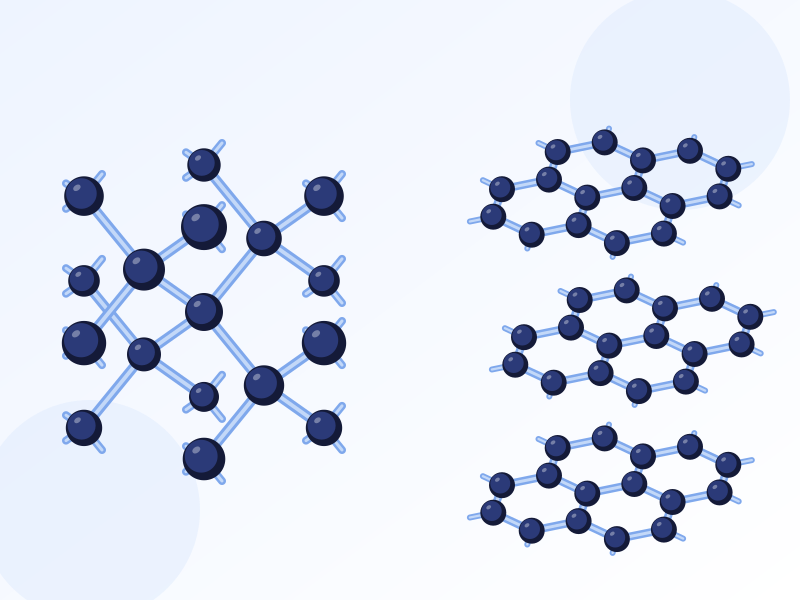
Giant Covalent Structures (2.2.2)
Diamond, graphite, graphene and silicon and their properties (3.1.1 (e), (f)), on the 2.2.2 Bonding and Structure pages.
Start revising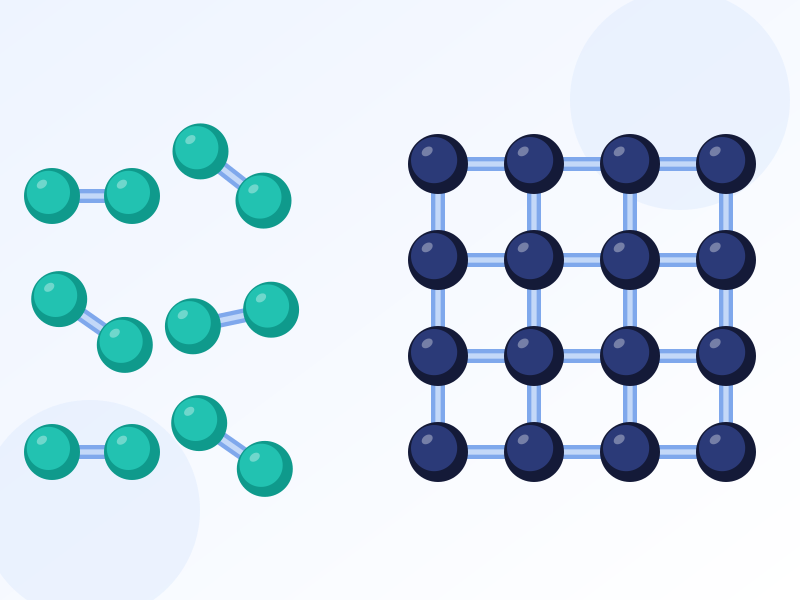
Structure Types (2.2.2)
The four lattice types compared: melting point, conductivity and solubility from structure and bonding (3.1.1 (f), (g)).
Start revisingSummary Map
Every reaction of the topic on one printable page.
The summary map for 3.1.1 Periodicity is being drawn.
Virtual Lessons
Recorded video lessons that teach the topic step by step.
The Virtual Lessons for 3.1.1 Periodicity are being recorded.
MCQ Bank
Multiple-choice papers on this topic, marked the moment you submit.
The MCQ papers for 3.1.1 Periodicity are being written.
SAQ Bank
Written, drawn and worked exam practice on this topic.
The exam practice papers for 3.1.1 Periodicity are being written.
Revision Game
Match reagents to products, with your board's reagents and conditions.
The revision game for 3.1.1 Periodicity is being built.
Study Cards
Pick a deck, then turn each card to check what you remember.
Specification
Every specification point in this topic, in the exam board's own words. Rate how confident you are with each one.
Self-assessment · 24 points
Sign in to rate how confident you feel about each point. Your ratings are saved to your account, follow you to any device, and appear beside your KASP analytics, kept apart from your marks.
3.1.1
- a (ii)
the periodic table as the arrangement of elements in periods showing repeating trends in physical and chemical properties (periodicity)
Revise - a (iii)
the periodic table as the arrangement of elements in groups having similar chemical properties
Revise - c (i) a
explanation of the trend in first ionisation energies across Periods 2 and 3, in terms of attraction, nuclear charge and atomic radius
Revise - c (i) b
explanation of the trend in first ionisation energies down a group, in terms of attraction, nuclear charge and atomic radius
Revise - c (ii) a
prediction from successive ionisation energies of the number of electrons in each shell of an atom
Revise - d (i)
explanation of metallic bonding as strong electrostatic attraction between cations (positive ions) and delocalised electrons
- d (ii)
explanation of a giant metallic lattice structure, e.g. all metals
- e i
explanation of the solid giant covalent lattice of diamond as a network of atoms bonded by strong covalent bonds
- e ii
explanation of the solid giant covalent lattice of graphite as a network of atoms bonded by strong covalent bonds
- e iii
explanation of the solid giant covalent lattice of graphene as a network of atoms bonded by strong covalent bonds
- e iv
explanation of the solid giant covalent lattice of silicon as a network of atoms bonded by strong covalent bonds
- f i
explanation of the melting and boiling points of giant metallic lattices in terms of structure and bonding
- f ii
explanation of the solubility of giant metallic lattices in terms of structure and bonding
- f iii
explanation of the electrical conductivity of giant metallic lattices in terms of structure and bonding
- f iv
explanation of the melting and boiling points of giant covalent lattices in terms of structure and bonding
- f v
explanation of the solubility of giant covalent lattices in terms of structure and bonding
- f vi
explanation of the electrical conductivity of giant covalent lattices in terms of structure and bonding
- g
explanation of the variation in melting points across Periods 2 and 3 in terms of structure and bonding (see also 2.2.2 o)
Revise
Keep this note — free
Save your progress across every OCR topic. A free account remembers which topics you have covered, saves your question scores, and syncs across your phone and laptop.
- Track every topic you have finished
- Keep your practice-question scores
- No payment, no card, free forever
Already registered? Log in