Metallic Bonding
Metallic bonding occurs when positive metal ions are held together by electrostatic attraction to a sea of delocalised electrons. These pages separate the key ideas so that students can revise metallic structure and link it clearly to metal properties.
The section also covers ionic and metallic bonding, simple molecular and giant lattices, and intermolecular forces with hydrogen bonding and the anomalous properties of water.
Revision Notes
2 revision notes, in the order the specification teaches them.
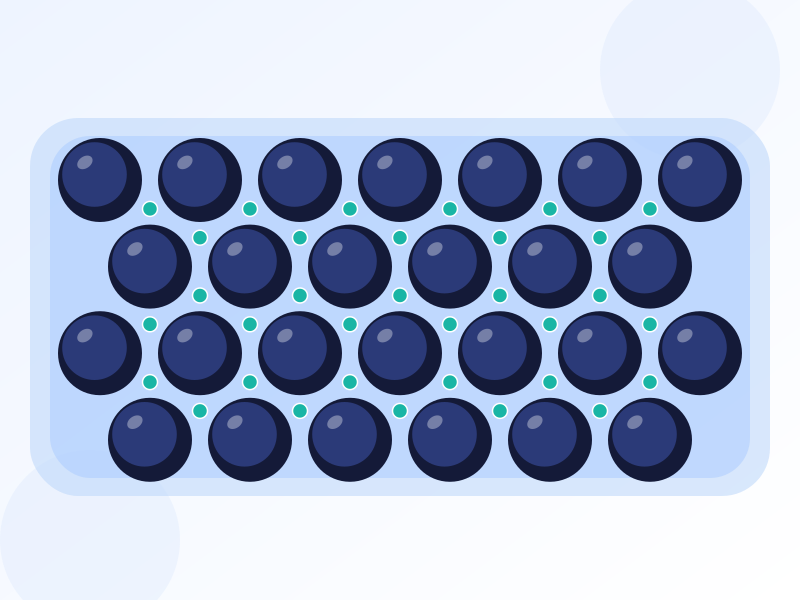
Metallic Bonding and Structure
Revise positive metal ions, delocalised electrons and the electrostatic attraction that holds metallic structures together.
Start revising
Physical Properties of Metals
Connect metallic bonding and structure with electrical conductivity, thermal conductivity, malleability, ductility and melting point.
Start revisingSummary Map
Download, print and revise the key facts of this topic at a glance.
Summary map
Download, print and revise the key facts of this topic at a glance.

Structure Types Map
OCR A Level Chemistry A · 3.1.1 Periodicity · Metallic bonding and structure types
The whole section on one A4 page: metallic bonding, the giant covalent lattices of carbon and silicon, the four kinds of solid, and how to deduce a structure.
© 2026 Online Learning System. For personal study: printing is allowed; editing, copying and redistribution are not.
Virtual Lessons
Recorded video lessons that teach the topic step by step.
The Virtual Lessons for Metallic Bonding are being recorded.
MCQ Bank
Multiple-choice papers on this topic, marked the moment you submit.
The MCQ papers for Metallic Bonding are being written.
SAQ Bank
Written, drawn and worked exam practice on this topic.
The exam practice papers for Metallic Bonding are being written.
Revision Game
Match reagents to products, with your board's reagents and conditions.
The revision game for Metallic Bonding is being built.
Study Cards
Pick a deck, then turn each card to check what you remember.
Specification
Every specification point in this topic, in the exam board's own words. Rate how confident you are with each one.
Self-assessment · 4 points
Sign in to rate how confident you feel about each point. Your ratings are saved to your account, follow you to any device, and appear beside your KASP analytics, kept apart from your marks.
3.1.1
- d (i)
explanation of metallic bonding as strong electrostatic attraction between cations (positive ions) and delocalised electrons
- d (ii)
explanation of a giant metallic lattice structure, e.g. all metals
- f i
explanation of the melting and boiling points of giant metallic lattices in terms of structure and bonding
- f iii
explanation of the electrical conductivity of giant metallic lattices in terms of structure and bonding
Keep this note — free
Save your progress across every OCR topic. A free account remembers which topics you have covered, saves your question scores, and syncs across your phone and laptop.
- Track every topic you have finished
- Keep your practice-question scores
- No payment, no card, free forever
Already registered? Log in