Reactions of Alkanes
Alkanes are relatively unreactive because C-C and C-H bonds are strong and essentially non-polar. Their key organic reaction in this section is free radical substitution with halogens, which occurs through a chain mechanism involving initiation, propagation and termination steps.
Revision Notes
5 revision notes, in the order the specification teaches them.
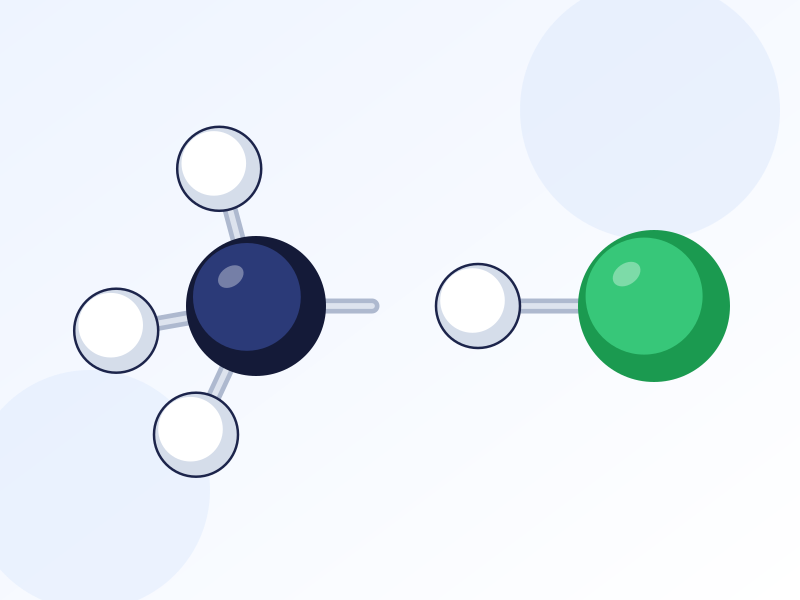
Free Radical Substitution
Revise the overall reaction type, why radicals are formed and how halogenation replaces a hydrogen atom in an alkane.
Start revising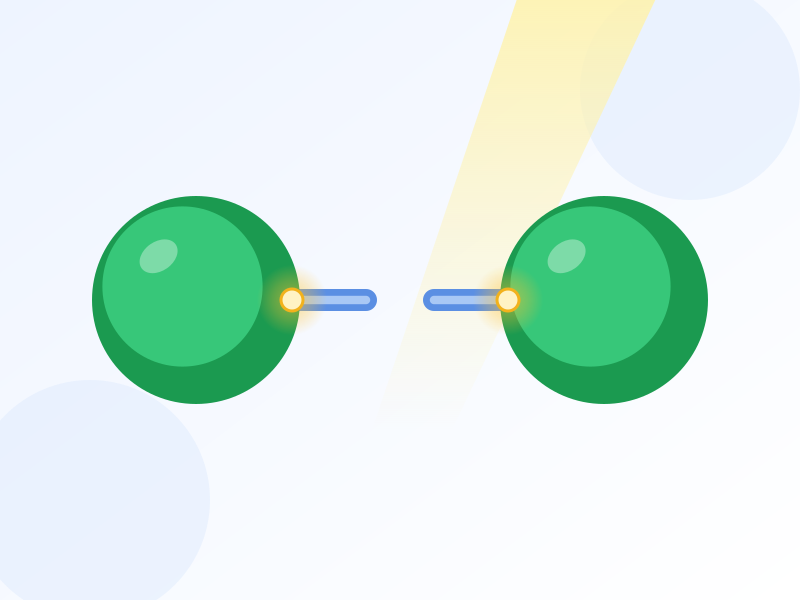
Initiation
Learn how ultraviolet light causes homolytic fission of a halogen molecule to form two reactive halogen radicals.
Start revising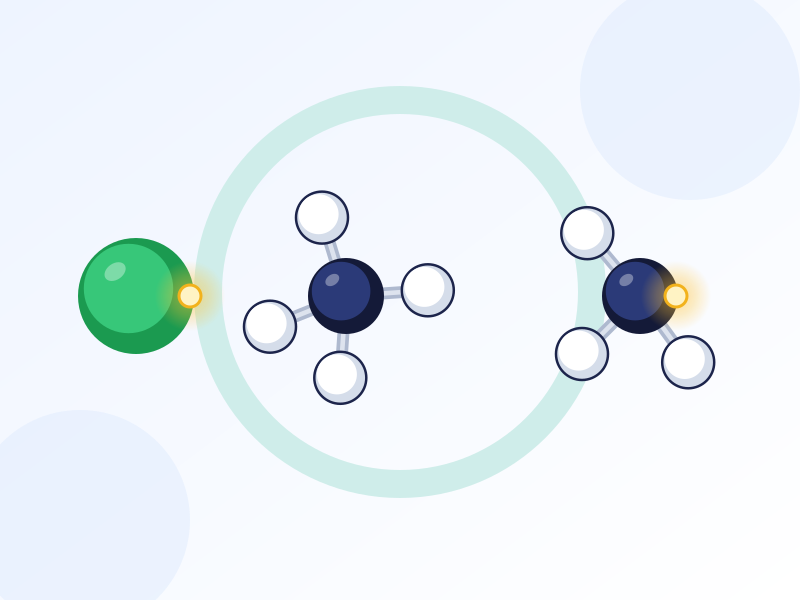
Propagation
Review the two repeating steps that produce the organic product and regenerate a radical so the chain reaction continues.
Start revising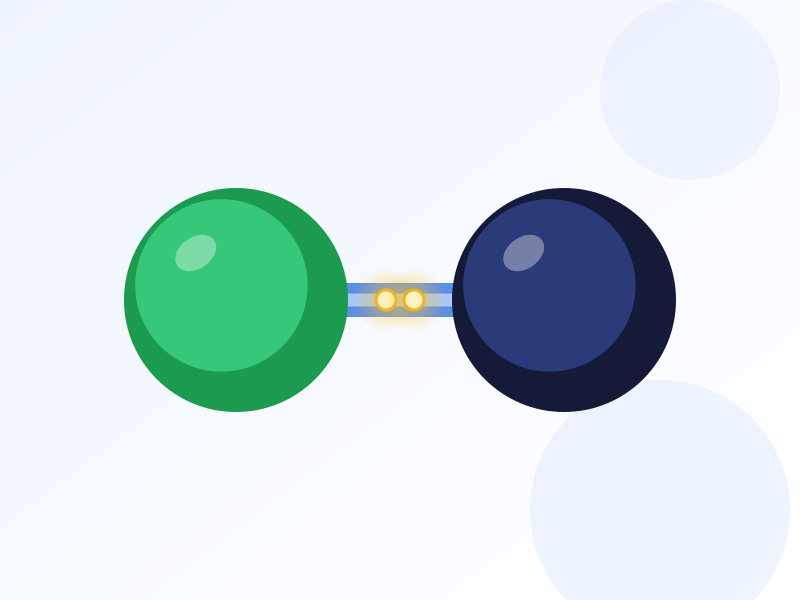
Termination
Revise how two radicals combine to form a stable molecule, removing radicals and stopping that part of the chain.
Start revising
Further Substitution
Learn how substitution can continue to form mixtures of products when more hydrogen atoms are replaced by halogen atoms.
Start revisingSummary Map
Download, print and revise the reactions of this topic at a glance.
Summary maps
Download, print and revise the reactions of this topic at a glance.

Alkanes Map
AQA A-level Chemistry · 3.3.2 Alkanes
Every reaction on one A4 page: reagents, conditions and reaction type for each arrow, colour coded, with the key tests.
Alkanes Summary Map
AQA A-level Chemistry · 3.3.2 Alkanes
The whole section on one A4 page: crude oil, thermal and catalytic cracking, combustion, pollutants, converters and flue-gas desulfurisation, with the free radical mechanism in a table.
© 2026 Online Learning System. For personal study: printing is allowed; editing, copying and redistribution are not.
Virtual Lessons
Recorded video lessons that teach the topic step by step.
The Virtual Lessons for 3.3.2 Alkanes are being recorded.
MCQ Bank
Multiple-choice papers on this topic, marked the moment you submit.
The MCQ papers for 3.3.2 Alkanes are being written.
SAQ Bank
Written, drawn and worked exam practice on this topic.
The exam practice papers for 3.3.2 Alkanes are being written.
Revision Game
Match reagents to products, free, with your board's reagents and conditions.

Study Cards
Pick a deck, then turn each card to check what you remember.
Specification
Every specification point in this topic, in the exam board's own words. Rate how confident you are with each one.
Self-assessment · 26 points
Sign in to rate how confident you feel about each point. Your ratings are saved to your account, follow you to any device, and appear beside your KASP analytics, kept apart from your marks.
3.3.2.1
- ii
know that petroleum is a mixture consisting mainly of alkane hydrocarbons that can be separated by fractional distillation
Revise
3.3.2.2
3.3.2.3
3.3.2.4
- ii a
explain the initiation step in the chlorination of methane as a free-radical substitution mechanism
Revise - ii b
explain the propagation steps in the chlorination of methane as a free-radical substitution mechanism
Revise - ii c
explain the termination steps in the chlorination of methane as a free-radical substitution mechanism
Revise
Keep this note — free
Save your progress across every AQA topic. A free account remembers which topics you have covered, saves your question scores, and syncs across your phone and laptop.
- Track every topic you have finished
- Keep your practice-question scores
- No payment, no card, free forever
Already registered? Log in