Topic 12
Entropy and
Energetics
Topic 12 explains why reactions happen. It builds entropy as the measure of disorder and the dispersal of energy, calculates the entropy changes of the system, the surroundings and the total, uses them to decide feasibility and the temperature at which a reaction becomes feasible, separates thermodynamic from kinetic stability, then turns to ionic solids: lattice energy and Born–Haber cycles, covalent character and polarisation, enthalpies of solution and hydration, and predicting solubility. It is examined in Unit 4.
Revision Notes
8 revision notes, in the order the specification teaches them.
Entropy and the Direction of Change
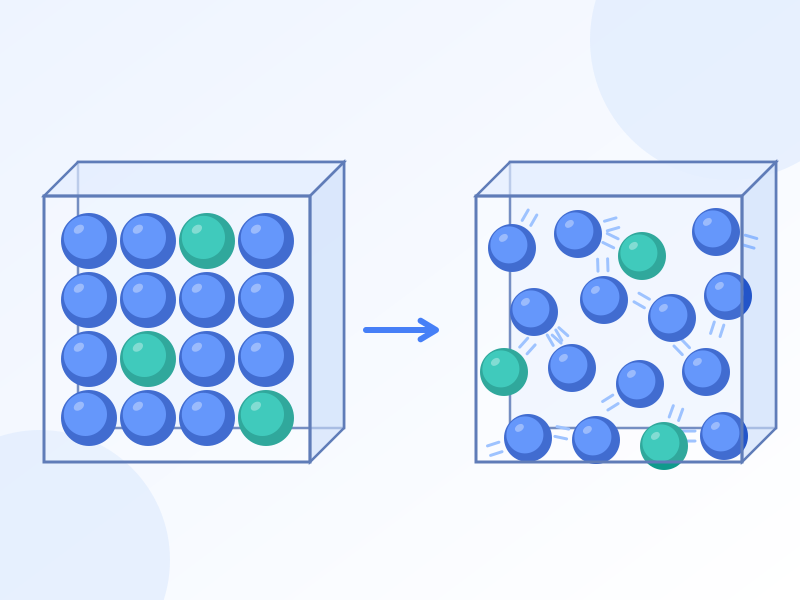
Entropy: disorder and the dispersal of energy, entropy and temperature, changes of state, dissolving, gas moles and the natural direction of change.
Start revising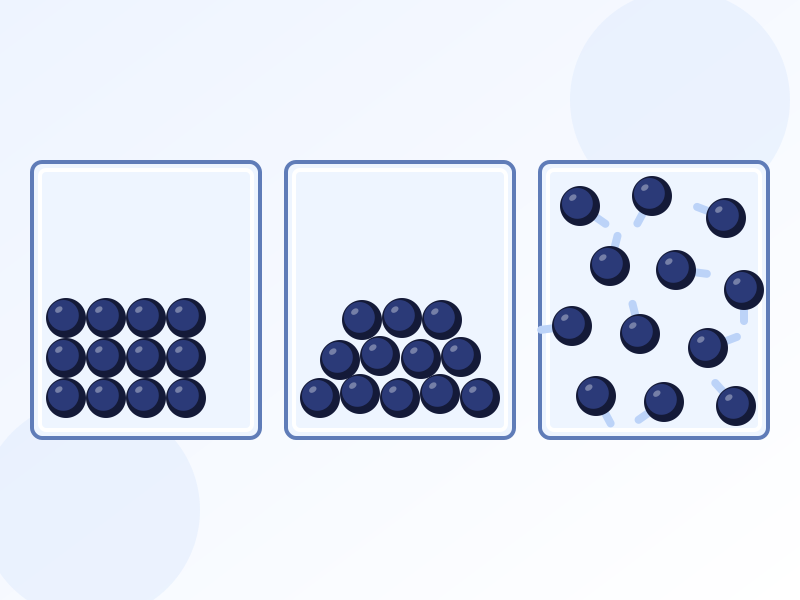
Calculating Entropy Changes
Entropy calculations: ΔS from standard entropies, ΔS of the surroundings from (−ΔH) / (T) and the total entropy change.
Start revising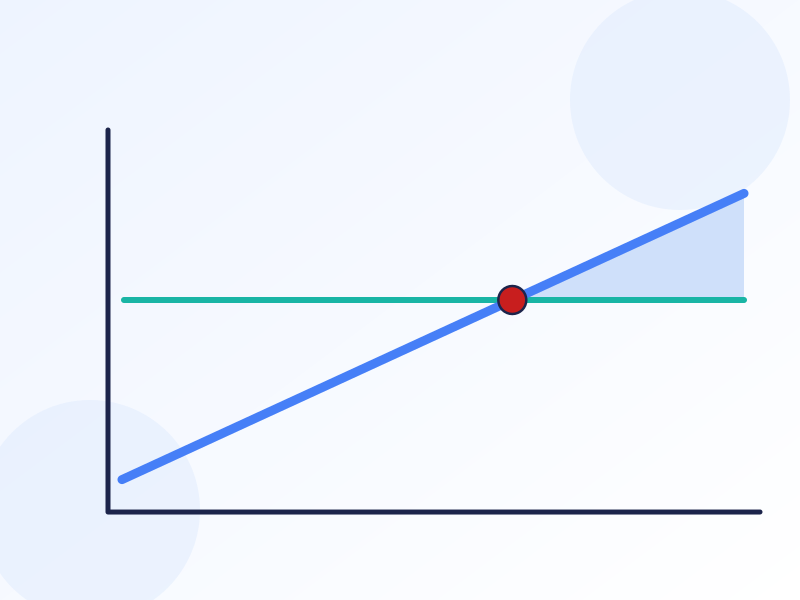
Feasibility and Temperature
Feasibility: ΔStotal = ΔSsystem + ΔSsurroundings, the effect of temperature and the temperature at which a reaction becomes feasible.
Start revising
Thermodynamic and Kinetic Stability
Thermodynamic and kinetic stability: feasible but slow reactions, activation energy and the limits of ΔG and ΔStotal predictions.
Start revising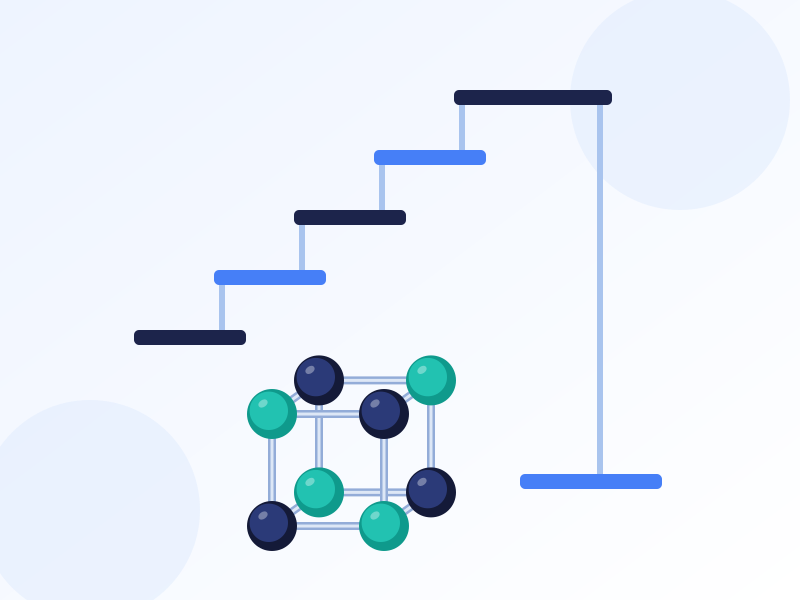
Lattice Energy and Born–Haber Cycles
Lattice energy and Born–Haber cycles: definitions of atomisation, ionisation energy and electron affinity, constructing the cycle for NaCl and MgCl₂ and calculating the missing value.
Start revising
Lattice Energy Trends and Covalent Character
Lattice energy trends: charge and radius, the perfect ionic model against Born–Haber values, polarisation and covalent character in ionic compounds.
Start revising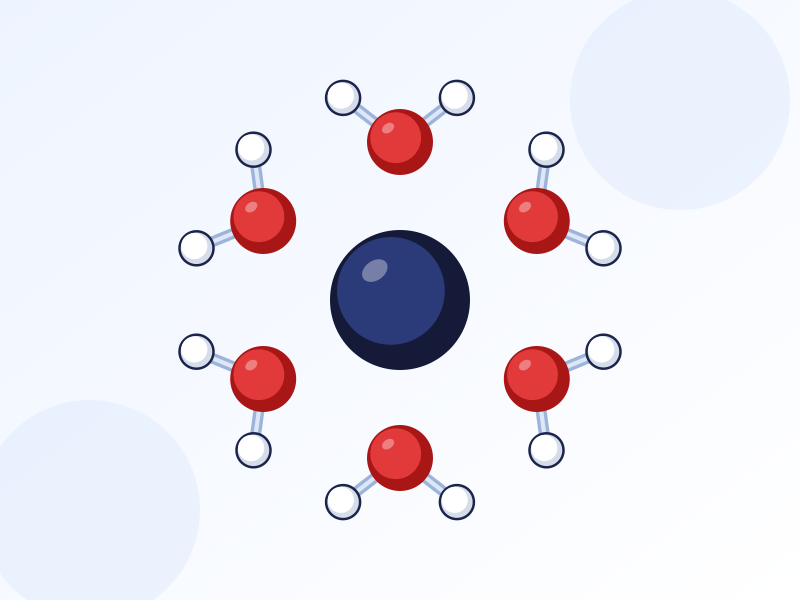
Enthalpy of Solution and Hydration
Enthalpy of solution and hydration: definitions, energy cycles with lattice energy, worked calculations and the effect of ionic charge and radius.
Start revising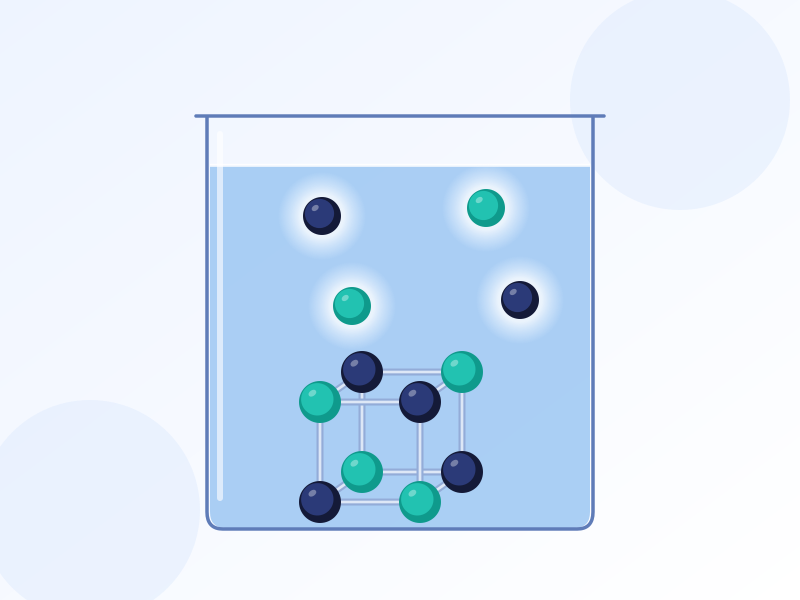
Predicting Solubility
Predicting solubility from enthalpy and entropy changes of solution, with the Group 2 hydroxide and sulfate trends explained.
Start revisingSummary Map
Download, print and revise the key facts of this topic at a glance.
Summary maps
Download, print and revise the key facts of this topic at a glance.

Entropy and Feasibility Map
Edexcel International A Level Chemistry · Unit 4 · Topic 12A Entropy and Feasibility
The whole section on one A4 page: entropy, state and temperature, the natural direction of change, calculating ΔS, temperature and feasibility, and stability.
Lattice Energy Map
Edexcel International A Level Chemistry · Unit 4 · Topic 12B Lattice Energy and Born–Haber Cycles
The whole section on one A4 page: atomisation, electron affinity, lattice energy, Born–Haber cycles, 2+ ions and oxides, and covalent character.
Solution and Solubility Map
Edexcel International A Level Chemistry · Unit 4 · Topic 12C Solution, Hydration and Solubility
The whole section on one A4 page: enthalpies of solution and hydration, the solution cycle, energy level diagrams, charge and radius, and solubility and Group 2 trends.
© 2026 Online Learning System. For personal study: printing is allowed; editing, copying and redistribution are not.
Virtual Lessons
Recorded video lessons that teach the topic step by step.
The Virtual Lessons for Topic 12 Entropy and Energetics are being recorded.
MCQ Bank
Multiple-choice papers on this topic, marked the moment you submit.
The MCQ papers for Topic 12 Entropy and Energetics are being written.
SAQ Bank
Written, drawn and worked exam practice on this topic.
The exam practice papers for Topic 12 Entropy and Energetics are being written.
Revision Game
Match reagents to products, with your board's reagents and conditions.
The revision game for Topic 12 Entropy and Energetics is being built.
Study Cards
Pick a deck, then turn each card to check what you remember.
Specification
Every specification point in this topic, in the exam board's own words. Rate how confident you are with each one.
Self-assessment · 41 points
Sign in to rate how confident you feel about each point. Your ratings are saved to your account, follow you to any device, and appear beside your KASP analytics, kept apart from your marks.
12.1
- 12.1
understand that, since endothermic reactions can occur spontaneously at room temperature, enthalpy changes alone do not control whether reactions occur
Revise
12.2
12.3
12.4
12.5
- iii
understand why entropy changes occur during: reactions in which there is a change in the number of moles from reactants to products
Revise
12.6
- a
understand that total entropy change of any reaction is the sum of entropy change of system and entropy change of surroundings
Revise
12.7
- 12.7
be able to calculate the entropy change of the system for a reaction, ΔSsystem, given the entropies of the reactants and products
Revise
12.8
12.9
- i
understand that the feasibility of a reaction depends on: the balance between ΔSsystem and ΔSsurroundings, so that even endothermic reactions can occur spontaneously at room temperature
Revise - ii
understand that the feasibility of a reaction depends on: temperature, as higher temperatures decrease the magnitude of ΔSsurroundings so its contribution to ΔStotal is less Students should be able to calculate the temperature at which a reaction is feasible. Students may also use ΔG = ΔH - TΔSsystem in answers, although this approach is not a requirement of the specification.
Revise
12.10
- 12.10
understand that reactions can occur as long as ΔStotal is positive even if one of the other entropy changes is negative
Revise
12.11
12.12
- iii
be able to define the terms: lattice energy (as the exothermic process for the formation of one mole of an ionic solid from its gaseous ions)
Revise
12.13
12.14
- 12.14
understand that a comparison of the experimental lattice energy value (from a Born-Haber cycle) with the theoretical value (obtained from electrostatic theory) in a particular compound indicates the degree of covalent bonding
Revise
12.15
- 12.15
understand that polarisation of anions by cations leads to some covalency in an ionic bond, based on evidence from the Born-Haber cycle
Revise
12.16
12.17
- a
be able to use energy cycles to calculate enthalpy change of solution of an ionic compound using enthalpy change of hydration and lattice energy
Revise - b
be able to use energy level diagrams to calculate enthalpy change of solution of an ionic compound using enthalpy change of hydration and lattice energy
Revise
12.18
12.19
Keep this note — free
Save your progress across every Edexcel IAL topic. A free account remembers which topics you have covered, saves your question scores, and syncs across your phone and laptop.
- Track every topic you have finished
- Keep your practice-question scores
- No payment, no card, free forever
Already registered? Log in