Sports Engineering
Inside the Materials Science of a World Cup Football
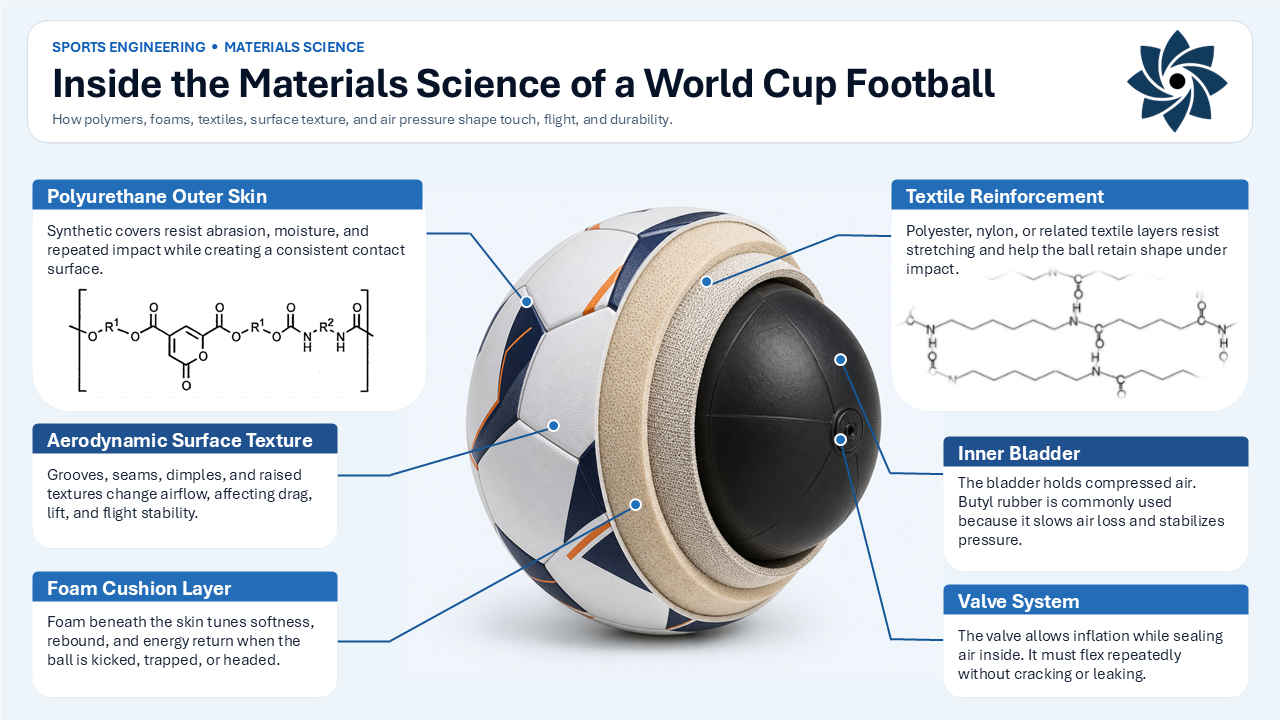
A modern match ball is a layered engineering system: synthetic skin, foam cushioning, textile reinforcement, air-retaining bladder, valve hardware, and carefully tuned surface texture.
Why the ball is engineered in layers
A professional football has to be light, round, durable, water-resistant, responsive to touch, and stable in flight. Those demands cannot be solved by one material alone. The outer surface handles wear and contact. The foam layer tunes feel and rebound. Textile reinforcement resists stretching. The bladder holds pressure. Surface texture shapes the airflow around the ball.
Surface design is performance design
The visible pattern is only part of the story. Grooves, seams, panel edges, dimples, and raised textures influence how air separates from the ball. That affects drag, lift, wake formation, and stability during shots and long passes.
Pressure, rebound, and feel
The bladder and valve system control air retention and inflation. Pressure changes how firm the ball feels, how it bounces, and how it responds on impact. In many balls, butyl rubber is used for air retention, while other bladder materials can be selected for a different response profile.