0 Moodle
Home Revision Notes Courses Blog My Account Cart
Moodle
Online Learning System — Home
Free Revision Notes

A Level
Chemistry
Online Course

Click ‘View Course’ after purchase.
Instant access. No setup.

Some ionic radii are shown.

Ion Ionic radius / nm
Na+ 0.102
K+ 0.138
F 0.133
Cl 0.180

Which compound has the strongest ionic bonding?

sodium chloride
potassium chloride
sodium fluoride
potassium fluoride

(ii)   Melting temperature depends on the strength of metallic bonding.
Explain why the metallic bonding in magnesium is much stronger than that in sodium.

A Level Chemistry
Online Course

View Courses

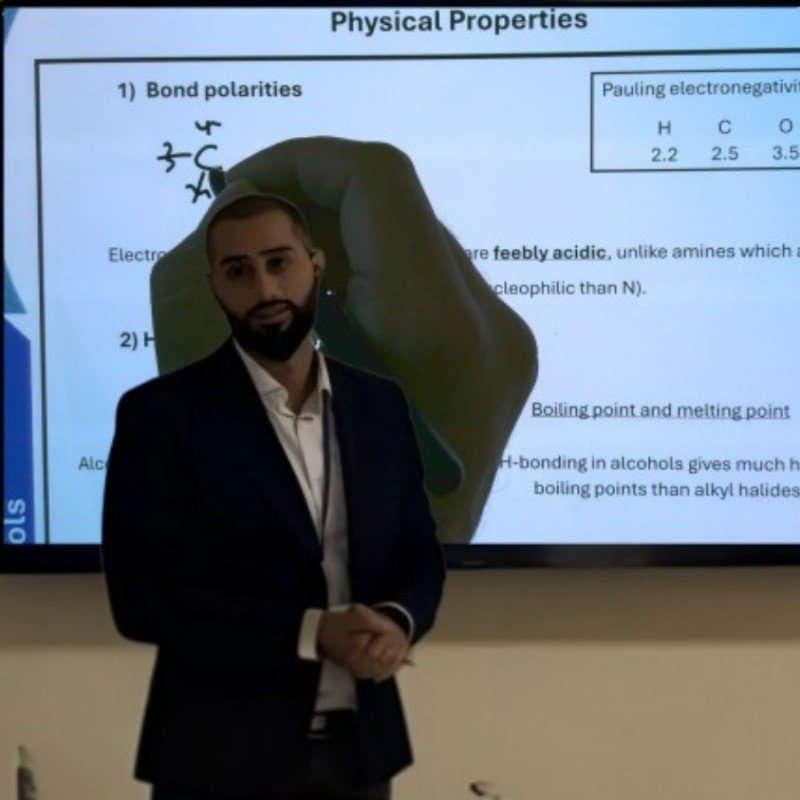
Meet the Chemistry
Specialist Behind OLS

Every A Level Chemistry online course, every assignment, every progress report, created and delivered by one chemistry specialist. Find out who is teaching your chemistry.

Meet The Specialist
A Level Chemistry Specialist Laboratory

Frequently Asked Questions

Can you do Chemistry A Level online?

Yes, studying Chemistry A Level online is entirely possible and increasingly popular, particularly among students who need flexibility around school timetables, work commitments, or geographical location. Online study works best when the resources are structured around the actual exam specification, so you are learning exactly what will be assessed rather than general chemistry content.

The key components you need are topic-by-topic video lessons, worked examples, and plenty of practice questions with mark scheme guidance. Many students combine online resources with past paper practice to build both understanding and exam technique. For practical components, most exam boards accept a practical endorsement from a registered centre, which can be arranged separately.

Online Chemistry A Level study suits independent learners who are comfortable managing their own schedule. With the right resources and consistent effort, there is no barrier to achieving a strong grade through self-directed online study.

What grade is 60% in A Level Chemistry?

Grade boundaries in A Level Chemistry vary each year depending on overall cohort performance and paper difficulty, so no percentage maps to a grade with certainty. That said, 60% typically falls around a C or low B in most years. Here is a general guide based on historical boundary ranges:

GradeApproximate % Range
A*90%+
A80–89%
B70–79%
C60–69%
D50–59%
E40–49%
UBelow 40%

These are indicative ranges only. In a particularly difficult year, boundaries shift downward, meaning 60% could secure a B. In an easier year, it might sit firmly at C. Always check the official grade boundary documents released by your exam board alongside your results.

Can you teach yourself A Level Chemistry?

Yes, self-teaching A Level Chemistry is achievable, but it requires discipline, the right resources, and a structured approach. The subject has a broad specification, so knowing exactly what you need to cover is the essential starting point. Working through each topic systematically, rather than jumping between areas, helps build the conceptual foundations that later topics depend on.

The areas students find hardest to self-teach are those requiring strong mathematical fluency, such as equilibrium calculations, electrochemistry, and kinetics, alongside organic chemistry mechanisms, which need to be learnt methodically rather than memorised in isolation. Regular practice with exam-style questions is critical; understanding the content is necessary but not sufficient without developing the ability to apply it under timed conditions.

Many successful self-taught candidates use a combination of structured video lessons, textbooks, and past papers with mark schemes. Progress is very achievable with consistent daily study.

Is Chemistry A Level very hard?

Chemistry A Level has a well-earned reputation for being one of the more demanding A Levels. It combines three distinct disciplines: physical, organic, and inorganic chemistry, each requiring different skills. Physical chemistry is heavily mathematical; organic chemistry demands the ability to follow and apply reaction mechanisms; inorganic chemistry requires substantial factual recall.

The jump from GCSE to A Level is significant. Content that was treated superficially at GCSE, such as atomic structure, bonding, and energetics, is revisited with considerably greater depth and rigour. Students who find A Level Chemistry manageable tend to keep up with topics, practise calculations regularly, and engage with past papers early.

Difficulty is relative. Students who enjoyed GCSE Chemistry and are prepared to put in consistent effort generally find it challenging but very rewarding.

What exam boards are the courses designed for?

At present, courses are developed specifically for Edexcel and Edexcel International A-Level Chemistry. Each course is aligned to the exact specification points used in these exam boards to ensure students are learning precisely what is required for their exams. Additional exam boards will be introduced in future, so please check the course roadmap on the website to see upcoming releases.

Unlike GCSE Chemistry, A-Level Chemistry exam boards differ significantly in structure, required knowledge, and assessment style. For this reason, our courses are designed separately for each exam board, rather than using a generic approach.

Which topics are currently available?

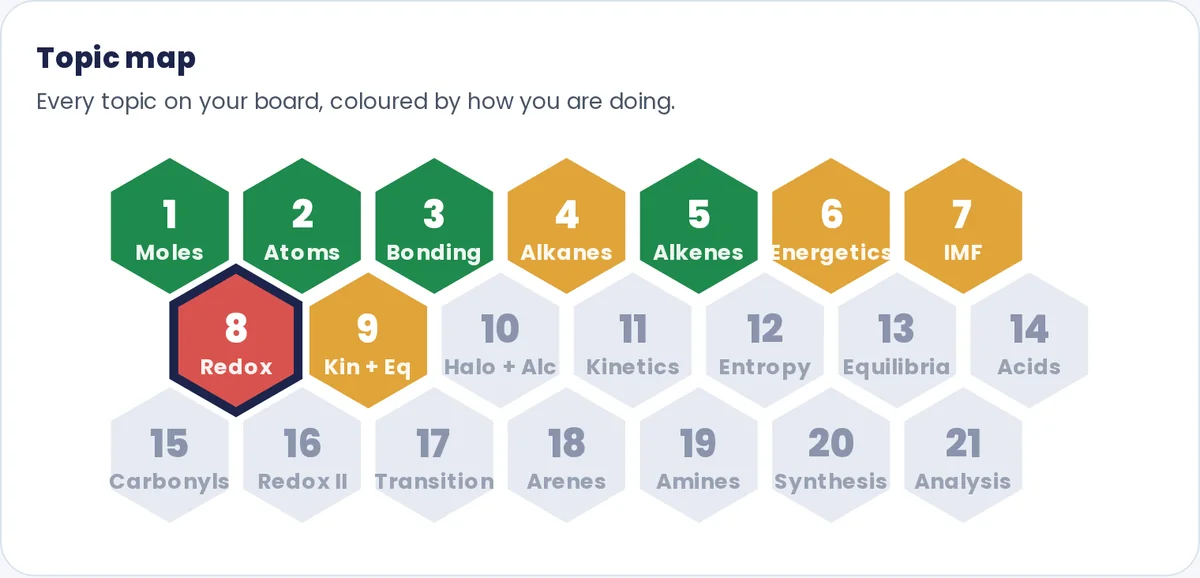
The topics currently available depend on the courses that have been released on the platform. To view all available topics and units, please visit the View Courses section of the website, where you can see the full list of courses currently available for purchase.

Are the courses suitable for other exam boards?

Although the courses are designed specifically around the Edexcel and Edexcel International specifications, much of the underlying chemistry overlaps with other A-Level exam boards such as AQA or OCR. This means many students studying with other exam boards may still find the content helpful for strengthening their understanding of core chemical concepts.

However, because exam boards organise topics differently and may emphasise different details, the courses are most accurate and directly aligned for Edexcel-based specifications.

Do the courses follow the official specification?

Yes. Each course is structured directly around the official Edexcel specification points. Lessons, study notes, and assessment questions are organised so that students can clearly see how each section corresponds to the required content in the syllabus.

This ensures that all material studied on the platform directly supports what students are expected to know for their A-Level Chemistry examinations.

How are the courses structured?

Each course follows a structured learning sequence designed to build understanding step by step. Students begin with interactive study notes, which function like a digital revision book but include embedded questions to check understanding as they read.

This is followed by recorded teaching lessons that explain the key concepts in detail. After the lesson, students complete multiple-choice questions with instant feedback to test their understanding. The final stage includes exam-style short-answer questions, allowing students to practise applying their knowledge in the same format used in A-Level examinations.

Are the study notes interactive?

Yes. The study notes are designed to be interactive rather than passive reading material. As students move through the notes, they encounter embedded questions such as fill-in-the-word activities and true/false checks that reinforce important concepts.

This approach encourages active engagement with the material and helps students identify gaps in their understanding immediately.

Can I study at my own pace?

Yes. All courses on the platform are self-paced, meaning students can work through the material at a speed that suits their schedule and learning style.

Lessons and resources remain accessible so students can revisit difficult topics, review explanations, and practise questions as many times as needed while preparing for their examinations.

Are there exam-style questions?

Yes. The platform includes exam-style questions drawn from past examination papers and other assessment materials relevant to the specification.

These questions are designed to reflect the style, wording, and level of difficulty students can expect in their A-Level Chemistry exams, allowing them to practise applying their knowledge in realistic exam conditions.

Will my answers be marked?

Yes. Short-answer questions are reviewed and marked, with feedback provided to help students understand how marks are awarded in exam questions.

The feedback explains where marks were gained and where improvements could be made, helping students refine their exam technique as well as their subject knowledge.

Who are these courses designed for?

These courses are designed for A-Level Chemistry students who want structured support with understanding the specification and preparing for exams.

They are suitable for students studying independently, those who want additional support alongside school lessons, or students who want focused revision using exam-style questions and structured learning materials.

Do I get instant feedback on quizzes?

Yes. Multiple-choice quizzes provide instant feedback after each question. Students are shown which answer is correct and are given an explanation to help reinforce the underlying chemistry concept.

This allows students to correct misunderstandings immediately rather than carrying them forward into later topics.

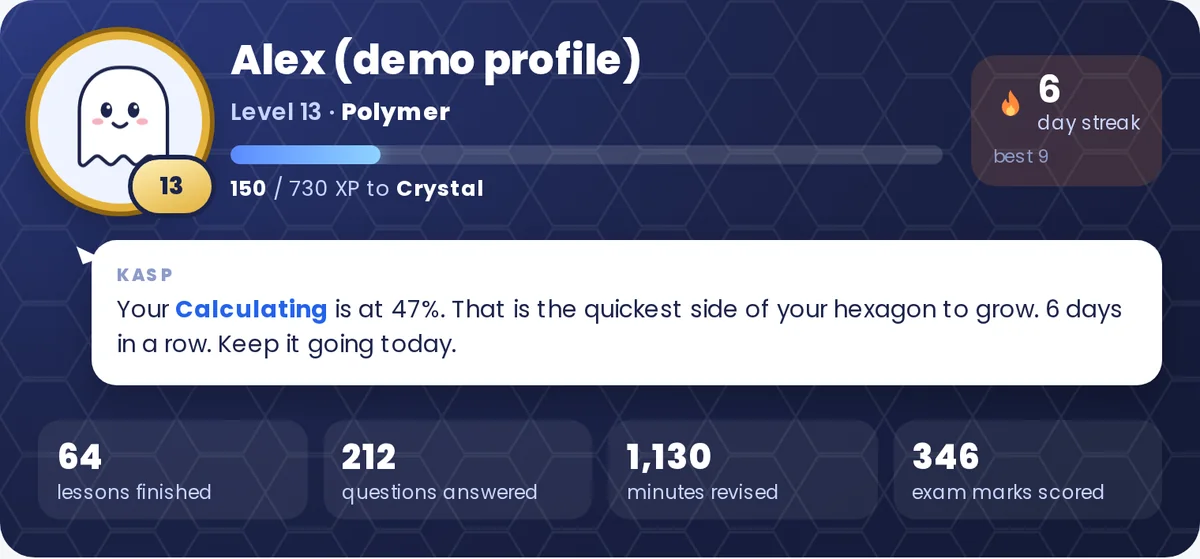
Is my progress tracked?

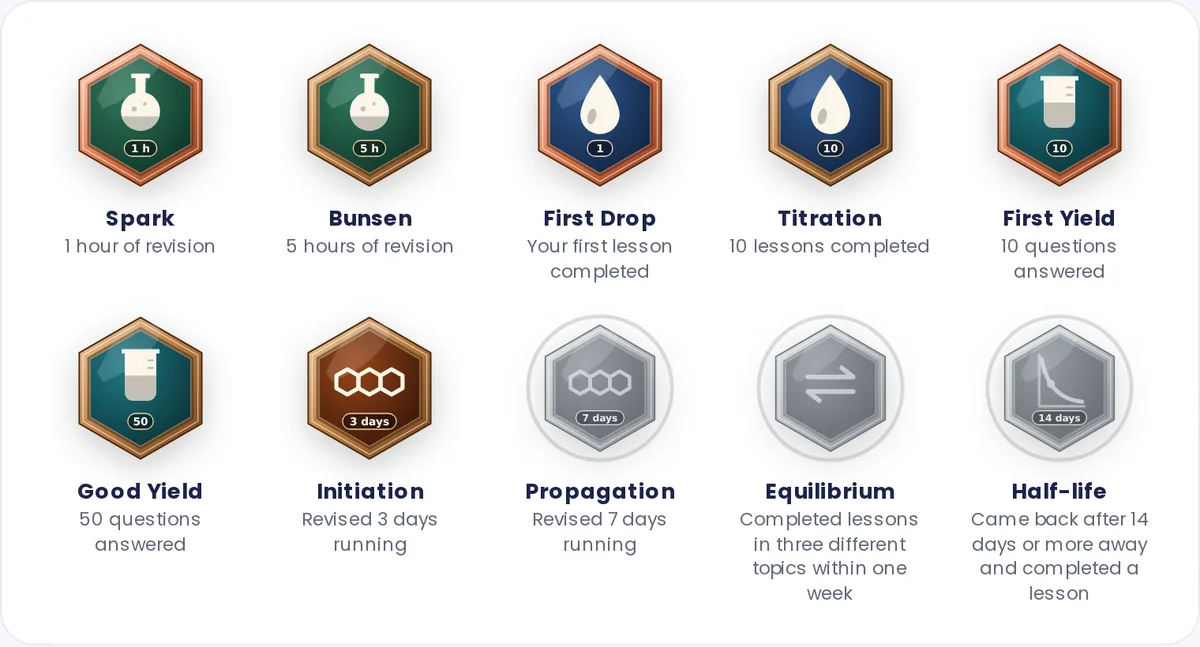
Yes. After completing each multiple-choice quiz and short-answer quiz, students receive their results so they can see how well they performed.

This allows students to monitor their understanding of each topic and identify areas that may require further revision.

Who created the courses?

The courses were created by a highly qualified chemistry specialist with a strong academic background in science and education.

His qualifications include a BSc in Chemistry with First Class Honours from University College London, an MSc in Advanced Chemical Research from UCL, a PGCE in Secondary Chemistry, a BDS in Dentistry from Queen Mary University of London, and a Master’s degree in Education from UCL. Before university, he achieved three A* grades in A-Level Biology, Chemistry and Mathematics, providing a strong academic foundation in the sciences.

What teaching experience is behind the courses?

The courses are built on extensive teaching experience in both the UK and internationally. This includes teaching at City of London School for Boys, one of the UK’s leading independent schools with a long-standing reputation for academic excellence.

Additional teaching experience includes working at high-performing British curriculum schools in Dubai, teaching GCSE and A-Level Chemistry. This experience has helped shape the courses to reflect the standards, expectations, and exam preparation strategies used in top-performing schools.

How do I access the course after purchase?

After purchasing a course, you will automatically receive an email containing a link to access the course. This link will direct you to the course hosted on our Online Learning System platform, which runs through the Moodle learning management system.

Once logged in, you will be able to access all course materials, lessons, quizzes, and assessments directly from your student dashboard.

Can I access the course on mobile or tablet?

Yes. The platform can be accessed on mobile phones, tablets, laptops, and desktop computers through a web browser.

However, for the best learning experience, particularly when viewing study notes, diagrams, and exam questions, it is recommended to use a larger screen such as a tablet, laptop, or desktop computer.

How long do I have access to the course?

Students receive one year of access to the course from the date of purchase. During this time, all lessons, study materials, and quizzes can be revisited as many times as needed to support learning and exam preparation.

How much does a course cost?

Course prices vary depending on the amount of content included. Some topics contain more material, such as longer video lessons, additional quizzes, and extended exam question practice.

Because of this, pricing may differ between courses depending on the depth and volume of content provided.

What payment methods are accepted?

We accept a wide range of secure digital payment methods through our online checkout system. These include major debit and credit cards and other standard online payment options supported by the website’s payment processor.

What is the refund policy?

Refund requests must be submitted by email within three working days of purchase. To qualify for a refund, the course must not have been accessed or used.

This means that no video lessons should have been watched, no study material should have been read, and no multiple-choice or short-answer questions should have been attempted. Student activity on the platform is recorded, including the time spent on each page, allowing us to verify whether course content has been accessed before processing a refund request.

We’d Love To Hear From You

Contact Us

Find Us Here

124 City Road
EC1V 2NX
London, United Kingdom

Hours

Mon–Fri: 9am–5pm
Saturday: 10am–4pm