3.3.15
NMR
Spectroscopy
Section 3.3.15 covers nuclear magnetic resonance spectroscopy: ¹³C and ¹H NMR give information about the positions of carbon and hydrogen atoms in a molecule; chemical shift on the δ scale depends on the molecular environment; integration gives the relative numbers of protons; TMS is the standard; samples are dissolved in deuterated solvents or CCl₄; and the n + 1 rule explains spin–spin splitting.
Revision Notes
2 revision notes, in the order the specification teaches them.
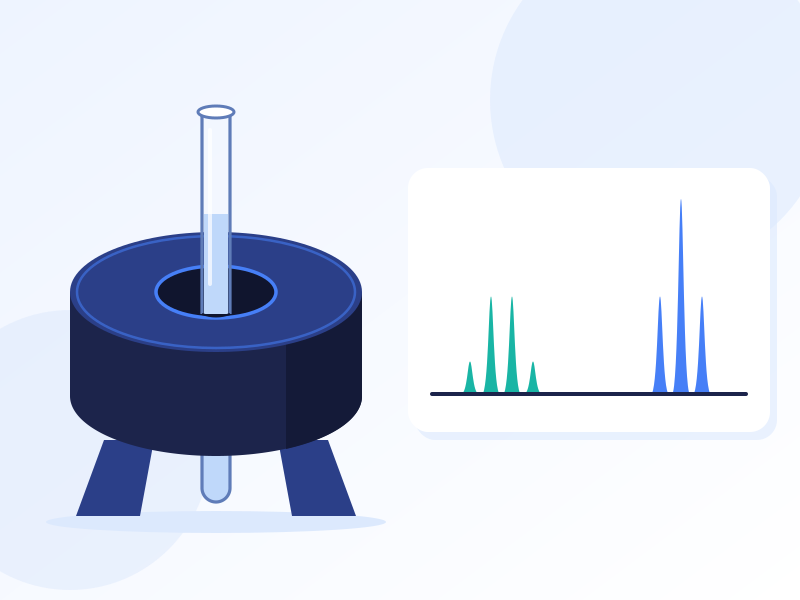
Carbon-13 NMR Spectroscopy
¹³C NMR spectroscopy: carbon environments, number of peaks, chemical shift and deducing structures.
Start revising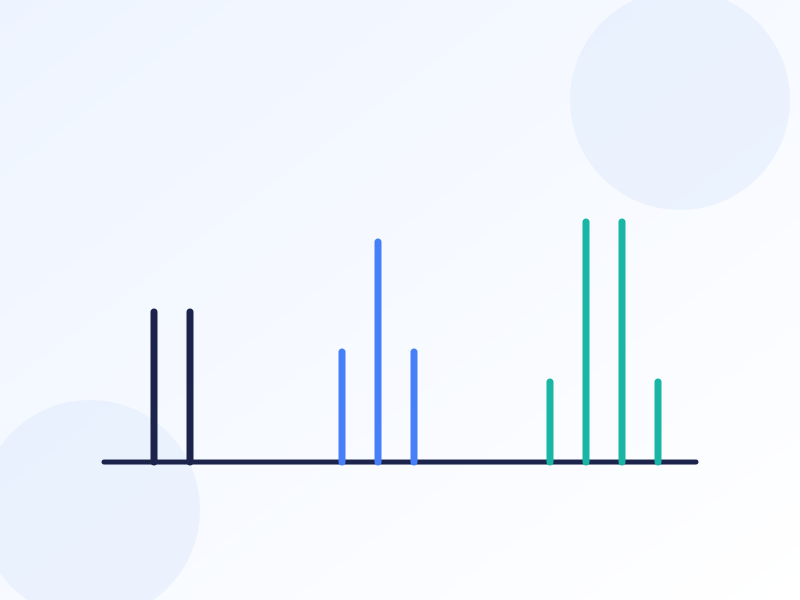
Proton NMR Spectroscopy
¹H NMR spectroscopy: chemical shift, integration, the n + 1 rule and splitting patterns, and deducing structures from spectra.
Start revisingSummary Map
Download, print and revise the key facts of this topic at a glance.
Summary map
Download, print and revise the key facts of this topic at a glance.

NMR Spectroscopy Map
AQA A-level Chemistry · 3.3.15 Nuclear magnetic resonance spectroscopy
The whole section on one A4 page: ¹³C NMR, TMS and solvents, ¹H shifts and areas, splitting, common patterns and deducing a structure.
© 2026 Online Learning System. For personal study: printing is allowed; editing, copying and redistribution are not.
Virtual Lessons
Recorded video lessons that teach the topic step by step.
The Virtual Lessons for 3.3.15 Nuclear magnetic resonance spectroscopy are being recorded.
MCQ Bank
Multiple-choice papers on this topic, marked the moment you submit.
The MCQ papers for 3.3.15 Nuclear magnetic resonance spectroscopy are being written.
SAQ Bank
Written, drawn and worked exam practice on this topic.
The exam practice papers for 3.3.15 Nuclear magnetic resonance spectroscopy are being written.
Revision Game
Match reagents to products, with your board's reagents and conditions.
The revision game for 3.3.15 Nuclear magnetic resonance spectroscopy is being built.
Study Cards
Pick a deck, then turn each card to check what you remember.
Specification
Every specification point in this topic, in the exam board's own words. Rate how confident you are with each one.
Self-assessment · 14 points
Sign in to rate how confident you feel about each point. Your ratings are saved to your account, follow you to any device, and appear beside your KASP analytics, kept apart from your marks.
3.3.15
- iv
know that integrated spectra indicate the relative numbers of 1H atoms in different environments
Revise - ix a
use the n+1 rule to deduce doublet spin-spin splitting patterns of adjacent non-equivalent protons in aliphatic compounds
Revise - ix b
use the n+1 rule to deduce triplet spin-spin splitting patterns of adjacent non-equivalent protons in aliphatic compounds
Revise - ix c
use the n+1 rule to deduce quartet spin-spin splitting patterns of adjacent non-equivalent protons in aliphatic compounds
Revise - vii a
use 1H NMR spectra and chemical shift data to suggest possible structures or part structures for molecules
Revise - vii b
use 13C NMR spectra and chemical shift data to suggest possible structures or part structures for molecules
Revise - viii
use integration data from 1H NMR spectra to determine the relative numbers of equivalent protons in the molecule
Revise
Keep this note — free
Save your progress across every AQA topic. A free account remembers which topics you have covered, saves your question scores, and syncs across your phone and laptop.
- Track every topic you have finished
- Keep your practice-question scores
- No payment, no card, free forever
Already registered? Log in