Topic 31
Halogen
Compounds
Topic 31 covers the halogenoarenes: how chlorobenzene and bromobenzene are made by electrophilic substitution of an arene with Cl₂ or Br₂ and an AlCl₃, AlBr₃ or iron catalyst (31.1.1), and why a halogenoarene is so much less reactive towards nucleophiles than a halogenoalkane, exemplified by chlorobenzene and chloroethane: the shorter, stronger C–Cl bond with partial double-bond character from the lone pair delocalised into the ring, and the electron-rich ring that repels nucleophiles (31.1.2). The AS halogenoalkane chemistry is in Topic 15.
Revision Notes
2 revision notes, in the order the specification teaches them.
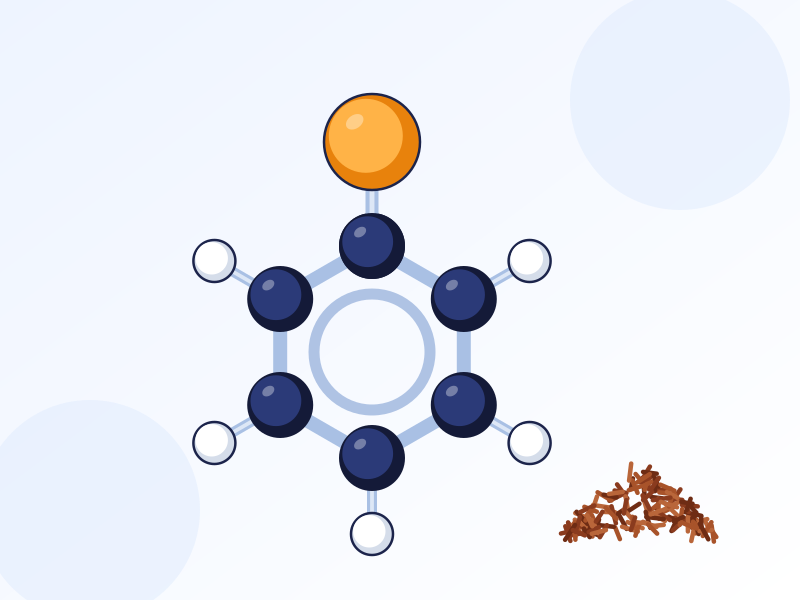
Making Halogenoarenes by Electrophilic Substitution
Preparing halogenoarenes from benzene and methylbenzene by electrophilic substitution with a halogen and an aluminium halide catalyst.
Start revising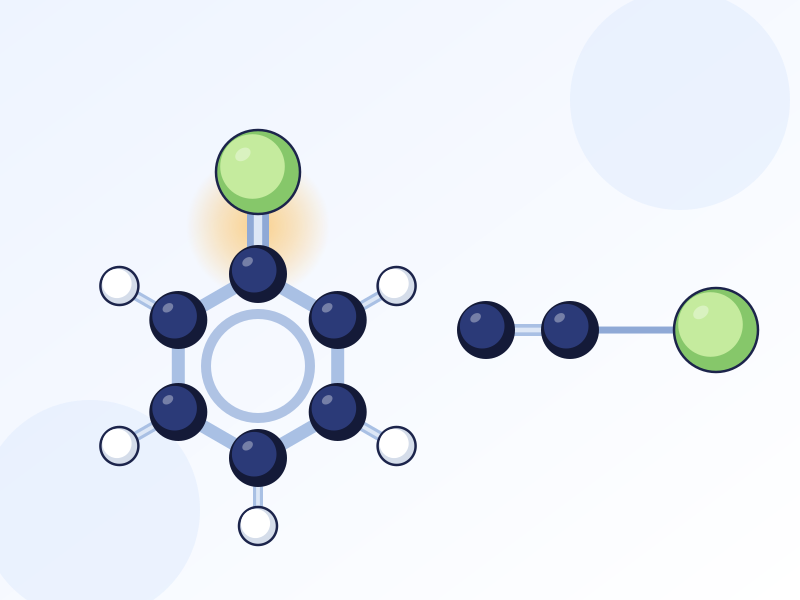
Why Halogenoarenes Resist Substitution: Chlorobenzene versus Chloroethane
The difference in reactivity between chloroethane and chlorobenzene towards nucleophilic substitution.
Start revisingSummary Map
Every reaction of the topic on one printable page.
The summary map for Topic 31 Halogen compounds is being drawn.
Virtual Lessons
Recorded video lessons that teach the topic step by step.
The Virtual Lessons for Topic 31 Halogen compounds are being recorded.
MCQ Bank
Multiple-choice papers on this topic, marked the moment you submit.
The MCQ papers for Topic 31 Halogen compounds are being written.
SAQ Bank
Written, drawn and worked exam practice on this topic.
The exam practice papers for Topic 31 Halogen compounds are being written.
Revision Game
Match reagents to products, with your board's reagents and conditions.
The revision game for Topic 31 Halogen compounds is being built.
Study Cards
Pick a deck, then turn each card to check what you remember.
Specification
Every specification point in this topic, in the exam board's own words. Rate how confident you are with each one.
Cambridge no longer issues a data booklet: the data you need are given in each question, and the syllabus has a Data section.
Self-assessment · 3 points
Sign in to rate how confident you feel about each point. Your ratings are saved to your account, follow you to any device, and appear beside your KASP analytics, kept apart from your marks.
31.1.1
- a
recall the reaction by which halogenoarenes can be produced: substitution of an arene with Cl2 or Br2 in the presence of a catalyst, AlCl3 or AlBr3 to form a halogenoarene, exemplified by benzene to form chlorobenzene
Revise - b
recall the reaction by which halogenoarenes can be produced: substitution of an arene with Cl2 or Br2 in the presence of a catalyst, AlCl3 or AlBr3 to form a halogenoarene, exemplified by methylbenzene to form 2-chloromethylbenzene and 4-chloromethylbenzene
Revise
31.1.2
- 31.1.2
explain the difference in reactivity between a halogenoalkane and a halogenoarene as exemplified by chloroethane and chlorobenzene
Revise
Keep this note — free
Save your progress across every Cambridge topic. A free account remembers which topics you have covered, saves your question scores, and syncs across your phone and laptop.
- Track every topic you have finished
- Keep your practice-question scores
- No payment, no card, free forever
Already registered? Log in