Topic 14
Redox II
Topic 14 builds on Redox I. It covers oxidation and reduction of s-, p- and d-block elements, standard electrode potentials and the standard hydrogen electrode, electrochemical cells, cell diagrams and standard emf, the electrochemical series, thermodynamic feasibility, kinetic inhibition and disproportionation, the link between E⦵cell, total entropy and ln K, storage cells, hydrogen–oxygen and methanol fuel cells, and redox titrations with Fe²⁺/MnO₄⁻ and I₂/S₂O₃²⁻.
Revision Notes
9 revision notes, in the order the specification teaches them.

Redox, Oxidation Numbers and Half-Equations
Redox: electron transfer, oxidation numbers, oxidising and reducing agents and constructing redox equations from half-equations.
Start revising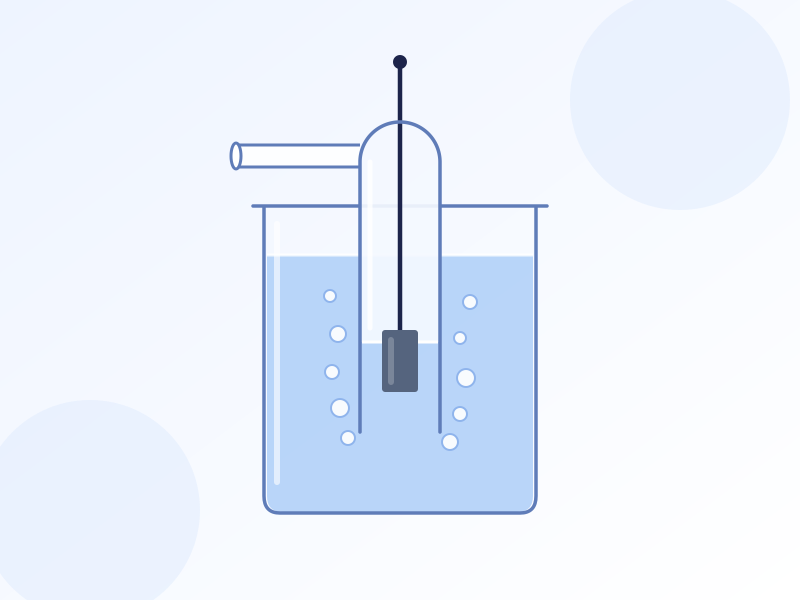
Standard Electrode Potentials and the Hydrogen Electrode
The standard electrode potential: half-cells, standard conditions of 298 K, 100 kPa and 1.00 mol dm⁻³, and the standard hydrogen electrode.
Start revising
Electrochemical Cells, Cell Diagrams and Cell Potentials
Electrochemical cells: half-cells, the salt bridge, cell diagrams and calculating the standard emf.
Start revising
The Electrochemical Series and Feasibility of Reactions
The electrochemical series: oxidising and reducing agents, predicting feasibility from E⦵ values and the limitations of the predictions.
Start revising
Cell Potential, Total Entropy and Equilibrium Constants
E⦵cell, total entropy change and ln K: how cell potential measures the feasibility and extent of a reaction.
Start revising
Storage Cells
Storage cells: electrode reactions, overall equations and cell voltage from electrode potential data.
Start revising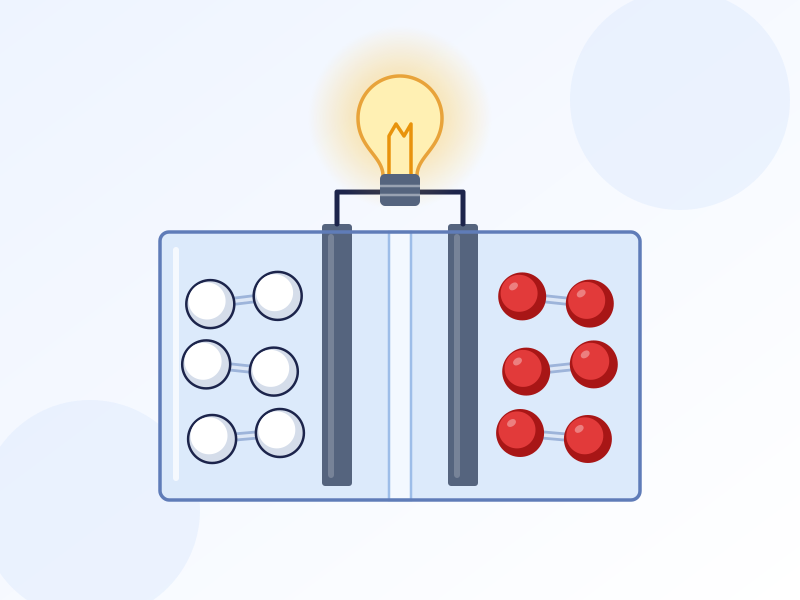
Fuel Cells
Fuel cells: the hydrogen–oxygen fuel cell, electrode half-equations in acidic and alkaline electrolytes and the overall reaction.
Start revising
Redox Titrations: Iron(II) and Manganate(VII)
Redox titrations with potassium manganate(VII) and iron(II): equations, method, end point and calculations.
Start revising
Redox Titrations: Iodine and Thiosulfate
Iodine–thiosulfate titrations: equations, the starch indicator, method and calculations.
Start revisingSummary Map
Download, print and revise the key facts of this topic at a glance.
Summary maps
Download, print and revise the key facts of this topic at a glance.

Electrode Potentials Map
Edexcel A Level Chemistry · Topic 14A Electrode Potentials and Cells
The whole section on one A4 page: half-equations, standard electrode potentials, cells and E⦵cell, the electrochemical series and feasibility, limits, entropy and K, and storage and fuel cells.
Redox Titrations Map
Edexcel A Level Chemistry · Topic 14B Redox Titrations
The whole section on one A4 page: manganate(VII) with iron(II), Core Practical 11, other reducing agents, iodine and thiosulfate, ratios through iodine, and uncertainty and validity.
© 2026 Online Learning System. For personal study: printing is allowed; editing, copying and redistribution are not.
Virtual Lessons
Recorded video lessons that teach the topic step by step.
The Virtual Lessons for Topic 14 - Redox II are being recorded.
MCQ Bank
Multiple-choice papers on this topic, marked the moment you submit.
The MCQ papers for Topic 14 - Redox II are being written.
SAQ Bank
Written, drawn and worked exam practice on this topic.
The exam practice papers for Topic 14 - Redox II are being written.
Revision Game
Match reagents to products, with your board's reagents and conditions.
The revision game for Topic 14 - Redox II is being built.
Study Cards
Pick a deck, then turn each card to check what you remember.
Specification
Every specification point in this topic, in the exam board's own words. Rate how confident you are with each one.
Self-assessment · 28 points
Sign in to rate how confident you feel about each point. Your ratings are saved to your account, follow you to any device, and appear beside your KASP analytics, kept apart from your marks.
14.1
- 14.1
understand the terms ‘oxidation’ and ‘reduction’ in terms of electron transfer, applied to s-, p- and d-block elements
Revise
14.2
- 14.2
understand the terms ‘oxidation’ and ‘reduction’ in terms of changes in oxidation number, applied to s-, p- and d-block elements
Revise
14.3
14.4
14.5
14.6
- i
understand that different methods are used to measure standard electrode potentials of: metals or non-metals in contact with their ions in aqueous solution
Revise - ii
understand that different methods are used to measure standard electrode potentials of: ions of the same element with different oxidation numbers
Revise
14.7
14.8
14.9
14.10
- 14.10
be able to predict the thermodynamic feasibility of a reaction using standard electrode potentials
Revise
14.11
- 14.11
understand that Eo cell is directly proportional to the total entropy change and to ln K for a reaction
Revise
14.12
14.13
14.14
14.15
14.16
- 14.16
understand that the energy released on the reaction of a fuel with oxygen is utilised in a fuel cell to generate a voltage Knowledge that methanol and other hydrogen-rich fuels are used in fuel cells is expected.
Revise
14.17
14.18
14.19
Keep this note — free
Save your progress across every Edexcel topic. A free account remembers which topics you have covered, saves your question scores, and syncs across your phone and laptop.
- Track every topic you have finished
- Keep your practice-question scores
- No payment, no card, free forever
Already registered? Log in