Revision Notes MCQ Bank SAQ Bank Study Cards Courses Teachers Blog
Edexcel A Level Chemistry

Alkanes from Crude Oil

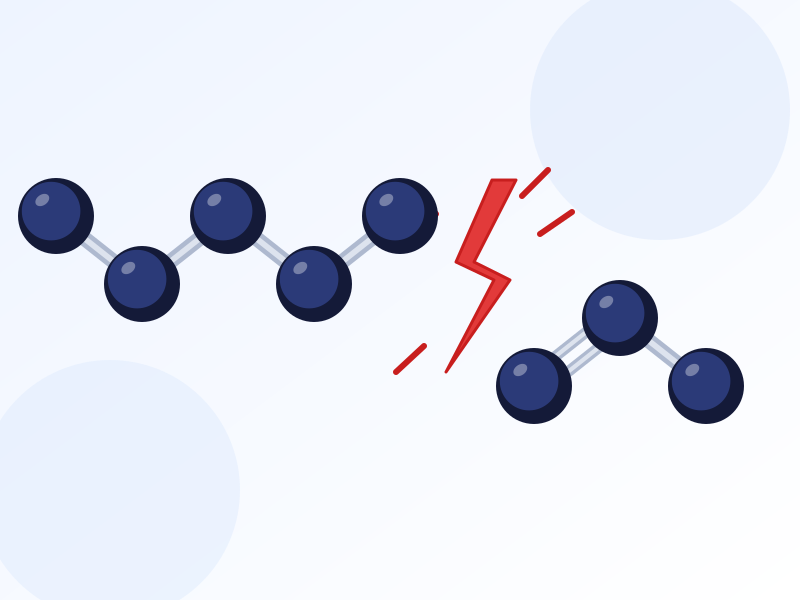
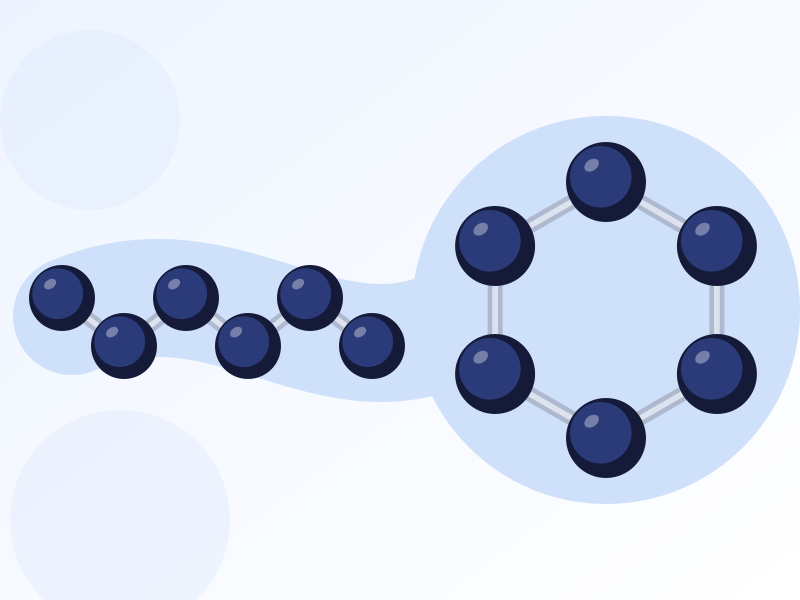
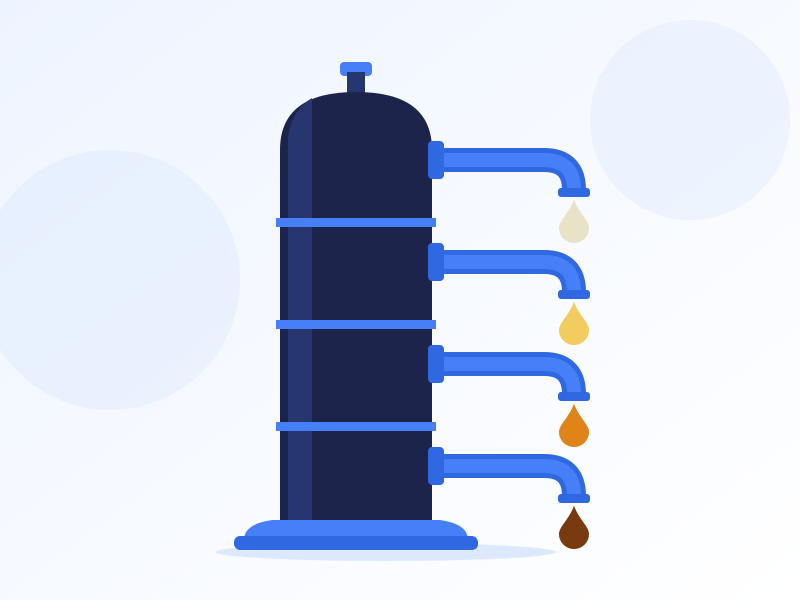
Crude oil is a complex mixture of hydrocarbons. This section breaks the topic into the three key industrial processes students need to recognise: fractional distillation, cracking and reforming.

Exam Papers
Paper 2
9CH0/02
Specification Points
6.10
1 point covered
Sub-topics
3 lessons
Revision notes available
Exam Board
Edexcel
Pearson 9CH0

Revision Notes

3 revision notes, in the order the specification teaches them.
Summary Map

Download, print and revise the reactions of this topic at a glance.

Summary maps

Download, print and revise the reactions of this topic at a glance.

Illustration of a summary map: compounds joined by reaction arrows
Summary map · PDF

Alkanes Map

Edexcel A Level Chemistry · Topic 6B Alkanes

Every reaction on one A4 page: reagents, conditions and reaction type for each arrow, colour coded, with the key tests.

Download the map5 reactions · A4 portrait · print ready
Illustration of a summary map: compounds joined by reaction arrows
Summary map · PDF

Alkanes Summary Map

Edexcel A Level Chemistry · Topic 6B Alkanes

The whole section on one A4 page: crude oil, cracking, reforming, combustion, pollutants and biofuels, with the radical substitution mechanism in a table.

Download the map6 key ideas + the mechanism · A4 portrait · print ready

© 2026 Online Learning System. For personal study: printing is allowed; editing, copying and redistribution are not.

Virtual Lessons

Recorded video lessons that teach the topic step by step.

Illustration of a video lesson playing on a screenWith the course

Virtual Lessons

Taught step by step in 4 recorded video lessons, to watch at your own pace.

Topic 6B Alkanes taught by a specialist chemistry teacher, in 4 recorded video lessons that follow the specification.

  • Learn it before you revise itEach lesson explains the chemistry step by step, with the diagrams, mechanisms and worked examples the exam expects.
  • At your own pacePause, rewind and rewatch any part. Each lesson opens where you stopped.
  • Your progress is keptA lesson is ticked off once you have watched most of it, here and in your course on Moodle.

MCQ Bank

Multiple-choice papers on this topic, marked the moment you submit. MCQ (A) is free.

Illustration of a multiple-choice paper with one answer tickedMCQ (A) free

Test yourself: 5 MCQ papers

Exam-style multiple-choice papers, marked the moment you submit with every answer explained. MCQ (A) is free.

5 exam-style multiple-choice papers, MCQ (A) to (E): 110 questions on Topic 6B Alkanes, written the way the exam asks them.

  • Marked the moment you submitYour score straight away, with every answer explained, right or wrong.
  • Revise what you missedEach explanation links to the revision notes for that point.
  • MCQ (A) is freeTry the first paper now. MCQ (B) to (E) come with the course.

SAQ Bank

Written, drawn and worked exam practice on this topic, marked by a specialist chemistry teacher.

Illustration of a written exam paper with a drawn structure and a penWith the course

Written and drawn answers: 10 papers

Draw, write and calculate the way the exam asks, then a specialist chemistry teacher marks your work.

10 exam papers, (A) to (J): 122 questions on Topic 6B Alkanes with no multiple choice. You write explanations, work out calculations and draw answers: structures, mechanisms and diagrams.

  • Answer the way the exam asksThe real paper wants written, worked and drawn answers, so that is how you practise.
  • Marked by a teacher, assisted by KASPA specialist chemistry teacher marks every answer against the mark scheme, with feedback on what to fix.
  • One paper marked each weekYour marked paper comes back here with every marking point shown.

Revision Game

Match reagents to products, free, with your board's reagents and conditions.

Illustration of memory game cards, two turned face up as a matching pairFree

Revision Game: Alkanes

Turn the cards over two at a time: match reagents to what they make, and find how each product is made.

A free memory game on the reactions in this topic, with your board's reagents, conditions and spec points.

  • Two ways to playMatch each set of reagents to what the reaction makes, or see a product and find the reactant and reagents that make it.
  • Drawn the way the exam draws themEvery structure is drawn in ChemDraw, with the reagents and conditions your exam board asks for.
  • It countsRounds earn XP and keep your streak going, and every correct match shows in your KASP analytics, apart from your marks.

Study Cards

Pick a deck, then turn each card to check what you remember.

Specification

Every specification point in this topic, in the exam board's own words. Rate how confident you are with each one.

Self-assessment · 34 points

Sign in to rate how confident you feel about each point. Your ratings are saved to your account, follow you to any device, and appear beside your KASP analytics, kept apart from your marks.

0 Confident0 Getting there0 Not yet34 Not rated

6

  1. B.8

    know the general formula for alkanes

    Revise
  2. B.9

    know that alkanes and cycloalkanes are saturated hydrocarbons

    Revise
  3. B.9 a

    know that alkanes are hydrocarbons

    Revise
  4. B.9 b

    know that cycloalkanes are hydrocarbons

    Revise
  5. B.9 c

    know that alkanes are saturated

    Revise
  6. B.9 d

    know that cycloalkanes are saturated

  7. B.10 a

    understand that alkane fuels are obtained from fractional distillation of crude oil

    Revise
  8. B.10 b

    understand that alkane fuels are obtained from cracking crude oil fractions

    Revise
  9. B.10 c

    understand that alkane fuels are obtained from reforming crude oil fractions

    Revise
  10. B.10 d

    know reforming is processing straight-chain hydrocarbons into branched-chain alkanes

    Revise
  11. B.10 e

    know reforming is processing straight-chain hydrocarbons into cyclic hydrocarbons for efficient combustion

    Revise
  12. B.11 a

    know carbon monoxide is formed during combustion of alkane fuels

    Revise
  13. B.11 b

    know oxides of nitrogen are formed during combustion of alkane fuels

    Revise
  14. B.11 c

    know oxides of sulfur are formed during combustion of alkane fuels

    Revise
  15. B.11 d

    know carbon particulates are formed during combustion of alkane fuels

    Revise
  16. B.11 e

    know unburned hydrocarbons are formed during combustion of alkane fuels

    Revise
  17. B.12 a

    understand problems arising from carbon monoxide toxicity

    Revise
  18. B.12 b

    understand problems arising from acidity of oxides of nitrogen

    Revise
  19. B.12 c

    understand problems arising from acidity of oxides of sulfur

    Revise
  20. B.13

    understand how the use of a catalytic converter solves some problems caused by pollutants

    Revise
  21. B.14 a

    understand the use of biodiesel as an alternative fuel compared with non-renewable fossil fuels

    Revise
  22. B.14 b

    understand the use of alcohols from renewable plant sources as alternative fuels compared with non-renewable fossil fuels

    Revise
  23. B.15i

    know that a radical: is a species with an unpaired electron and is represented in mechanisms by a single dot

    Revise
  24. B.15i a

    know that a radical is a species with an unpaired electron

    Revise
  25. B.15i b

    know that a radical is represented in mechanisms by a single dot

    Revise
  26. B.15ii

    know that a radical: is formed by homolytic fission of a covalent bond and results in the formation of radicals

    Revise
  27. B.16i

    understand the reactions of alkanes with: oxygen in air (combustion)

    Revise
  28. B.16ii

    understand the reactions of alkanes with: halogens, in terms of the mechanism of radical substitution through initiation, propagation and termination steps The use of curly half-arrows is not expected in this mechanism.

    Revise
  29. B.16ii a

    understand the reactions of alkanes with halogens

    Revise
  30. B.16ii b

    understand the initiation step of the radical substitution mechanism

    Revise
  31. B.16ii c

    understand the propagation steps of the radical substitution mechanism

    Revise
  32. B.16ii d

    understand the termination steps of the radical substitution mechanism

    Revise
  33. B.17 a

    understand limitations of radical substitution in synthesis due to further substitution reactions

    Revise
  34. B.17 b

    understand limitations of radical substitution in synthesis due to formation of a mixture of products

    Revise