Topic 15
Carbonyls,
Carboxylic Acids
and Chirality
Topic 15 is the organic chemistry of Unit 4. It covers chirality and optical activity, with optical activity as evidence for reaction mechanisms; aldehydes and ketones, their tests, reduction and nucleophilic addition of HCN; carboxylic acids, acyl chlorides, esters and polyesters; and the analytical techniques used to identify organic compounds: high resolution mass spectrometry, carbon-13 and proton NMR, and chromatography including GC and HPLC.
Revision Notes
14 revision notes, in the order the specification teaches them.
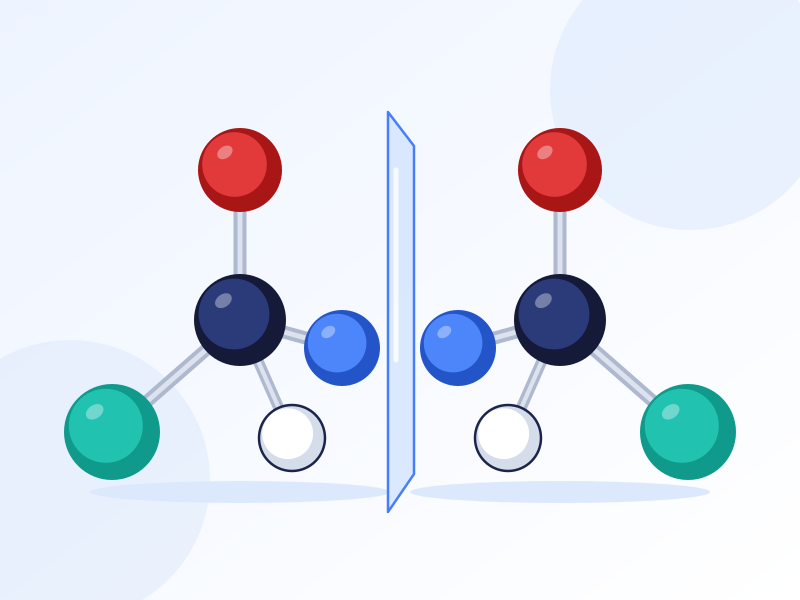
Optical Isomerism and Chirality
Optical isomerism and chirality: chiral centres, asymmetric carbon atoms, enantiomers as non-superimposable mirror images and drawing 3D diagrams.
Start revising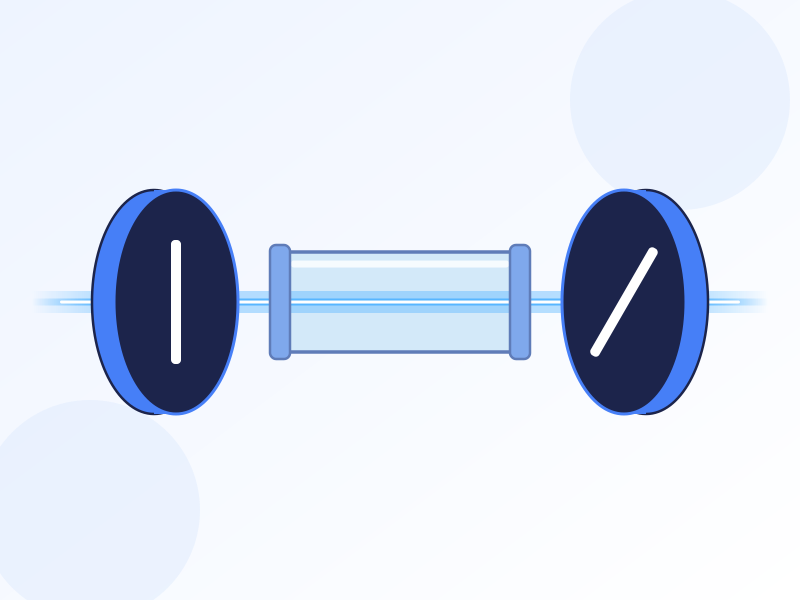
Optical Activity and Racemic Mixtures
Optical activity: plane-polarised light, enantiomers, racemic mixtures and optical activity as evidence for reaction mechanisms.
Start revising
Aldehydes and Ketones: Structure, Naming and Properties
Aldehydes and ketones: functional groups, nomenclature and formulae, the polar carbonyl group, boiling temperatures and solubility in water.
Start revising
Oxidation and Tests for Carbonyl Compounds
Oxidation and tests for aldehydes and ketones: Fehling’s solution, Tollens’ reagent, acidified dichromate(VI), 2,4-DNPH, iodoform test.
Start revising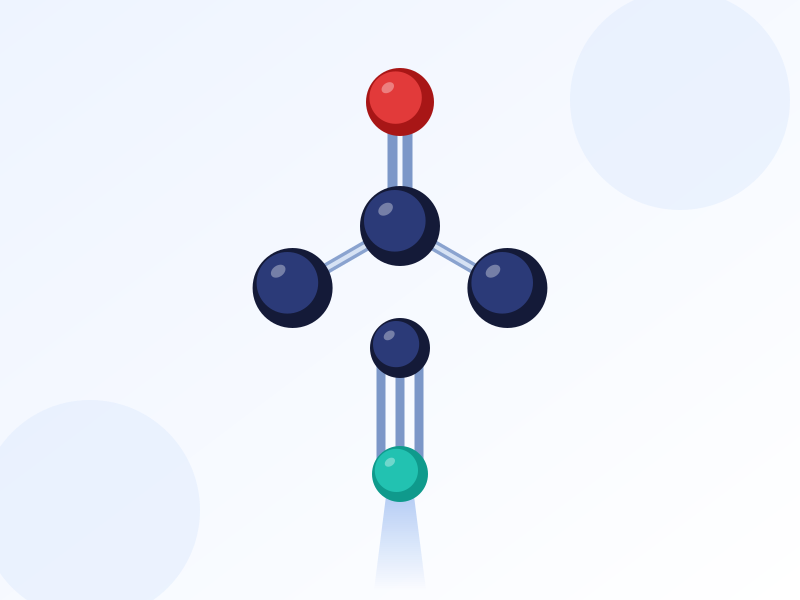
Reduction and Nucleophilic Addition of Carbonyl Compounds
Carbonyl reduction with LiAlH₄ and nucleophilic addition of HCN: equations, the mechanism and the formation of hydroxynitriles.
Start revising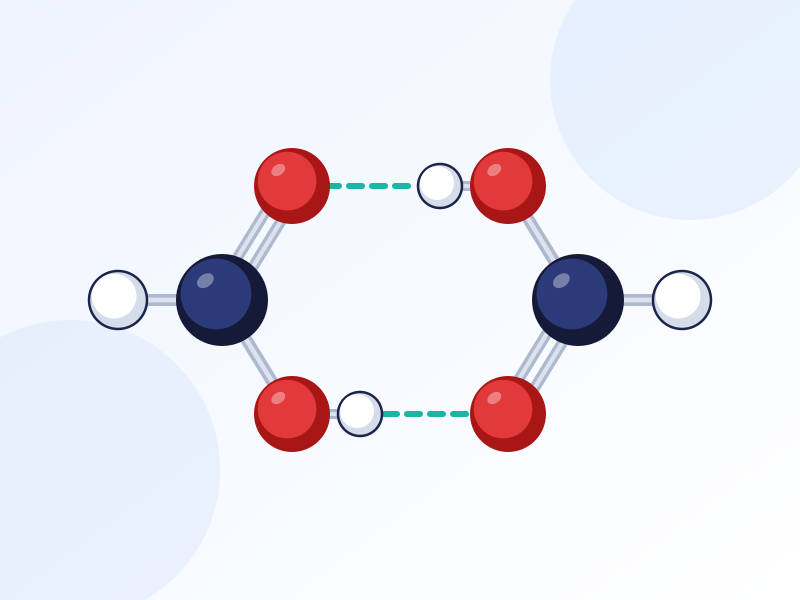
Carboxylic Acids: Structure, Properties and Preparation
Carboxylic acids: structure and naming, hydrogen bonding, boiling temperature and solubility, and preparation by oxidation and nitrile hydrolysis.
Start revising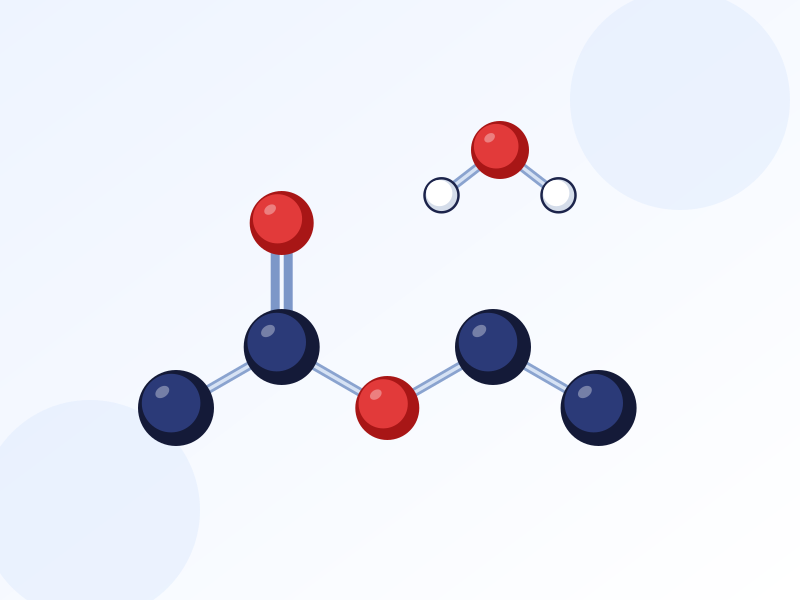
Reactions of Carboxylic Acids
Reactions of carboxylic acids: salts, esterification, reduction and the formation of acyl chlorides.
Start revising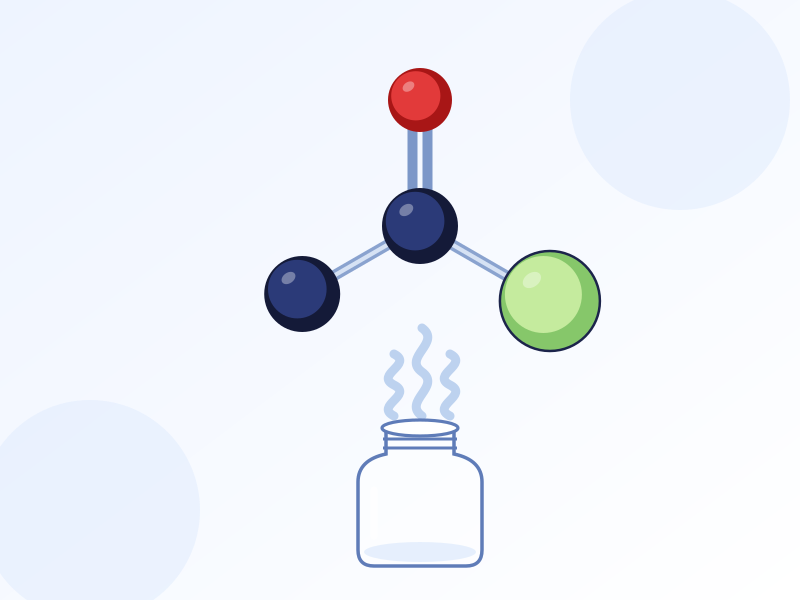
Acyl Chlorides
Acyl chlorides: structure, reactions with water, alcohols, ammonia and amines.
Start revising
Esters, Hydrolysis and Polyesters
Esters: naming, formation, acid and alkaline hydrolysis and condensation polymerisation to polyesters.
Start revising
High Resolution Mass Spectrometry
High resolution mass spectrometry: accurate relative molecular masses to four decimal places and identifying molecular formulae.
Start revising
Carbon-13 NMR Spectroscopy
¹³C NMR spectroscopy: carbon environments, number of peaks, chemical shift and deducing structures.
Start revising
Proton NMR Spectroscopy
¹H NMR spectroscopy: chemical shift, integration, the n + 1 rule and splitting patterns, and deducing structures from spectra.
Start revising
Chromatography: Paper, Thin-Layer and Rf Values
Chromatography: stationary and mobile phases, paper and thin-layer chromatography and Rf values.
Start revising
Gas Chromatography, HPLC and Mass Spectrometry
GC and HPLC: retention times and GC-MS.
Start revisingSummary Map
Download, print and revise the reactions of this topic at a glance.
Summary maps
Download, print and revise the reactions of this topic at a glance.

Aldehydes and Ketones Map
Edexcel International A Level Chemistry · Unit 4 · Topic 15
Every reaction on one A4 page: reagents, conditions and reaction type for each arrow, colour coded, with the key tests.
Carboxylic Acids Map
Edexcel International A Level Chemistry · Unit 4 · Topic 15
Every reaction on one A4 page: reagents, conditions and reaction type for each arrow, colour coded, with the key tests.
Acyl Chlorides Map
Edexcel International A Level Chemistry · Unit 4 · Topic 15
Every reaction on one A4 page: reagents, conditions and reaction type for each arrow, colour coded, with the key tests.
Esters Map
Edexcel International A Level Chemistry · Unit 4 · Topic 15
Every reaction on one A4 page: reagents, conditions and reaction type for each arrow, colour coded, with the key tests.
Chirality Map
Edexcel International A Level Chemistry · Unit 4 · Topic 15A Chirality
The whole section on one A4 page: chiral centres, enantiomers, drawing in 3D, optical activity, racemic mixtures and the evidence for mechanisms.
Carbonyl Compounds Summary Map
Edexcel International A Level Chemistry · Unit 4 · Topic 15B Carbonyl Compounds
The whole section on one A4 page: naming, forces and solubility, oxidation tests, reduction, adding HCN, 2,4-DNPH and iodoform.
Carboxylic Acids and Derivatives Summary Map
Edexcel International A Level Chemistry · Unit 4 · Topic 15C Carboxylic Acids and Derivatives
The whole section on one A4 page: carboxylic acids, making them, their reactions, acyl chlorides, esters and polyesters.
Spectroscopy and Chromatography Map
Edexcel International A Level Chemistry · Unit 4 · Topic 15D Spectroscopy and Chromatography
The whole section on one A4 page: high resolution mass spectrometry, ¹³C and ¹H NMR, splitting, paper and thin-layer chromatography, GC and HPLC.
© 2026 Online Learning System. For personal study: printing is allowed; editing, copying and redistribution are not.
Virtual Lessons
Recorded video lessons that teach the topic step by step.
The Virtual Lessons for Topic 15 Carbonyls, Carboxylic Acids and Chirality are being recorded.
MCQ Bank
Multiple-choice papers on this topic, marked the moment you submit.
The MCQ papers for Topic 15 Carbonyls, Carboxylic Acids and Chirality are being written.
SAQ Bank
Written, drawn and worked exam practice on this topic.
The exam practice papers for Topic 15 Carbonyls, Carboxylic Acids and Chirality are being written.
Revision Game
Match reagents to products, free, with your board's reagents and conditions.

Study Cards
Pick a deck, then turn each card to check what you remember.
Specification
Every specification point in this topic, in the exam board's own words. Rate how confident you are with each one.
Self-assessment · 73 points
Sign in to rate how confident you feel about each point. Your ratings are saved to your account, follow you to any device, and appear beside your KASP analytics, kept apart from your marks.
15.1
- 15.1
know that optical isomerism is a result of chirality in molecules with a single chiral centre
Revise
15.2
15.3
- 15.3
know that optical activity is the ability of a single optical isomer to rotate the plane of polarisation of plane-polarised monochromatic light in molecules containing a single chiral centre
Revise
15.4
15.5
15.6
15.7
15.8
- i
understand the reactions of carbonyl compounds with: Fehling’s or Benedict’s solution, Tollens’ reagent and acidified dichromate(VI) ions In equations, the oxidising agent can be represented as [O].
Revise - ii
understand the reactions of carbonyl compounds with: lithium tetrahydridoaluminate(III) (lithium aluminium hydride) in dry ether (ethoxyethane) In equations, the reducing agent can be represented by [H].
Revise - iii
understand the reactions of carbonyl compounds with: HCN, in the presence of KCN, as a nucleophilic addition reaction, using curly arrows, relevant lone pairs, dipoles and evidence of optical activity to show the mechanism
Revise - iv
understand the reactions of carbonyl compounds with: 2,4-dinitrophenylhydrazine (2,4-DNPH), as a qualitative test for the presence of a carbonyl group and to identify a carbonyl compound given data of the melting temperatures of derivatives The equation for this reaction is not required.
Revise - v
understand the reactions of carbonyl compounds with: iodine in the presence of alkali (the iodoform test)
Revise
15.9
15.10
15.11
15.12
- i
understand the reactions of carboxylic acids with: lithium tetrahydridoaluminate(III) (lithium aluminium hydride) in dry ether (ethoxyethane)
Revise - iii
understand the reactions of carboxylic acids with: phosphorus(V) chloride (phosphorus pentachloride)
Revise - iv
understand the reactions of carboxylic acids with: alcohols in the presence of an acid catalyst
Revise
15.13
15.14
15.15
15.16
- 15.16
understand how polyesters such as terylene are formed by condensation polymerisation reactions
Revise
15.17
- i
be able to use data from mass spectra to: suggest possible structures of a simple organic compound given accurate relative molecular masses
Revise - ii
be able to use data from mass spectra to: calculate the accurate relative molecular mass of a compound, given accurate relative atomic masses to four decimal places
Revise
15.18
- 15.18
understand that carbon-13, (13C) NMR spectroscopy provides information about the positions of 13C atoms in a molecule
Revise
15.19
- i
be able to use data from 13C NMR spectroscopy to: predict the different environments for carbon atoms present in a molecule, given values of chemical shift, δ
Revise - ii
be able to use data from 13C NMR spectroscopy to: justify the number of peaks present in a 13C NMR spectrum in terms of the number of carbon atoms in different environments
Revise
15.20
- i
be able to use both low and high resolution proton NMR spectroscopy to: predict the different types of proton present in a molecule, given values of chemical shift, δ
Revise - ii
be able to use both low and high resolution proton NMR spectroscopy to: relate relative peak areas, or ratio number of protons, to the relative numbers of 1H atoms in different environments
Revise - iii
be able to use both low and high resolution proton NMR spectroscopy to: deduce the splitting patterns of adjacent, non-equivalent protons using the (n+1) rule and hence suggest the possible structures for a molecule
Revise - iv
be able to use both low and high resolution proton NMR spectroscopy to: predict the chemical shifts and splitting patterns of the 1H atoms in a given molecule
Revise
15.21
15.22
15.23
Keep this note — free
Save your progress across every Edexcel IAL topic. A free account remembers which topics you have covered, saves your question scores, and syncs across your phone and laptop.
- Track every topic you have finished
- Keep your practice-question scores
- No payment, no card, free forever
Already registered? Log in