Topic 25
Equilibria
Topic 25 takes equilibrium beyond Kc and Kp. The first pages cover conjugate acids and bases, pH, Ka, pKa and Kw with calculations for strong acids, strong alkalis and weak acids, and buffer solutions: how they are made, how they control pH, their uses and the role of HCO₃⁻ in blood, and buffer pH calculations. The last two pages cover the solubility product, Ksp, with the common ion effect, and partition coefficients, Kpc.
Revision Notes
8 revision notes, in the order the specification teaches them.
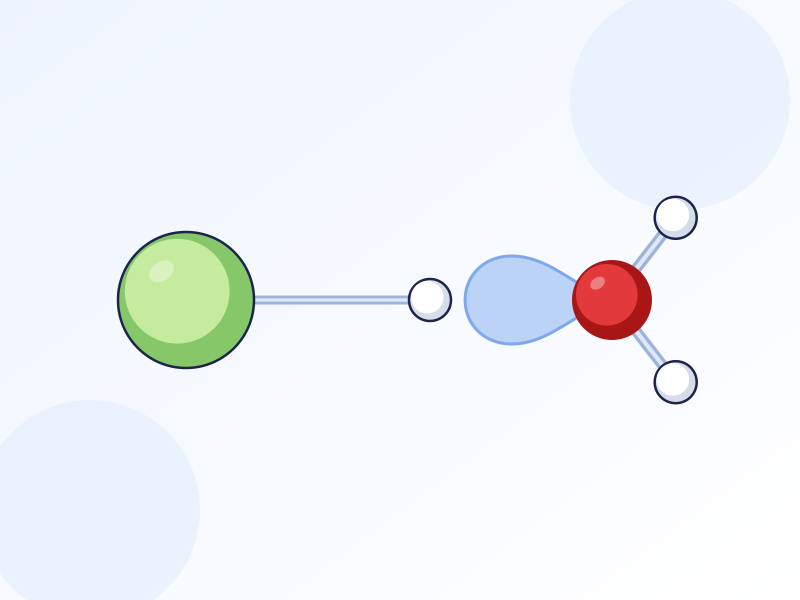
Brønsted–Lowry Acids, Bases and Conjugate Pairs
Brønsted–Lowry acids and bases: proton donors and acceptors, proton transfer, conjugate acid-base pairs and water as an acid and a base.
Start revising
pH and Strong Acids
PH and strong acids: pH = −log[H⁺], [H⁺] = 10⁻ᵖᴴ, strong and weak acids, and calculating the pH of strong acids.
Start revising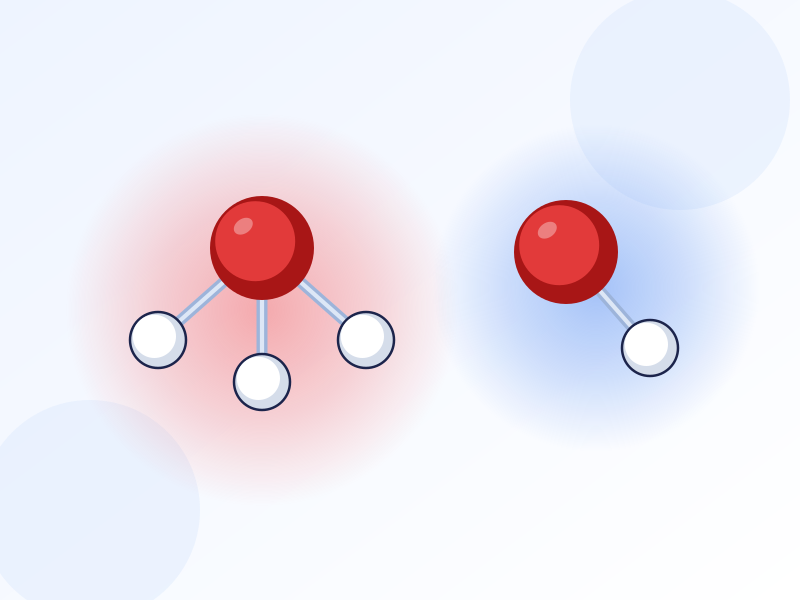
The Ionic Product of Water, Kw, and Strong Bases
The ionic product of water: Kw = [H⁺][OH⁻], pKw, the effect of temperature on Kw and neutral pH, and the pH of strong bases.
Start revising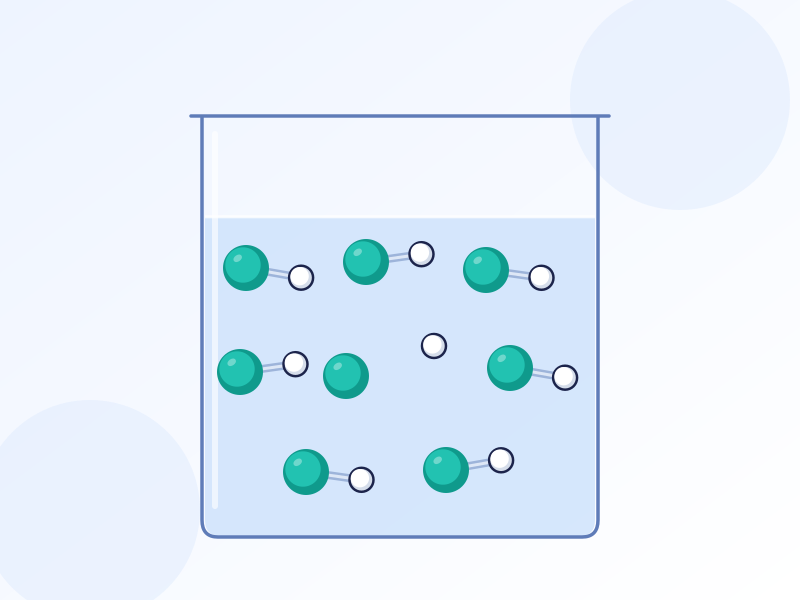
Weak Acids: Ka and pKa
Weak acids: the Ka expression, pKa, calculating the pH of a weak acid, finding Ka from pH, and the limits of the approximations.
Start revising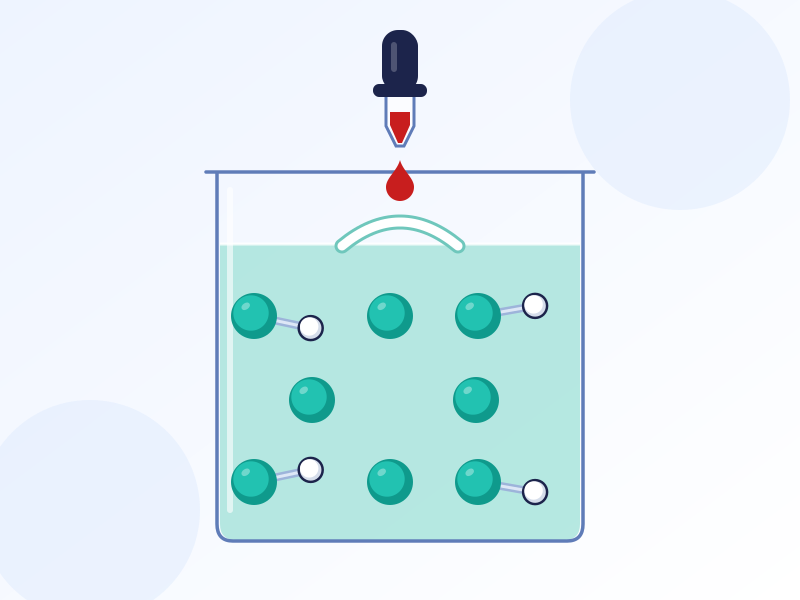
Buffer Solutions: How They Work and Why They Matter
Buffer solutions: making acidic and basic buffers, how a buffer resists pH change, and the blood buffer system.
Start revising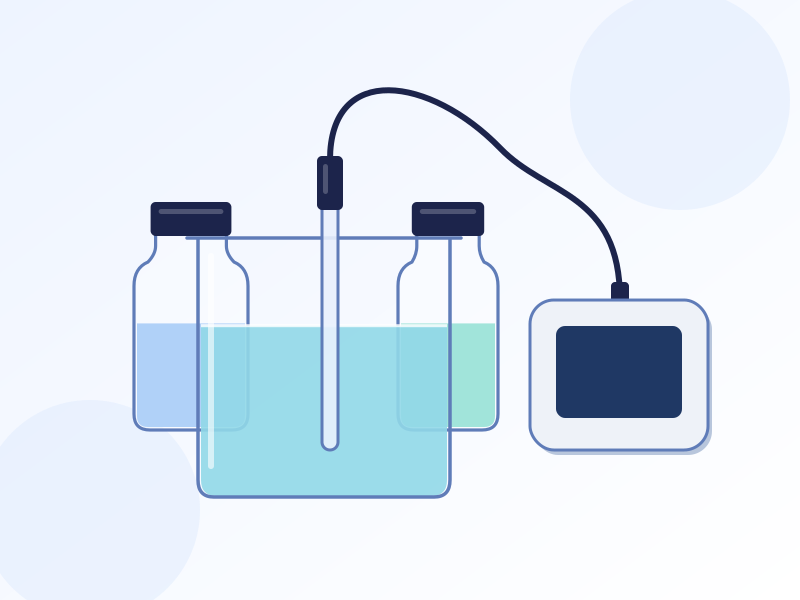
Calculating the pH of a Buffer Solution
Calculating buffer pH: [H⁺] = Ka × [HA]/[A⁻], buffers by partial neutralisation, making a buffer of a given pH, and pH after adding acid or alkali.
Start revising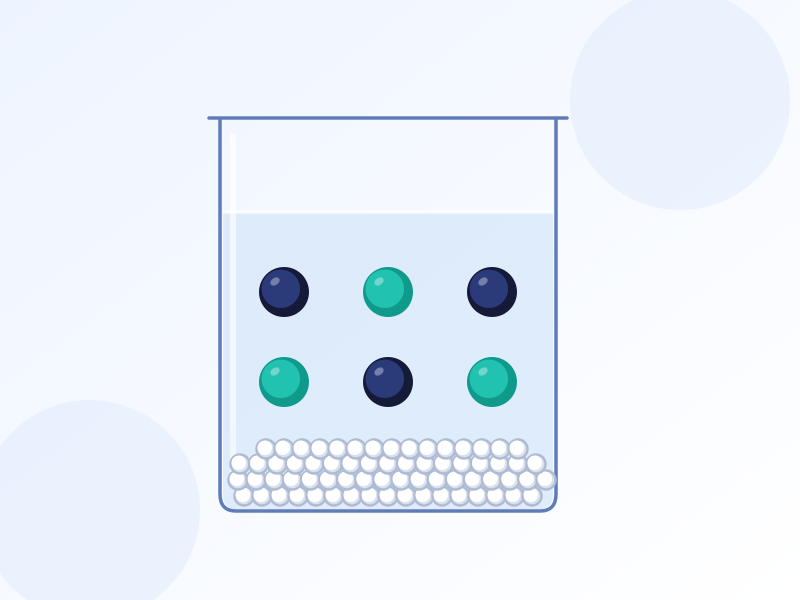
Solubility Product, Ksp, and the Common Ion Effect
The solubility product: Ksp expressions and units, calculating Ksp and solubility, and the common ion effect with calculations.
Start revising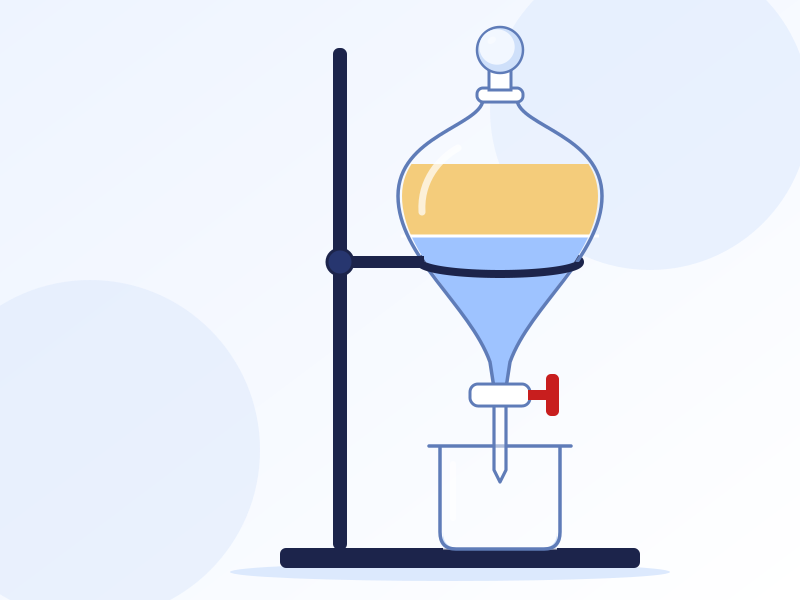
Partition Coefficients, Kpc
Partition coefficients: the meaning of Kpc, calculations for a solute between two immiscible solvents, and the effect of polarity.
Start revisingSummary Map
Download, print and revise the key facts of this topic at a glance.
Summary maps
Download, print and revise the key facts of this topic at a glance.

Acids, Bases and pH Map
Cambridge International AS & A Level Chemistry · Topic 25 Equilibria · 25.1 Acids, bases and pH
The whole section on one A4 page: Brønsted–Lowry acids and bases, pH and strong acids, Kw and strong bases, weak acids and their pH.
Partition Coefficients Map
Cambridge International AS & A Level Chemistry · Topic 25 Equilibria · 25.2 Partition coefficients
The whole section on one A4 page: what Kpc means, writing Kpc, Kpc from data, solvent extraction, several portions, and polarity.
Buffers Map
Cambridge International AS & A Level Chemistry · Topic 25 Equilibria · 25.1 Buffer solutions
The whole section on one A4 page: what a buffer is, how it works, calculating buffer pH, and buffers in blood, cells and food.
Solubility Product Map
Cambridge International AS & A Level Chemistry · Topic 25 Equilibria · 25.1 Solubility product
The whole section on one A4 page: solubility equilibria, writing Kₛₚ, Kₛₚ from solubility, solubility from Kₛₚ, precipitation and the common ion effect.
© 2026 Online Learning System. For personal study: printing is allowed; editing, copying and redistribution are not.
Virtual Lessons
Recorded video lessons that teach the topic step by step.
The Virtual Lessons for Topic 25 Equilibria are being recorded.
MCQ Bank
Multiple-choice papers on this topic, marked the moment you submit.
The MCQ papers for Topic 25 Equilibria are being written.
SAQ Bank
Written, drawn and worked exam practice on this topic.
The exam practice papers for Topic 25 Equilibria are being written.
Revision Game
Match reagents to products, with your board's reagents and conditions.
The revision game for Topic 25 Equilibria is being built.
Study Cards
Pick a deck, then turn each card to check what you remember.
Specification
Every specification point in this topic, in the exam board's own words. Rate how confident you are with each one.
Cambridge no longer issues a data booklet: the data you need are given in each question, and the syllabus has a Data section.
Self-assessment · 26 points
Sign in to rate how confident you feel about each point. Your ratings are saved to your account, follow you to any device, and appear beside your KASP analytics, kept apart from your marks.
25.1.1
25.1.2
25.1.3
- d
define mathematically the term Kw and use it in calculations (Kb and the equation Kw = Ka × Kb will not be tested)
Revise
25.1.4
25.1.5
25.1.6
25.1.7
25.1.8
25.1.9
25.1.10
- a
understand and use the common ion effect to explain the different solubility of a compound in a solution containing a common ion
Revise
25.2.1
25.2.2
- 25.2.2
calculate and use a partition coefficient for a system in which the solute is in the same physical state in the two solvents
Revise
25.2.3
Keep this note — free
Save your progress across every Cambridge topic. A free account remembers which topics you have covered, saves your question scores, and syncs across your phone and laptop.
- Track every topic you have finished
- Keep your practice-question scores
- No payment, no card, free forever
Already registered? Log in