Ester
A concise revision guide to ester functional groups, ester naming, the alkyl part from the alcohol, the carboxylate part from the carboxylic acid, and ester priority in IUPAC names.
- 4.5i
- 15.13-b
What these spec points say
- 4.5i be able to apply IUPAC nomenclature rules to name compounds relevant to this specification
- 15.13-b understand nomenclature of esters
GCSE Recap: Where Esters Come From
Before you start, check what you remember from GCSE about making esters and what they are like.
What Is an Ester?
An ester is an organic compound containing the ester functional group, written as RCOOR’. This contains a carbonyl group, C=O, directly bonded to an oxygen atom that is also bonded to another carbon group.
The ester group is often shown as -COO-. The carbonyl carbon belongs to the carboxylate part of the name, while the group attached to the single-bonded oxygen gives the alkyl part of the name.
Key idea: An ester has the pattern carbonyl carbon, oxygen, carbon. This is different from a carboxylic acid, which has the pattern -COOH.
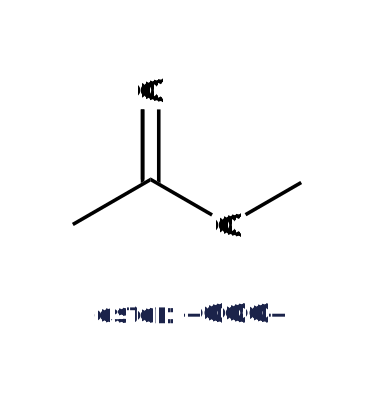
The ester functional group contains a C=O bond next to an oxygen atom bonded to another carbon group.
Quick Check: Is It an Ester?
Decide quickly whether each structural formula is an ester, a carboxylic acid or neither.
Watch: naming an ester in two halves
An ester's name comes in two parts. Which half is named first?
Naming Esters: Two Parts
An ester name is made of two parts. The first part is the alkyl group from the alcohol. The second part is the carboxylate part from the carboxylic acid.
The carboxylate part is named second and ends in -oate. For example, an ester made from methanol and ethanoic acid is named methyl ethanoate.
| Part of ester name | Where it comes from | Usual naming pattern | Example in methyl ethanoate |
|---|---|---|---|
| Alkyl part | Alcohol | Named first, often ending in -yl | methyl |
| Carboxylate part | Carboxylic acid | Named second, ending in -oate | ethanoate |
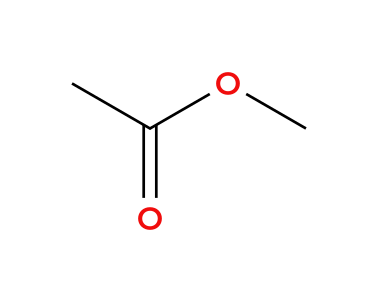
In methyl ethanoate, methyl is the alkyl part from the alcohol and ethanoate is the carboxylate part from the acid.
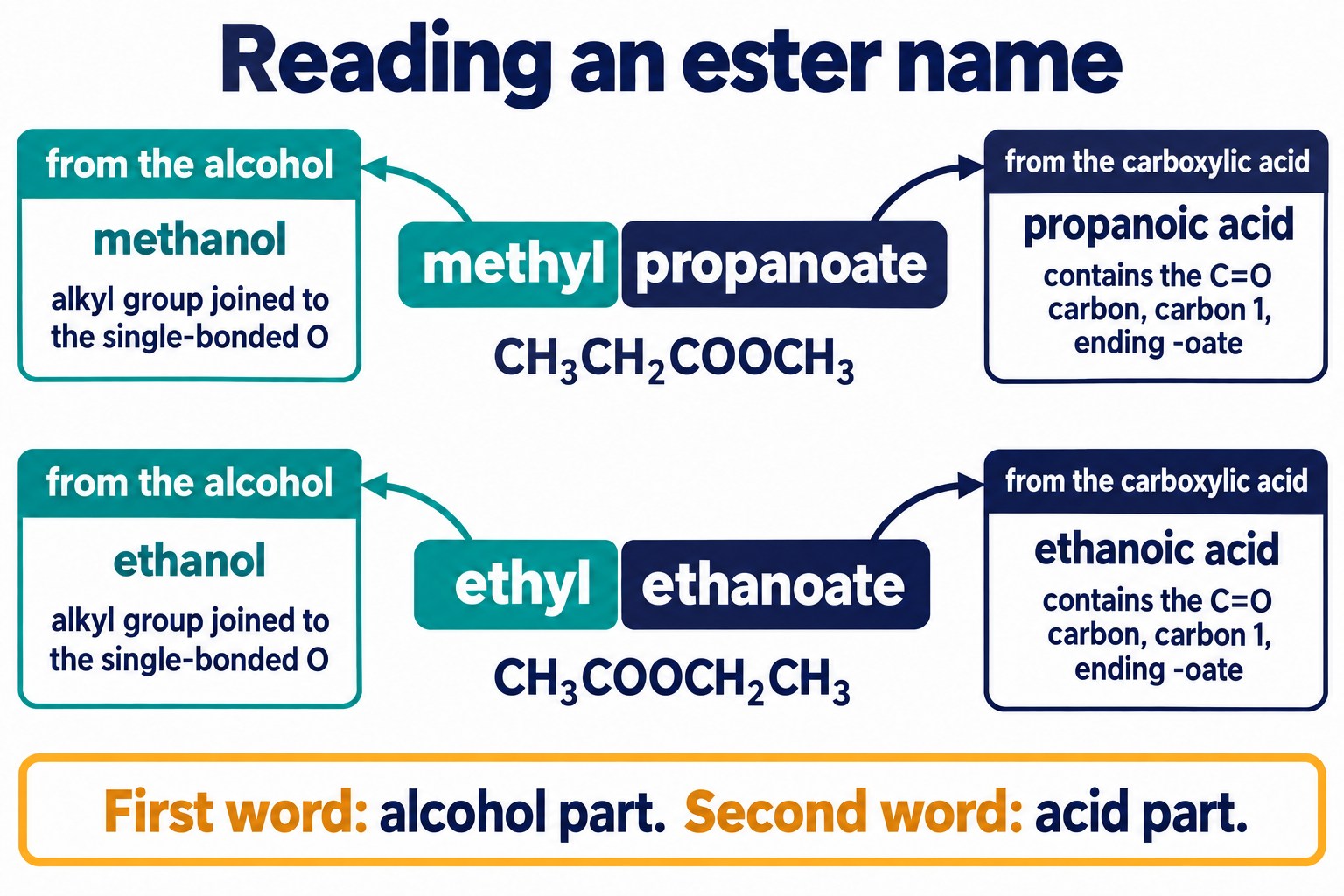
The first word comes from the alcohol; the second word, ending in -oate, comes from the acid and contains the C=O carbon.
Quick Check: Build the Ester Name
Type the name of the ester made from each alcohol and carboxylic acid.
Numbering the Acid Part
In the carboxylate part of an ester name, the carbon chain is numbered from the carbonyl carbon. This carbon is carbon 1 of the acid-derived part.
No position number is usually needed for the ester group because the ester functional group is at the end of the carboxylate chain. The name focuses on the alkyl group followed by the acid-derived -oate ending.
Exam focus: Work backwards from the name. The first word is attached to the oxygen atom. The second word tells you the carbon chain containing the carbonyl carbon.
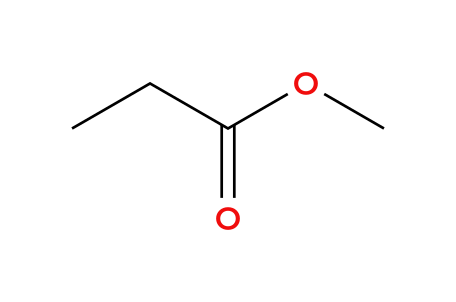
Methyl propanoate has a methyl group attached to the ester oxygen and a three-carbon propanoate chain containing the carbonyl carbon.
Quick Check: From Structure to Name
Name an ester from its structural formula by finding the carbonyl carbon first.
Ester Priority in IUPAC Names
Esters have lower priority than carboxylic acids. If a -COOH group is present in the same molecule, the compound is named as a carboxylic acid rather than using the ester suffix as the main functional group.
In this situation, the ester group is named as an alkoxycarbonyl substituent. This reflects the lower naming priority of esters compared with carboxylic acids.
No higher-priority acid group
Use the ester naming pattern: alkyl name first, then carboxylate name ending in -oate.
Carboxylic acid group present
The -COOH group takes priority, so the ester is treated as a substituent rather than the main suffix.
Quick Check: Which Group Wins?
Apply the priority rule to a molecule that contains both an ester group and a carboxylic acid group.
Common Ester Examples
The names methyl ethanoate and methyl propanoate show how ester names combine an alkyl group with a carboxylate part.
Changing the carboxylate chain changes the second part of the name. Ethanoate contains two carbon atoms in the acid-derived chain, while propanoate contains three carbon atoms in the acid-derived chain.
Methyl ethanoate contains a methyl group and an ethanoate chain.
Methyl propanoate contains the same alkyl group but a longer carboxylate chain.
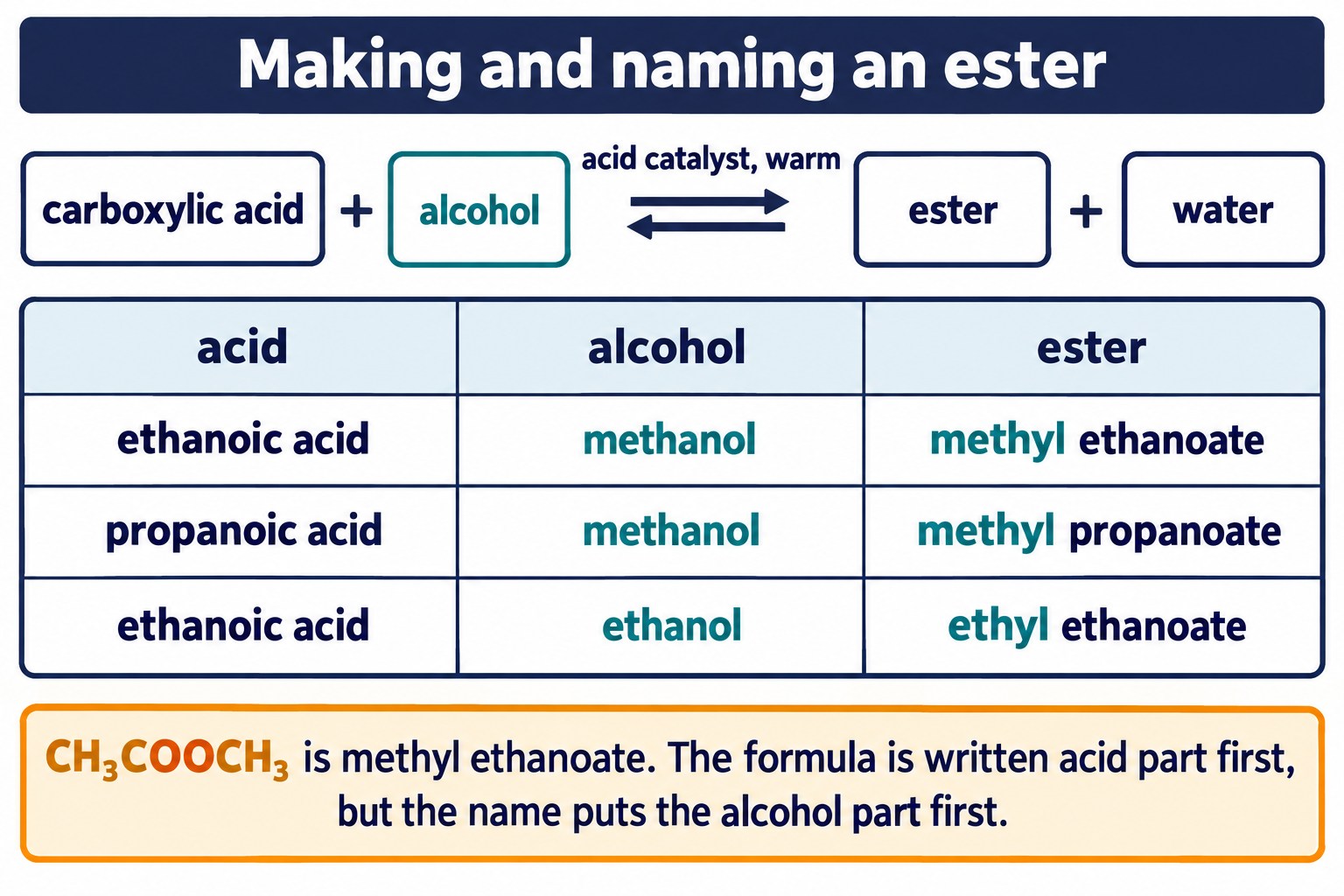
An acid and an alcohol react reversibly to give an ester and water; the ester name puts the alcohol part first.
Quick Check: Spot the Correct Name
In each round pick the one accurate statement and watch for names written the wrong way round.
Ester Naming FAQs
These questions check how ester names are built and read.
Which part of an ester name comes from the alcohol?
The first word. In methyl ethanoate, methyl comes from methanol and ethanoate from ethanoic acid.
How do I name the ester made from ethanol and propanoic acid?
Ethyl propanoate. The alkyl group from the alcohol comes first and the -oate part from the acid comes second.
Does the carbonyl carbon count in the -oate part?
Yes. The acid-derived part is numbered from the carbonyl carbon, so propanoate has three carbon atoms including the C=O carbon.
Are methyl ethanoate and ethyl methanoate the same?
No. They are isomers, C3H6O2. In methyl ethanoate a methyl group is on the oxygen. In ethyl methanoate an ethyl group is on the oxygen.
What happens to the name if a -COOH group is also present?
The carboxylic acid has higher priority and takes the suffix. The ester group is then named as an alkoxycarbonyl substituent.
Copyright notice: This OLS revision content, including the explanations, layout, diagrams, tables and embedded learning structure, is authored for Online Learning System by Dr. Mohammed Al-Fatah. It may not be copied, reproduced, redistributed or adapted without written permission.
Keep this note — free
Save your progress across every Edexcel IAL topic. A free account remembers which topics you have covered, saves your question scores, and syncs across your phone and laptop.
- Track every topic you have finished
- Keep your practice-question scores
- No payment, no card, free forever
Already registered? Log in