Alkanes as Fuel
Alkanes are useful fuels because they burn exothermically in oxygen. These pages separate the main fuel chemistry students need for Topic 4: complete and incomplete combustion, sulfur dioxide, nitrogen oxides, and catalytic converters.
Revision Notes
4 revision notes, in the order the specification teaches them.
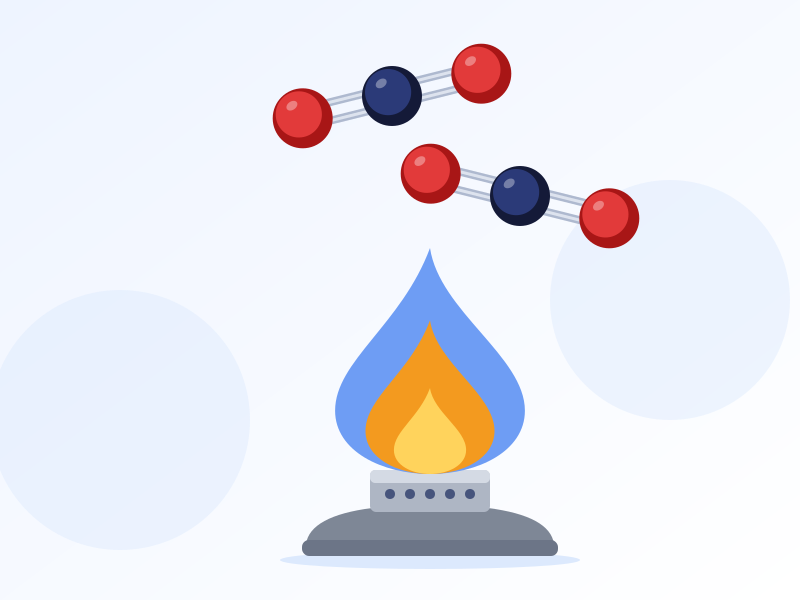
Combustion
Revise complete and incomplete combustion of alkanes, including oxygen supply, products and balanced chemical equations.
Start revising
Oxides of Sulfur
Learn how sulfur impurities in fossil fuels form sulfur dioxide and why this pollutant is linked to acid rain.
Start revising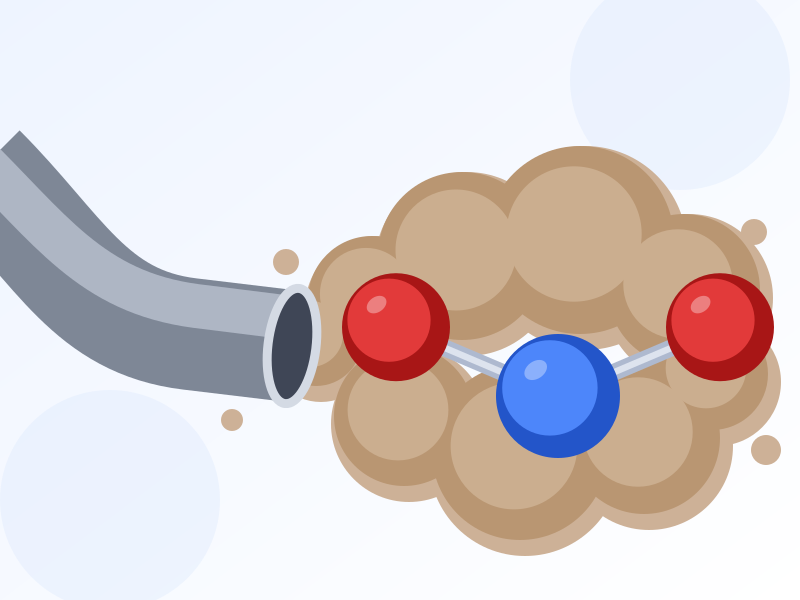
Oxides of Nitrogen
Review how high engine temperatures allow nitrogen and oxygen from the air to react, forming nitrogen oxides.
Start revising
Catalytic Converter
Revise how catalytic converters reduce carbon monoxide, nitrogen oxides and unburnt hydrocarbons in vehicle exhausts.
Start revisingSummary Map
Download, print and revise the reactions of this topic at a glance.
Summary maps
Download, print and revise the reactions of this topic at a glance.

Alkanes Map
Edexcel International A Level Chemistry · Unit 1 · Topic 4
Every reaction on one A4 page: reagents, conditions and reaction type for each arrow, colour coded, with the key tests.
Alkanes Summary Map
Edexcel International A Level Chemistry · Unit 1 · Topic 4B Alkanes
The whole section on one A4 page: crude oil, cracking, reforming, combustion, pollutants and alternative fuels, with the free radical mechanism in a table.
© 2026 Online Learning System. For personal study: printing is allowed; editing, copying and redistribution are not.
Virtual Lessons
Recorded video lessons that teach the topic step by step.

MCQ Bank
Multiple-choice papers on this topic, marked the moment you submit. MCQ (A) is free.

SAQ Bank
Written, drawn and worked exam practice on this topic, marked by a specialist chemistry teacher.

Revision Game
Match reagents to products, free, with your board's reagents and conditions.

Study Cards
Pick a deck, then turn each card to check what you remember.
Specification
Every specification point in this topic, in the exam board's own words. Rate how confident you are with each one.
Self-assessment · 40 points
Sign in to rate how confident you feel about each point. Your ratings are saved to your account, follow you to any device, and appear beside your KASP analytics, kept apart from your marks.
4.9
- b
know the general formula of cycloalkanes
- d
understand that cycloalkanes are hydrocarbons
4.10
4.11
- c
be able to draw structural isomers of cycloalkanes with up to six carbon atoms
- d
be able to name structural isomers of cycloalkanes with up to six carbon atoms
4.12
- e
be able to write equations for fractional distillation/cracking/reforming reactions where relevant
Revise
4.13
4.14
- a
understand the toxicity problem arising from carbon monoxide produced during combustion of alkane fuels
Revise - c
understand the acidity problem arising from oxides of nitrogen produced during combustion of alkane fuels
Revise - d
understand the acidity problem arising from oxides of sulfur produced during combustion of alkane fuels
Revise
4.15
- c
be able to discuss reasons for developing alternative fuels in terms of CO2 emissions and climate change
Revise
4.16
- c
be able to apply the concept of carbon neutrality to hydrogen
4.17
4.18
- i
understand the mechanism of the free radical substitution reaction between an alkane and a halogen: using free radicals, which are species with an unpaired electron, represented by a single dot
Revise - ii
understand the mechanism of the free radical substitution reaction between an alkane and a halogen: showing the initiation step of the mechanism, with curly half-arrows for free radical formation
Revise - iii
understand the mechanism of the free radical substitution reaction between an alkane and a halogen: showing the propagation and termination steps of the mechanism
Revise - iii a
understand the propagation steps of the free radical substitution reaction between an alkane and a halogen
Revise - iii b
understand the termination steps of the free radical substitution reaction between an alkane and a halogen
Revise - iv
understand the mechanism of the free radical substitution reaction between an alkane and a halogen: having limited use in synthesis because of further substitution reactions
Revise
Keep this note — free
Save your progress across every Edexcel IAL topic. A free account remembers which topics you have covered, saves your question scores, and syncs across your phone and laptop.
- Track every topic you have finished
- Keep your practice-question scores
- No payment, no card, free forever
Already registered? Log in