Nucleophilic Substitution Reactions
A concise revision guide to the nucleophilic substitution reactions of halogenoalkanes with aqueous hydroxide, water with silver nitrate, ammonia and cyanide ions, their conditions and products, and the mechanism drawn with curly arrows.
- 10.8i
- 10.8iii
- 10.8iv
- 10.8v
- 10.9i
- 10.9ii
What these spec points say
- 10.8i understand the reactions of halogenoalkanes with: aqueous alkali, including KOH(aq) to produce alcohols (where the hydroxide ion acts as a nucleophile)
- 10.8iii understand the reactions of halogenoalkanes with: aqueous silver nitrate in ethanol (where water acts as a nucleophile)
- 10.8iv understand the reactions of halogenoalkanes with: alcoholic ammonia under pressure to produce amines (where the ammonia acts as a nucleophile)
- 10.8v understand the reactions of halogenoalkanes with: alcoholic potassium cyanide to produce nitriles (where the cyanide ion acts as a nucleophile) Students should know this is an example of increasing the length of the carbon chain.
- 10.9i understand the mechanisms of the nucleophilic substitution reactions between primary halogenoalkanes and: aqueous potassium hydroxide
- 10.9ii understand the mechanisms of the nucleophilic substitution reactions between primary halogenoalkanes and: ammonia SN1 and SN2 substitution mechanisms will be tested in Unit 4.
The Mechanism with Hydroxide Ions
When a halogenoalkane is heated under reflux with aqueous potassium hydroxide (or sodium hydroxide), the halogen is replaced by an OH group and an alcohol forms: CH₃CH₂CH₂Br + OH⁻ → CH₃CH₂CH₂OH + Br⁻. The hydroxide ion acts as a nucleophile: it donates its lone pair to the δ+ carbon of the C–Br bond. The reaction is a nucleophilic substitution, and because water and hydroxide ions split the molecule it is also a hydrolysis.
The mechanism for a primary halogenoalkane is a single step. Two curly arrows are drawn.
One is from the lone pair on the oxygen of HO⁻ to the δ+ carbon, showing the new C–O bond forming.
The other is from the middle of the C–Br bond to the bromine, showing the bond breaking heterolytically so that bromine leaves as a bromide ion.
Exam focus: The δ+ and δ− on the C–Br bond, the lone pair on the nucleophile and the negative charge on the leaving bromide ion must all be shown.
The hydroxide attacks from the side opposite the halogen, and at the moment of substitution the carbon is briefly bonded to both groups in a transition state.
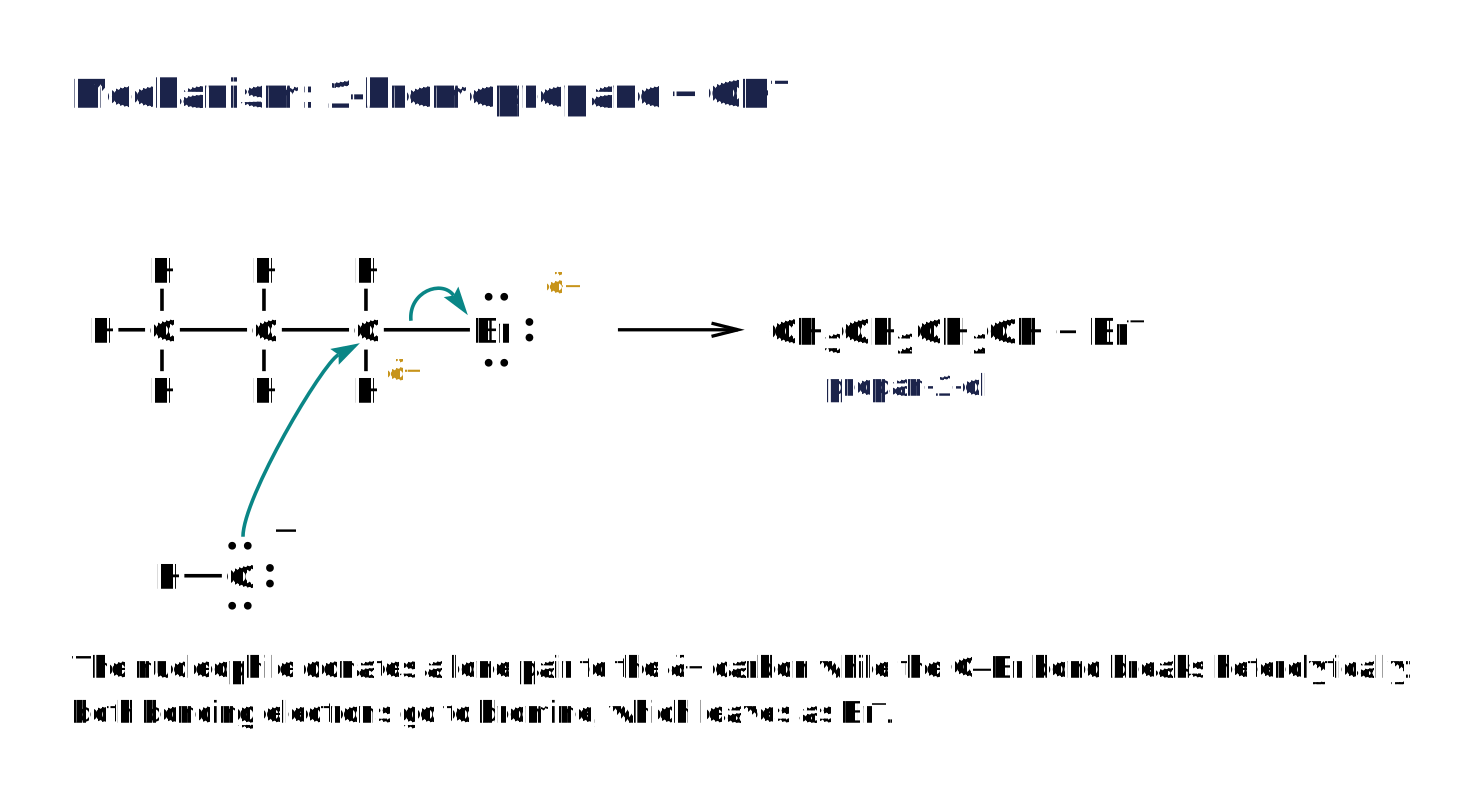
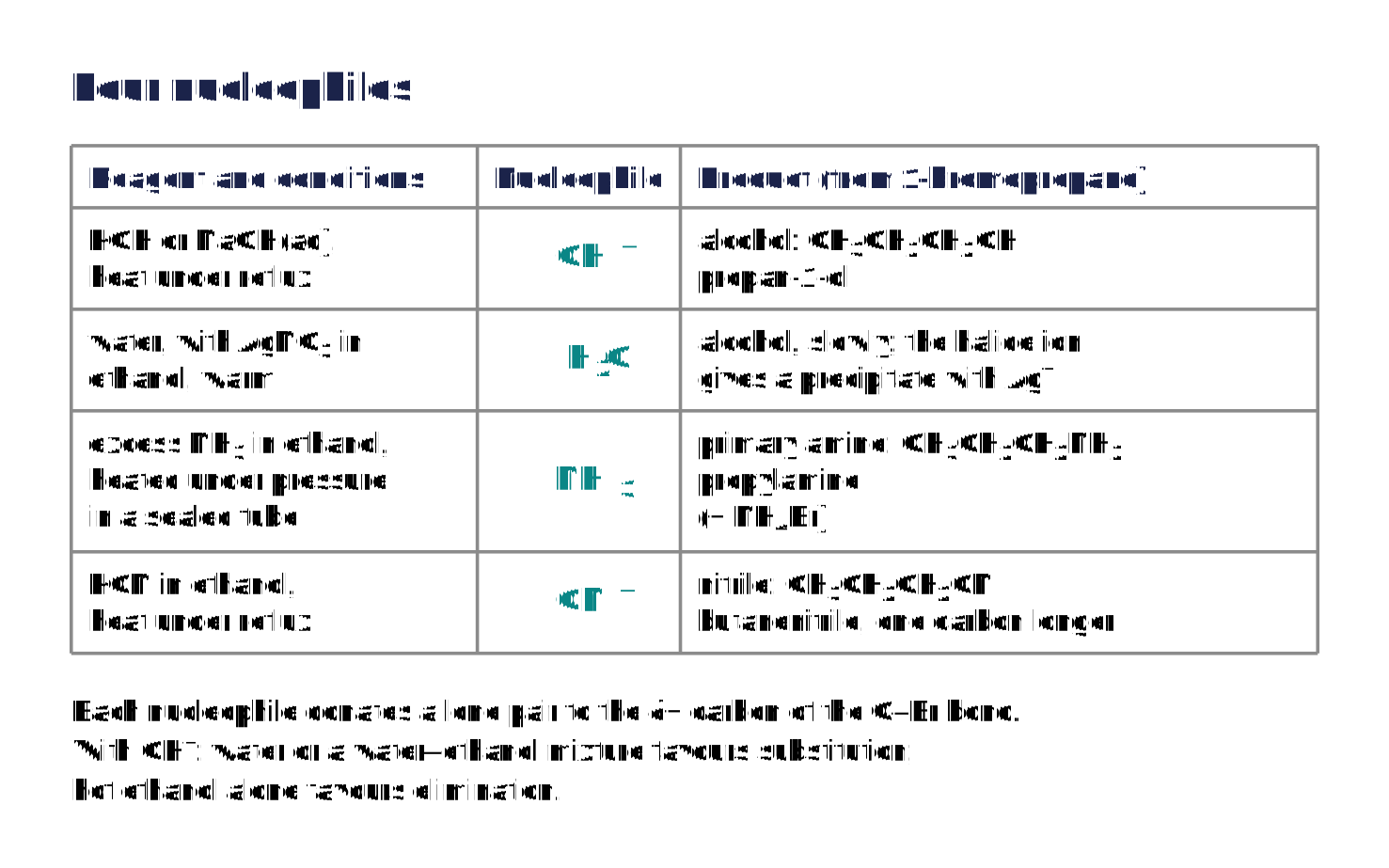
The nucleophilic substitution of 1-bromopropane by hydroxide ions with its curly arrows, and the four nucleophiles with their conditions and products.
Nucleophilic Substitution of Bromoethane by Hydroxide
Watch a hydroxide ion attack the δ+ carbon of bromoethane from behind, pass through a single transition state and push out the bromide ion, turning the carbon inside out.
© Dr. Mohammed Al-Fatah – onlinelearningsystem.net
Exam focus: Two arrows, two partial charges, one lone pair, one leaving group with its negative charge. Draw the arrow from the lone pair to the carbon, never from the carbon to the nucleophile.
Check: The Substitution Mechanism
Draw and judge mechanisms for halogenoalkanes other than 1-bromopropane.
Water as the Nucleophile
Water is a much weaker nucleophile than the hydroxide ion, because it has no negative charge, but it hydrolyses halogenoalkanes slowly: CH₃CH₂Br + H₂O → CH₃CH₂OH + H⁺ + Br⁻.
The reaction is used as the basis of the silver nitrate test: the halogenoalkane is warmed with aqueous silver nitrate dissolved in ethanol. Ethanol is the solvent because the halogenoalkane does not dissolve in water.
As the halide ion is released it reacts with silver ions to give a precipitate of the silver halide, Ag⁺(aq) + Br⁻(aq) → AgBr(s).
The colour of the precipitate identifies the halogen (white AgCl, cream AgBr, yellow AgI) and the time taken for it to appear compares the rates of hydrolysis.
Key idea: Aqueous silver nitrate in ethanol: water is the nucleophile, the halide ion that leaves gives the precipitate.
Ammonia: Making Amines
Heating a halogenoalkane with ammonia dissolved in ethanol under pressure in a sealed tube gives a primary amine: CH₃CH₂CH₂Br + 2NH₃ → CH₃CH₂CH₂NH₂ + NH₄Br.
The nitrogen lone pair of ammonia attacks the δ+ carbon exactly as the hydroxide ion did.
The product at that stage is a positively charged ion, CH₃CH₂CH₂NH₃⁺, and a second ammonia molecule removes a proton from it to give the amine and an ammonium ion. That is why two molecules of ammonia appear in the equation.
The mechanism needs three arrows in two steps.
Lone pair on N to the carbon and C–Br bond to Br in the first step. Then a lone pair on a second NH₃ to one of the N–H hydrogens and the N–H bond back onto the nitrogen in the second.
The sealed tube keeps the volatile ammonia in the mixture. An excess of ammonia is used because the amine formed is itself a nucleophile and would otherwise attack more halogenoalkane to give secondary and tertiary amines.
Exam wording: “Ethanolic ammonia, heated under pressure in a sealed tube, excess ammonia.” Products: the amine and ammonium bromide.
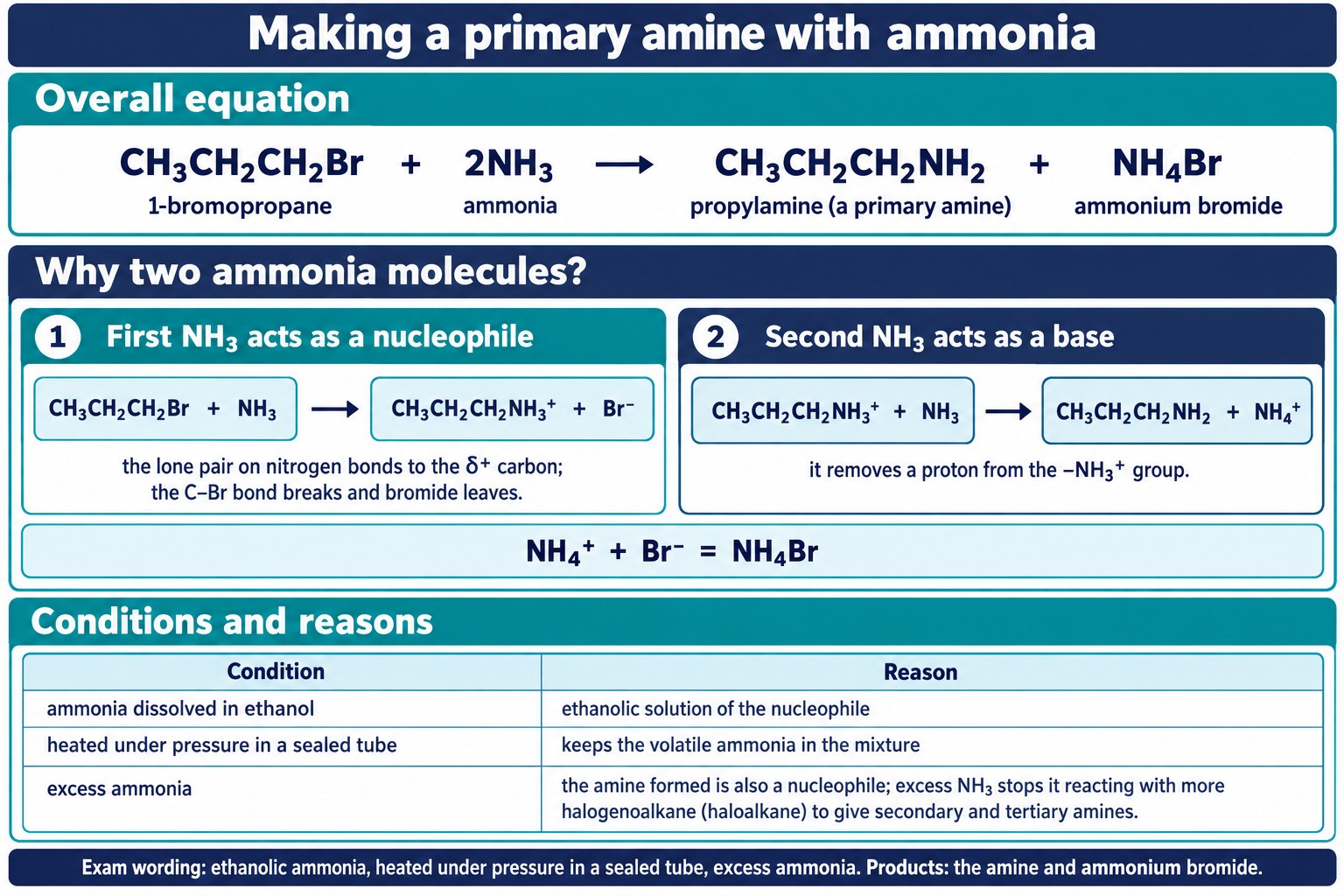
One ammonia molecule substitutes for the bromine and a second removes a proton, which is why the equation needs two NH₃ and gives ammonium bromide.
Check: Ammonia and Amines
Write equations and conditions for amine preparations not used above.
Cyanide Ions: Making Nitriles and Lengthening the Chain
Heating a halogenoalkane under reflux with potassium cyanide dissolved in ethanol gives a nitrile: CH₃CH₂CH₂Br + CN⁻ → CH₃CH₂CH₂CN + Br⁻.
The cyanide ion is a nucleophile through the lone pair on its carbon atom, and the mechanism is the same two-arrow substitution as with hydroxide.
Key idea: The carbon of the cyanide group is added to the chain, so the product has one more carbon atom than the starting compound: 1-bromopropane (three carbons) gives butanenitrile (four carbons, counting the nitrile carbon in the name).
This is one of the few ways of lengthening a carbon chain in synthesis, and the nitrile can then be hydrolysed to a carboxylic acid or reduced to an amine.
| Reagent and conditions | Nucleophile | Product from 1-bromopropane | Type of compound |
|---|---|---|---|
| KOH(aq), heat under reflux | OH⁻ | CH₃CH₂CH₂OH, propan-1-ol | alcohol |
| H₂O with AgNO₃ in ethanol, warm | H₂O | propan-1-ol slowly, AgBr precipitate | alcohol |
| NH₃ in ethanol, heat under pressure, excess NH₃ | NH₃ | CH₃CH₂CH₂NH₂, propylamine (propan-1-amine) | primary amine |
| KCN in ethanol, heat under reflux | CN⁻ | CH₃CH₂CH₂CN, butanenitrile | nitrile |
Exam focus: Name nitriles from the whole chain including the CN carbon: butanenitrile, not propanenitrile, from a three-carbon bromoalkane.
Check: Choosing the Nucleophile
Pick reagents and predict products for target molecules not made on this page.
Common Exam Points
Say
“The lone pair on the nucleophile forms a bond to the δ+ carbon while the C–X bond breaks heterolytically.” “Aqueous KOH, heat under reflux, substitution.” “KCN in ethanol adds one carbon to the chain.”
Do not say
“KOH in ethanol” for substitution (that gives elimination). “The bromine leaves as a bromine atom” (it leaves as a bromide ion).
Watch for
The names Sₙ1 and Sₙ2 belong to Unit 4; in Unit 2 you draw the single-step mechanism for a primary compound with hydroxide and with ammonia.
Check: Substitution Round-up
Match reagents, conditions and products across nucleophilic substitutions of halogenoalkanes not seen above.
FAQs
Use these quick answers to check nucleophilic substitution.
Why is the reaction with KOH done in water rather than ethanol?
In water the hydroxide ion acts as a nucleophile and substitutes the halogen. In ethanol it acts as a base and an elimination reaction takes over.
Why are two molecules of ammonia needed?
The first attacks the carbon and forms an alkylammonium ion; the second removes a proton from it to leave the free amine and an ammonium ion.
Why does the cyanide reaction add a carbon to the chain?
The nucleophile is the carbon of the cyanide ion, so the CN carbon becomes part of the chain: 1-bromopropane (three carbons) gives butanenitrile (four carbons).
Why is silver nitrate used with water as the nucleophile?
Water hydrolyses the compound slowly and releases a halide ion; silver ions turn that halide ion into a precipitate, which makes the slow reaction visible and identifies the halogen.
Does the nucleophile attack from a particular side?
Yes, from the side opposite the halogen, where the δ+ carbon is least shielded; the C–X bond breaks as the new bond forms.
Copyright notice: This OLS revision content, including the explanations, layout, diagrams, tables and embedded learning structure, is authored for Online Learning System by Dr. Mohammed Al-Fatah. It may not be copied, reproduced, redistributed or adapted without written permission.
Keep this note — free
Save your progress across every Edexcel IAL topic. A free account remembers which topics you have covered, saves your question scores, and syncs across your phone and laptop.
- Track every topic you have finished
- Keep your practice-question scores
- No payment, no card, free forever
Already registered? Log in