Topic 30
Hydrocarbons
Topic 30 at A Level is the chemistry of arenes. These pages also cover the shape and bonding of benzene with sp² hybridisation and the delocalised π system (29.3.1) and the naming of aromatic compounds (29.1.4). They cover the substitution reactions of benzene and methylbenzene with chlorine and bromine, nitration, Friedel–Crafts alkylation and acylation, oxidation of the side chain to benzoic acid and hydrogenation of the ring (30.1.1); the mechanism of electrophilic substitution and aromatic stabilisation (30.1.2); side-chain versus ring halogenation (30.1.3); and the directing effects of substituents (30.1.4), with the halogenoarene preparation from Topic 31.
Revision Notes
9 revision notes, in the order the specification teaches them.
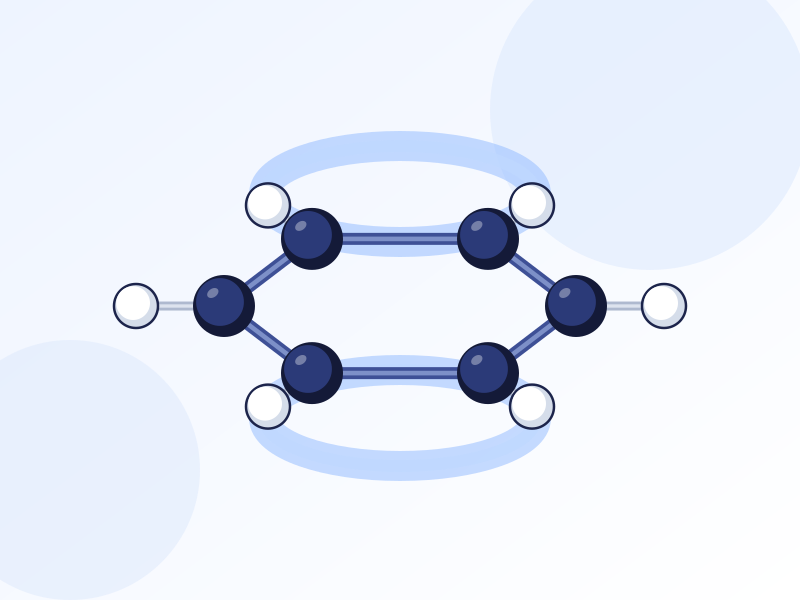
Structure and Bonding in Benzene
The structure and bonding of benzene: the Kekulé and delocalised models, p-orbital overlap, the π system and how benzene is represented.
Start revising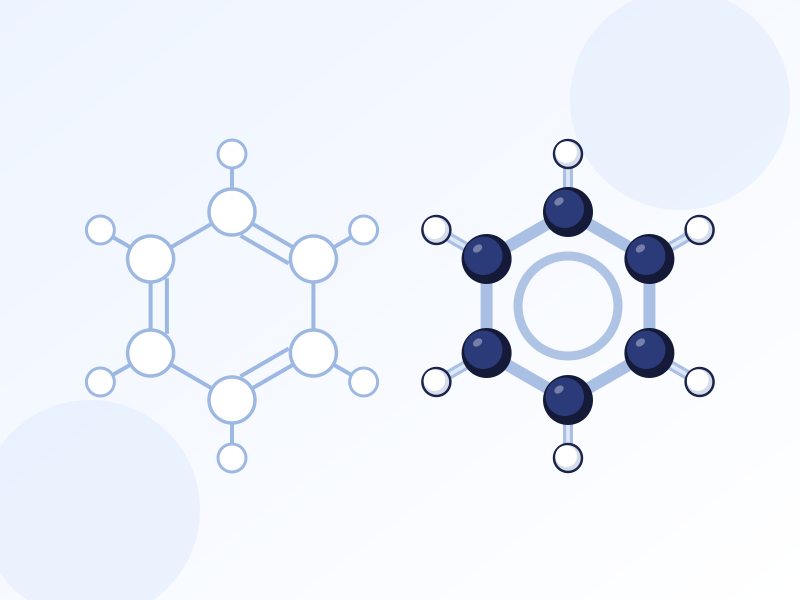
Evidence for the Structure of Benzene
The evidence for the structure of benzene: hydrogenation enthalpies, delocalisation energy, bond lengths and resistance to addition.
Start revising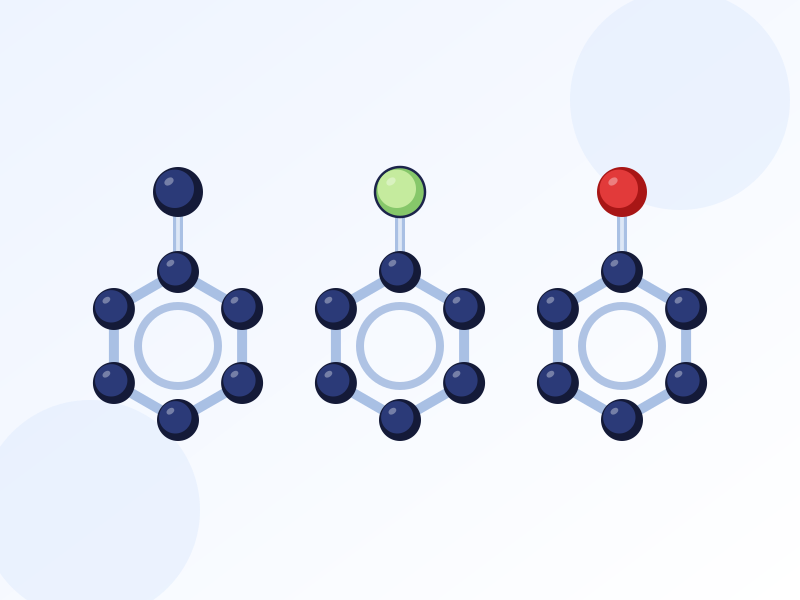
Naming Aromatic Compounds
Naming substituted aromatic compounds: IUPAC rules, ring numbering, the phenyl group and worked examples.
Start revising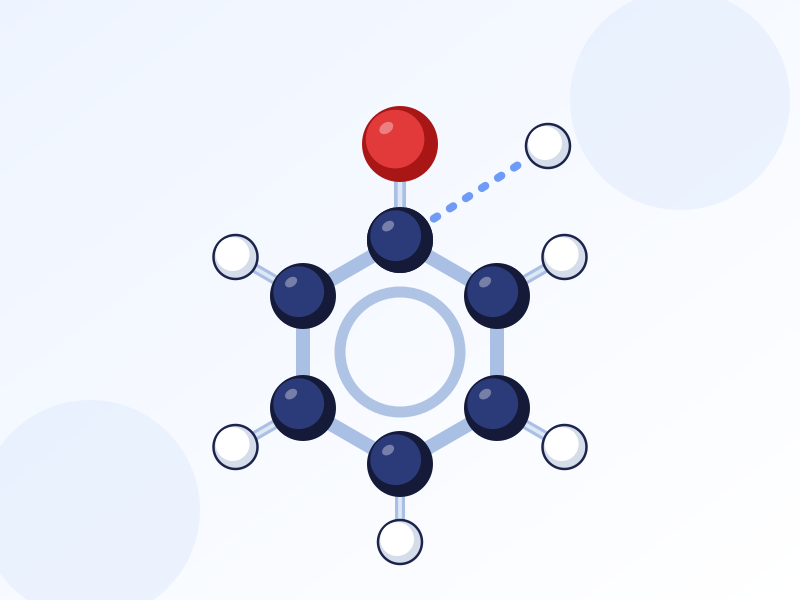
Electrophilic Substitution in Benzene
Electrophilic substitution in benzene: substitution versus addition, the general mechanism and the delocalised intermediate.
Start revising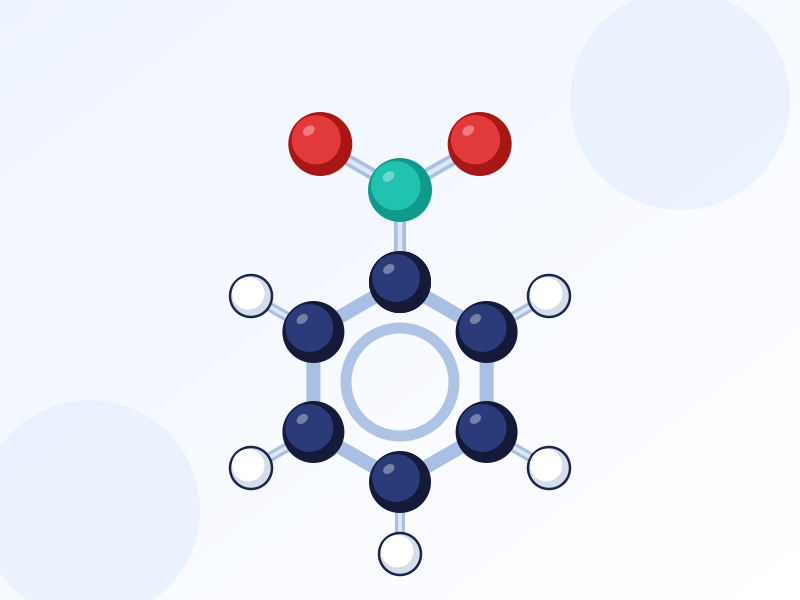
Nitration of Benzene
The nitration of benzene: reagents and conditions, generation of NO₂⁺, the mechanism and the role of sulfuric acid.
Start revising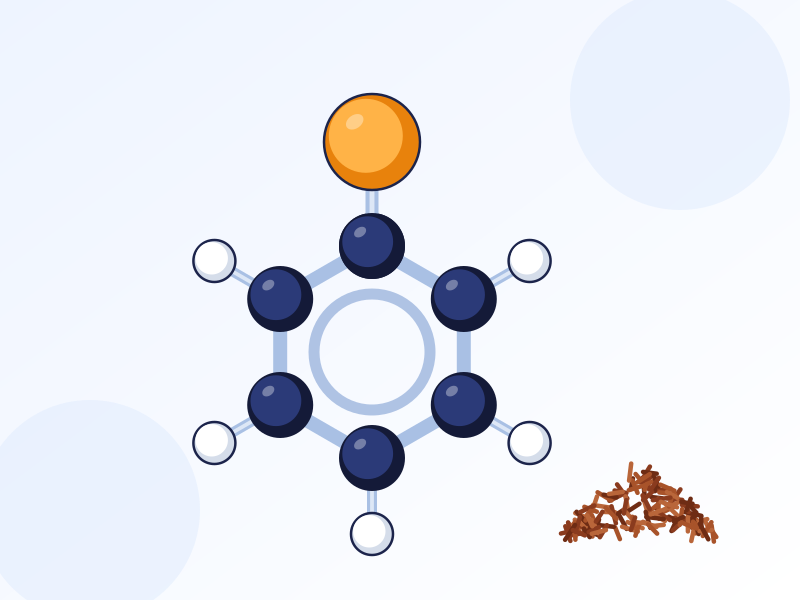
Halogenation of Benzene
The halogenation of benzene: the catalyst, generation of the halogen electrophile and the electrophilic substitution mechanism.
Start revising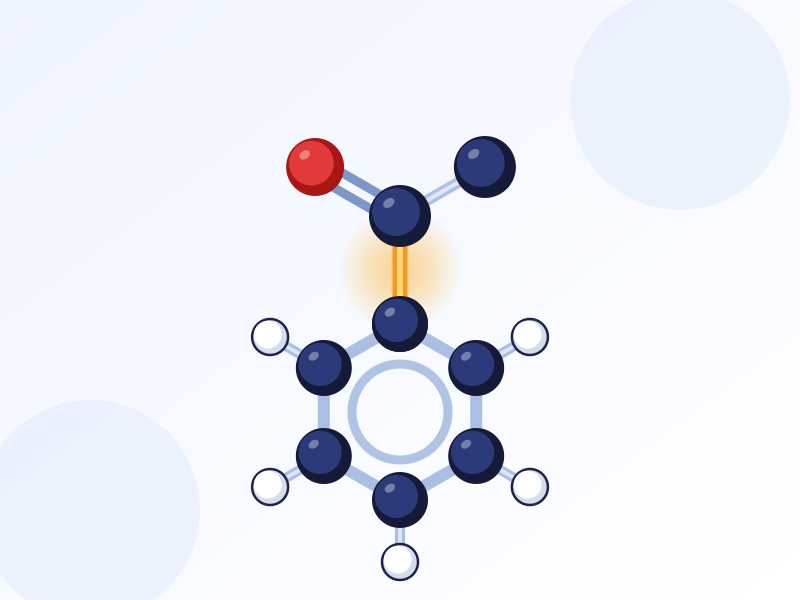
Friedel–Crafts Alkylation and Acylation
Friedel–Crafts alkylation and acylation of benzene: AlCl₃ catalyst, the electrophile and the mechanism.
Start revising
Other Reactions of Benzene and Methylbenzene
The hydrogenation of benzene and side-chain oxidation of methylbenzene, with a reaction map of the arene chemistry.
Start revising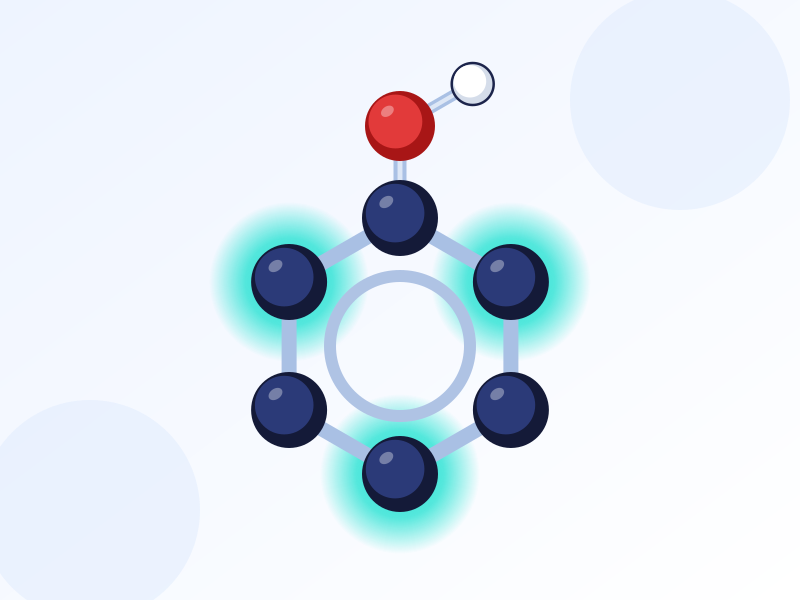
Directing Effects in Electrophilic Substitution
Directing effects in aromatic substitution: 2,4-directing and 3-directing groups, predicting products and planning synthesis.
Start revisingSummary Map
Download, print and revise the key facts of this topic at a glance.
Summary maps
Download, print and revise the key facts of this topic at a glance.

Benzene Map
Cambridge International AS & A Level Chemistry · Topic 30 Hydrocarbons
Every reaction on one A4 page: reagents, conditions and reaction type for each arrow, colour coded, with the key tests.
Methylbenzene Map
Cambridge International AS & A Level Chemistry · Topic 30 Hydrocarbons
Every reaction on one A4 page: reagents, conditions and reaction type for each arrow, colour coded, with the key tests.
Benzene Structure Map
Cambridge International A Level Chemistry · 30 Benzene
All of the benzene section on one A4 page: the models, the evidence, stability and naming.
Reactions of Arenes Map
Cambridge International A Level Chemistry · 30 Reactions of arenes
All of the arenes section on one A4 page: substitution, hydrogenation, ring or side chain, oxidation and directing.
© 2026 Online Learning System. For personal study: printing is allowed; editing, copying and redistribution are not.
Virtual Lessons
Recorded video lessons that teach the topic step by step.
The Virtual Lessons for Topic 30 Hydrocarbons are being recorded.
MCQ Bank
Multiple-choice papers on this topic, marked the moment you submit.
The MCQ papers for Topic 30 Hydrocarbons are being written.
SAQ Bank
Written, drawn and worked exam practice on this topic.
The exam practice papers for Topic 30 Hydrocarbons are being written.
Revision Game
Match reagents to products, free, with your board's reagents and conditions.

Study Cards
Pick a deck, then turn each card to check what you remember.
Specification
Every specification point in this topic, in the exam board's own words. Rate how confident you are with each one.
Cambridge no longer issues a data booklet: the data you need are given in each question, and the syllabus has a Data section.
Self-assessment · 17 points
Sign in to rate how confident you feel about each point. Your ratings are saved to your account, follow you to any device, and appear beside your KASP analytics, kept apart from your marks.
30.1.1
- a i
describe the chemistry of arenes as exemplified by the substitution reactions of benzene and methylbenzene with Cl2 in the presence of a catalyst, AlCl3, to form halogenoarenes (aryl halides)
Revise - a ii
describe the chemistry of arenes as exemplified by the substitution reactions of benzene and methylbenzene with Br2 in the presence of a catalyst, AlBr3, to form halogenoarenes (aryl halides)
Revise - b
describe the chemistry of arenes as exemplified by the nitration of benzene and methylbenzene with a mixture of concentrated HNO3 and concentrated H2SO4 at a temperature between 25 °C and 60 °C
Revise - c
describe the chemistry of arenes as exemplified by the Friedel–Crafts alkylation of benzene and methylbenzene by CH3Cl and AlCl3 and heat
Revise - d
describe the chemistry of arenes as exemplified by the Friedel–Crafts acylation of benzene and methylbenzene by CH3COCl and AlCl3 and heat
Revise - e
describe the chemistry of arenes as exemplified by the complete oxidation of the side-chain of methylbenzene using hot alkaline KMnO4 and then dilute acid to give a benzoic acid
Revise - f
describe the chemistry of arenes as exemplified by the hydrogenation of the benzene ring using H2 and Pt/Ni catalyst and heat to form a cyclohexane ring
Revise
30.1.2
- a i
describe the mechanism of electrophilic substitution in arenes as exemplified by the formation of nitrobenzene
Revise - a ii
describe the mechanism of electrophilic substitution in arenes as exemplified by the formation of bromobenzene
Revise - b
describe the mechanism of electrophilic substitution in arenes with regards to the effect of delocalisation (aromatic stabilisation) of electrons in arenes to explain the predomination of substitution over addition
Revise
30.1.3
- 30.1.3
predict whether halogenation will occur in the side-chain or in the aromatic ring in arenes depending on reaction conditions
Revise
30.1.4
- a
describe that in the electrophilic substitution of arenes, the –NH2 substituent directs to particular ring positions
Revise - b
describe that in the electrophilic substitution of arenes, the –OH substituent directs to particular ring positions
Revise - c
describe that in the electrophilic substitution of arenes, the –R substituent directs to particular ring positions
Revise - d
describe that in the electrophilic substitution of arenes, the –NO2 substituent directs to particular ring positions
Revise - e
describe that in the electrophilic substitution of arenes, the –COOH substituent directs to particular ring positions
Revise - f
describe that in the electrophilic substitution of arenes, the –COR substituent directs to particular ring positions
Revise
Keep this note — free
Save your progress across every Cambridge topic. A free account remembers which topics you have covered, saves your question scores, and syncs across your phone and laptop.
- Track every topic you have finished
- Keep your practice-question scores
- No payment, no card, free forever
Already registered? Log in