Electrophilic Addition Mechanism
A concise revision guide to addition reactions of alkenes, electrophiles, electron-rich π bonds and why the carbon-carbon double bond is the reactive centre in alkene chemistry.
- 4.8-b
- 5.1-e
- 5.6ii-b
What these spec points say
- 4.8-b know the definition of the term 'electrophile'
- 5.1-e understand that a carbon-carbon double bond consists of a pi bond
- 5.6ii-b use curly arrow notation in electrophilic addition mechanisms, with curly arrows starting from a bond or lone pair of electrons
Electrophilic Addition in Motion
Choose a step to watch HBr and then Br₂ add across the π bond of ethene, one curly arrow at a time.
© Dr. Mohammed Al-Fatah – onlinelearningsystem.net
GCSE Recap: What Alkenes Do
Three quick questions on the reactions of alkenes that you met at GCSE.
Addition Reactions of Alkenes
An addition reaction is a reaction in which two reactant molecules combine to form a single product molecule.
Alkenes commonly undergo addition reactions because their carbon-carbon double bond can be broken and replaced by new single bonds.
This is why the C=C bond is the functional group that controls the characteristic reactions of alkenes.
Key idea: In an alkene addition reaction, atoms add across the C=C double bond and only one organic product molecule is formed.
Addition across a double bond
The double bond opens up, allowing new atoms or groups to attach to the two carbon atoms from the original C=C bond.
Quick Check: Addition or Not?
Decide quickly whether each equation shows an addition reaction.
Why the π Bond Reacts
In an alkene, the π bond is weaker than the σ bond, so it requires less energy to break during a reaction.
The π bond also contains a region of high electron density. This exposed electron density is especially attractive to electron-seeking species.
Because the π bond is both weaker and more exposed than a σ bond, it is particularly susceptible to attack by electrophiles.
Exam focus: Link alkene reactivity to the exposed, electron-rich π bond rather than simply saying that alkenes have a double bond.
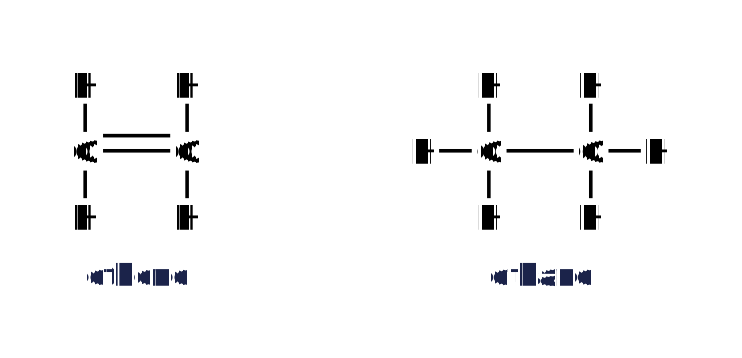
Electron-rich π bond
The π bond forms exposed electron density above and below the molecular plane, making the alkene attractive to electrophiles.
Quick Check: A New Electrophile
Explain why a different reagent, iodine monochloride, attacks the π bond of but-1-ene.
Electrophiles
An electrophile is an electron pair acceptor.
Electrophiles are attracted to regions of high electron density. In alkenes, this means the electrophile is drawn towards the electron-rich π bond.
This attraction begins the electrophilic addition mechanism.
Electrophile: A species that accepts an electron pair from an electron-rich region during a chemical reaction.
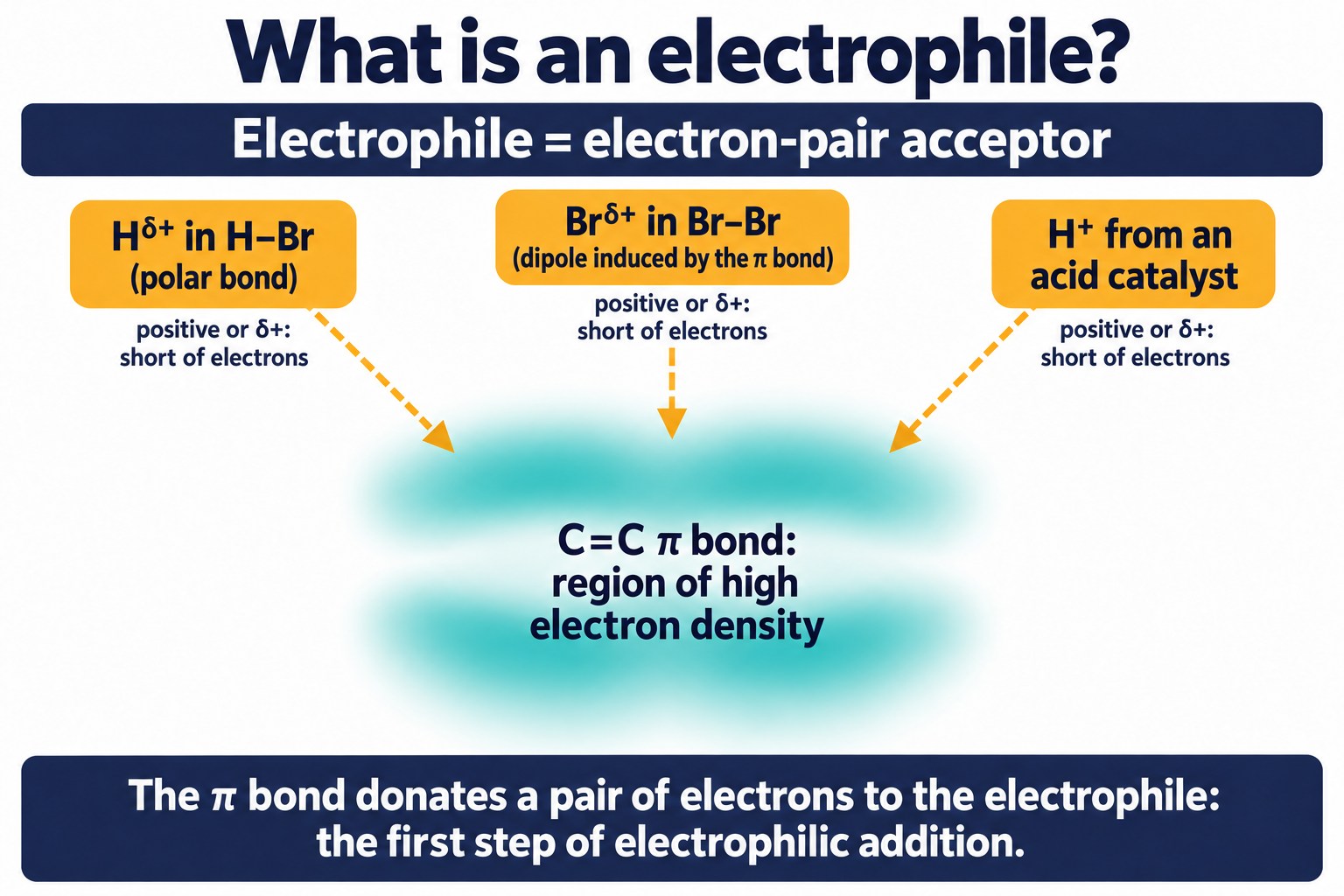
An electrophile is an electron-pair acceptor: a positive or δ+ species attracted to the electron-rich π bond.
Quick Check: Find the Electrophile
Identify the electrophile in a reagent that this page has not used.
Watch: the first two steps of electrophilic addition
The pi bond breaks, H–Br splits, and a carbocation is left on the board. What happens next?
The Electrophilic Addition Mechanism
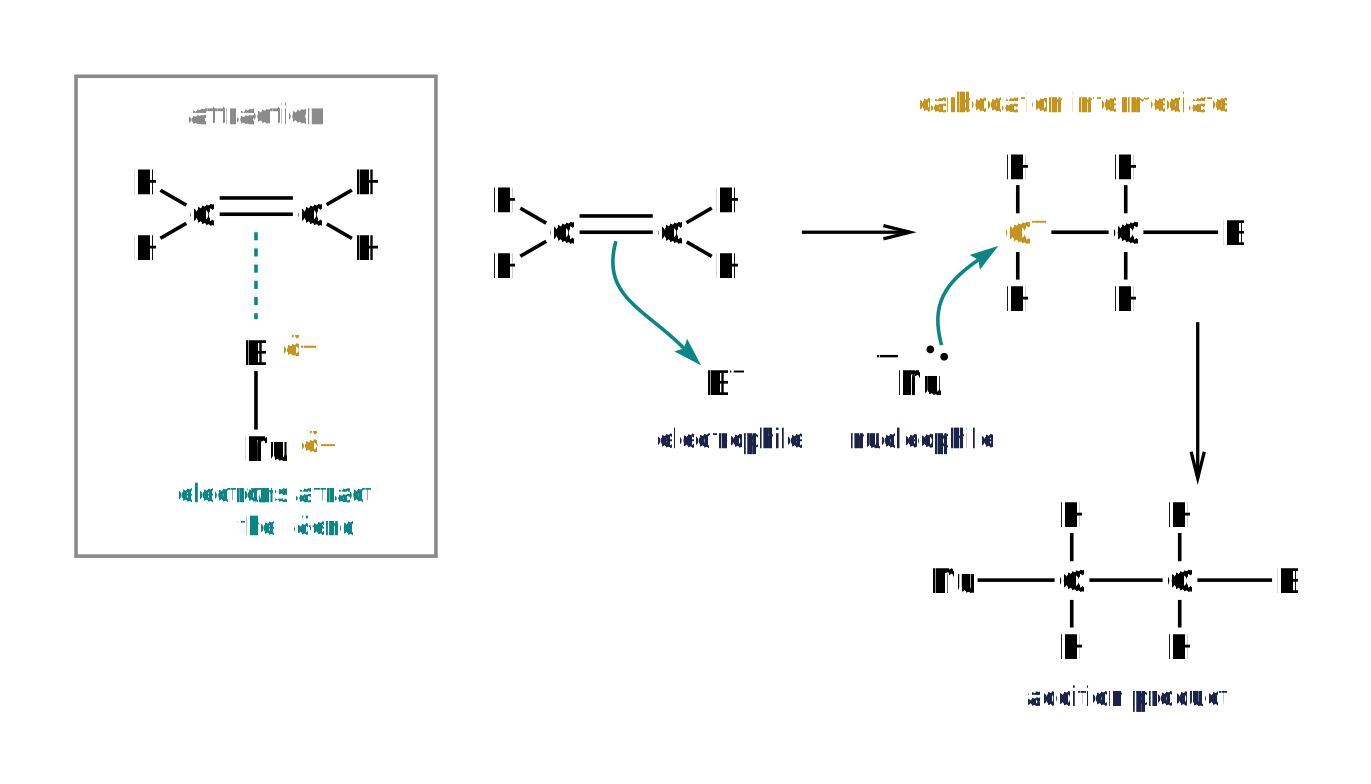
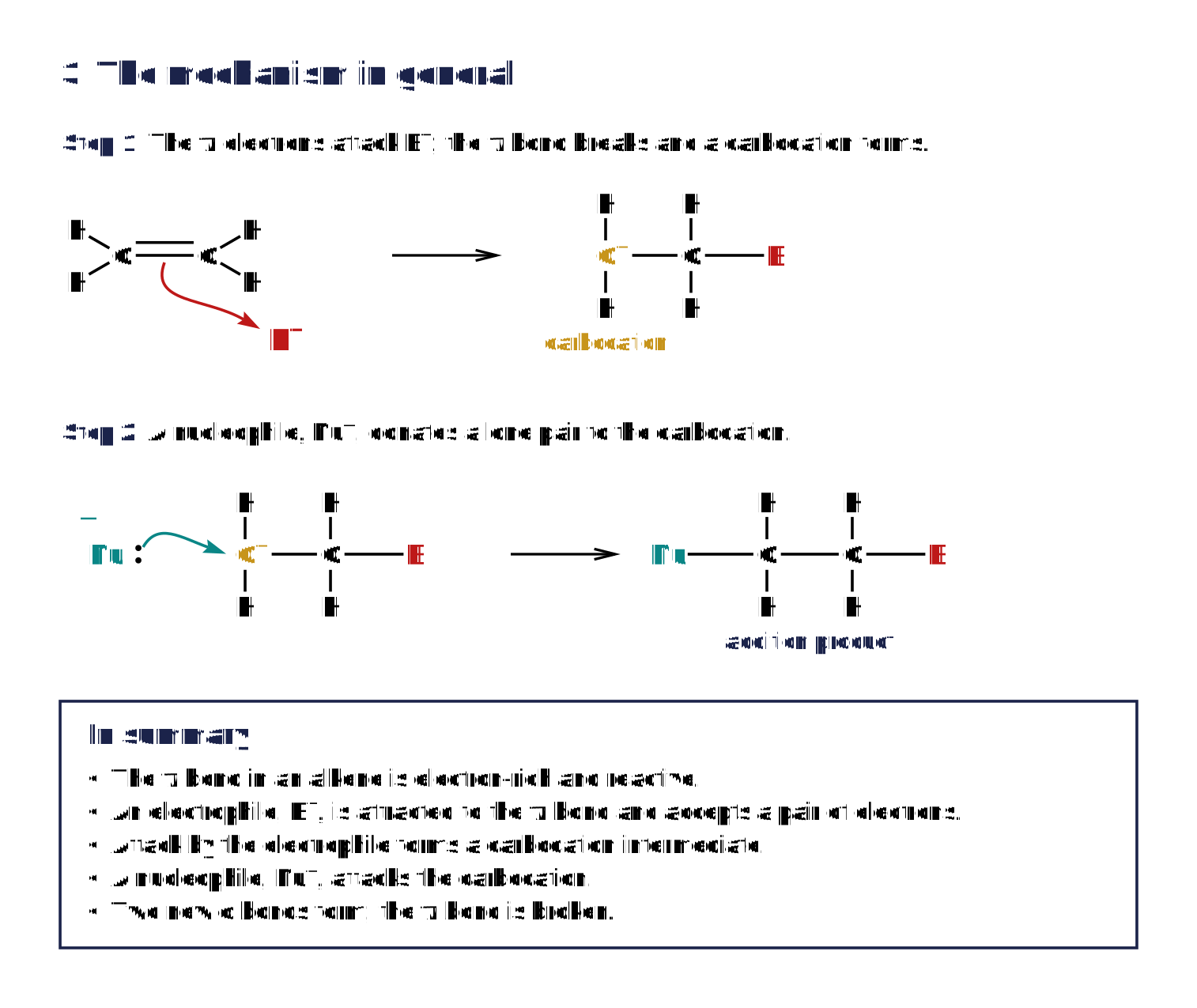
In electrophilic addition, the π bond breaks and new single bonds are formed. The electrophile accepts an electron pair from the alkene.
At this stage, students must be careful with curly arrows. A curly arrow shows the movement of an electron pair, so the arrow should start from a bond or lone pair, not from a positive charge.
1. Attraction
The electrophile is attracted to the high electron density in the π bond.
2. Bond breaking
The π bond breaks because it is weaker than the σ bond.
3. New bonds form
New single bonds form to give an addition product.
Remember: Electrophilic addition happens because the π bond is electron-rich, exposed and relatively easy to break.
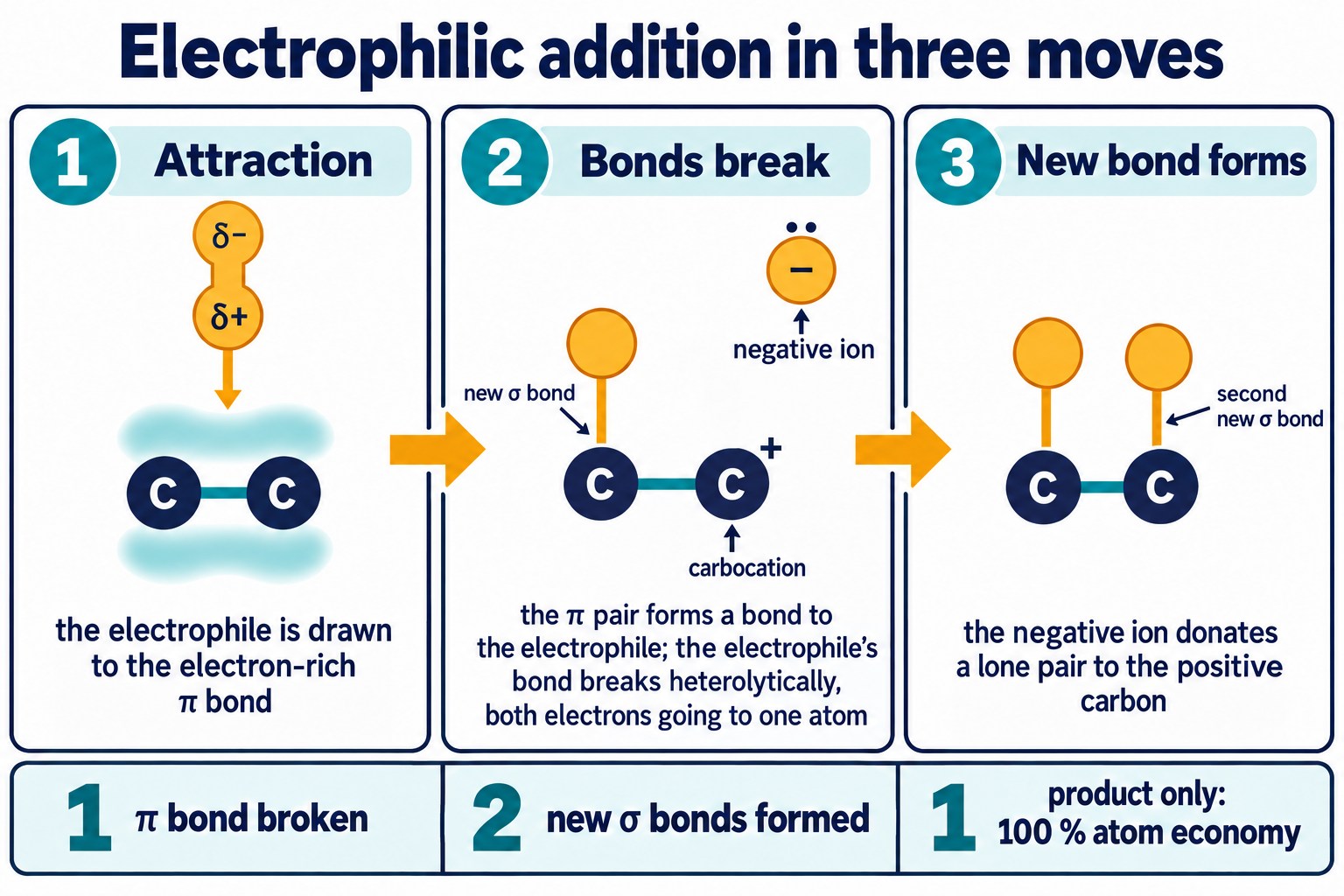
The electrophile is attracted to the π bond, two bonds break heterolytically to give a carbocation, then the negative ion forms the second new bond.
Quick Check: Order the Mechanism
Put the events of an electrophilic addition you have not seen into the correct order.
Exam Link: Why Alkenes React This Way
Exam answers should connect three ideas: the alkene contains a C=C bond, the π bond has high electron density, and electrophiles are attracted to this electron-rich region.
It is not enough to write that alkenes are reactive because they have a double bond. The explanation needs to identify the role of the π bond and the electrophile.
| Exam phrase | Why it matters | Common mistake to avoid |
|---|---|---|
| π bond has high electron density | Explains why an electrophile is attracted to the alkene. | Only saying that the double bond is reactive. |
| Electrophile accepts an electron pair | Links the definition of electrophile to the mechanism. | Calling the electrophile an electron donor. |
| π bond breaks and new single bonds form | Explains why the reaction is an addition reaction. | Describing substitution instead of addition. |
Quick Check: Explain Why the Alkene Reacts
Write a short explanation, then compare it with the mark points and the model answer.
Quick Check: Hydrogen Iodide and Cyclohexene
In each round, pick the one accurate statement about this addition.
FAQs
These questions secure the curly-arrow and electrophile ideas that every alkene mechanism uses.
Does the first curly arrow start at the electrophile or at the C=C bond?
At the C=C bond. A curly arrow shows an electron pair moving, so it starts at the π bond and points to the electrophile. An arrow drawn from a positive atom shows nothing moving and loses the mark.
Is an electrophile always a positive ion?
No. An electrophile is an electron pair acceptor. It can be a positive ion such as H+, or the δ+ atom of a polar or polarised molecule, such as Hδ+ in HBr or Brδ+ in Br2.
Why is the carbocation called an intermediate and not a product?
It forms part-way through the mechanism and is used up straight away when the negative ion attacks it. It is never isolated, so it does not appear in the overall equation.
Why do alkenes react with electrophiles when alkanes do not?
Alkanes contain only σ bonds, with the electron density held between the nuclei. Alkenes have an exposed π bond with high electron density above and below the plane. This attracts electrophiles and breaks more easily than a σ bond.
If a bond breaks, why is the reaction called addition?
Only the π bond breaks. The σ bond stays, two new σ bonds form and all the atoms of the reagent end up in one product. Nothing is removed from the alkene, so it is addition, not substitution.

Copyright notice: This OLS revision content, including the explanations, layout, diagrams, tables and embedded learning structure, is authored for Online Learning System by Dr. Mohammed Al-Fatah. It may not be copied, reproduced, redistributed or adapted without written permission.
Keep this note — free
Save your progress across every Edexcel IAL topic. A free account remembers which topics you have covered, saves your question scores, and syncs across your phone and laptop.
- Track every topic you have finished
- Keep your practice-question scores
- No payment, no card, free forever
Already registered? Log in