Physical Properties of Metals
A concise revision guide to the physical properties of metals, including high melting points, electrical conductivity, thermal conductivity, malleability and ductility.
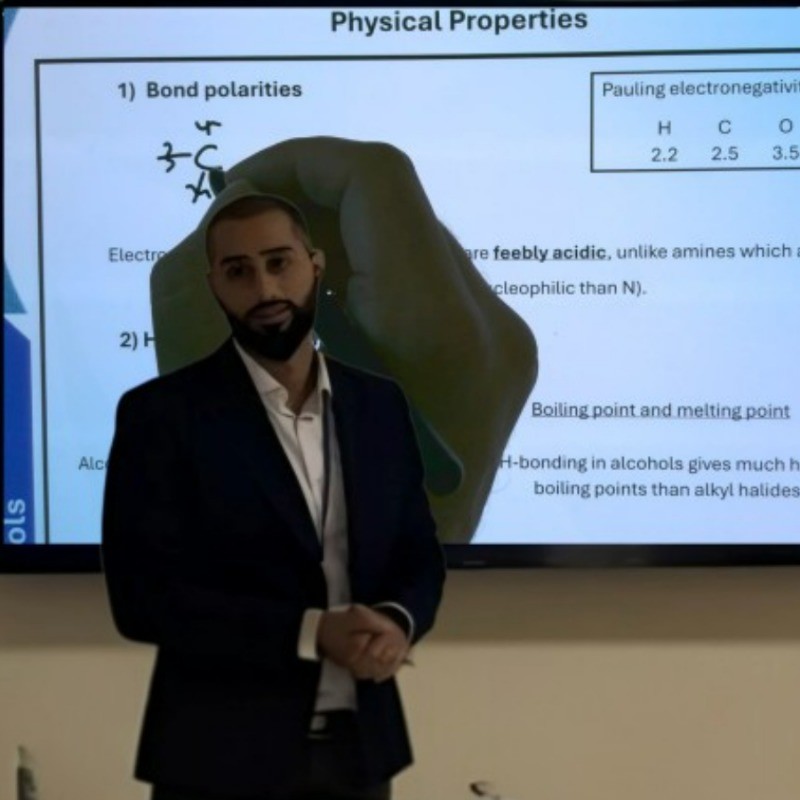
GCSE Recap: Spotting a Metal from Its Properties
Before you start, check that you can still recognise a metal from its GCSE properties.
Why Metallic Bonding Explains Metal Properties
Most physical properties of metals can be explained using the same model: a giant metallic lattice of positive metal ions surrounded by delocalised electrons.
The positive metal ions are arranged in regular layers. The delocalised electrons are mobile and spread throughout the structure, producing strong electrostatic attractions between the ions and the electron cloud.
Key definition: Metallic bonding is the strong electrostatic attraction between positive metal ions and delocalised electrons.
Exam link: When explaining a metal property, always connect the property to either strong electrostatic attractions, mobile delocalised electrons, or layers of metal ions that can slide.
High Melting Points
Metals usually have high melting points because there are strong electrostatic attractions between positive metal ions and delocalised electrons.
To melt a metal, these attractions must be partially overcome so that the metal ions can move out of their fixed lattice positions. Since metals have giant lattice structures, many strong attractions must be overcome.
Factors affecting melting point
- More delocalised electrons per ion usually produce stronger metallic bonding.
- A higher charge-to-radius ratio gives stronger attraction between metal ions and delocalised electrons.
Trends to remember
- Group 1 metals have relatively low melting points.
- Group 2 metals usually have higher melting points than Group 1 metals.
- Transition metals often have high melting points because of strong metallic bonding.
Comparison: Magnesium has a higher melting point than sodium because Mg2+ ions have a greater charge than Na+ ions and magnesium contributes more delocalised electrons. This gives stronger metallic bonding.
Quick Check: Find the Error
Read the student's four-point explanation and decide which point is wrong.
Electrical Conductivity
Metals conduct electricity because they contain delocalised electrons that are free to move throughout the lattice.
When a potential difference is applied, these mobile electrons move towards the positive terminal and carry charge through the metal. This movement of charge is an electric current.
| Factor | Effect on electrical conductivity |
|---|---|
| Number of delocalised electrons | More delocalised electrons means more mobile charge carriers, so conductivity increases. |
| Charge density of metal ions | A strong lattice can support a dense delocalised electron system, but the key conductivity point is still the movement of electrons. |
| Impurities | Impurities disrupt the regular lattice and scatter moving electrons, which can lower conductivity. |
Comparison: Magnesium conducts electricity better than sodium because each magnesium atom contributes two delocalised electrons, whereas sodium contributes one. This gives magnesium more charge carriers.
Quick Check: A Liquid Metal
Apply the model of metallic bonding to a metal that is liquid at room temperature.
Thermal Conductivity
Metals conduct heat well because their delocalised electrons can move through the structure and transfer kinetic energy rapidly.
When thermal energy is supplied, delocalised electrons gain kinetic energy. They move through the lattice and transfer energy to other electrons and ions.
Main mechanism
Delocalised electrons transfer kinetic energy quickly through the metal. Closely packed metal ions can also vibrate and pass energy through the lattice.
Effect of impurities
Impurities disrupt both electron movement and lattice vibrations, reducing the efficiency of heat transfer.
Comparison: Magnesium can transfer heat more effectively than sodium because it provides more delocalised electrons per atom, allowing more rapid transfer of kinetic energy.
Quick Check: Comparing Two Conductors
Complete the comparison of aluminium and potassium, two metals this page has not compared.
Malleability and Ductility
Metals are malleable, meaning they can be hammered or shaped, and ductile, meaning they can be drawn into wires.
This is because the layers of positive metal ions can slide over each other without breaking the metallic structure. The delocalised electrons continue to attract the positive ions after the layers have moved.
Why layers can slide
Metallic bonding is non-directional. There are no fixed individual bonds between specific pairs of ions, so layers can shift while attractions remain.
Why the structure does not shatter
The delocalised electrons move with the ions and continue to hold the lattice together, preventing strong repulsion from breaking the structure apart.
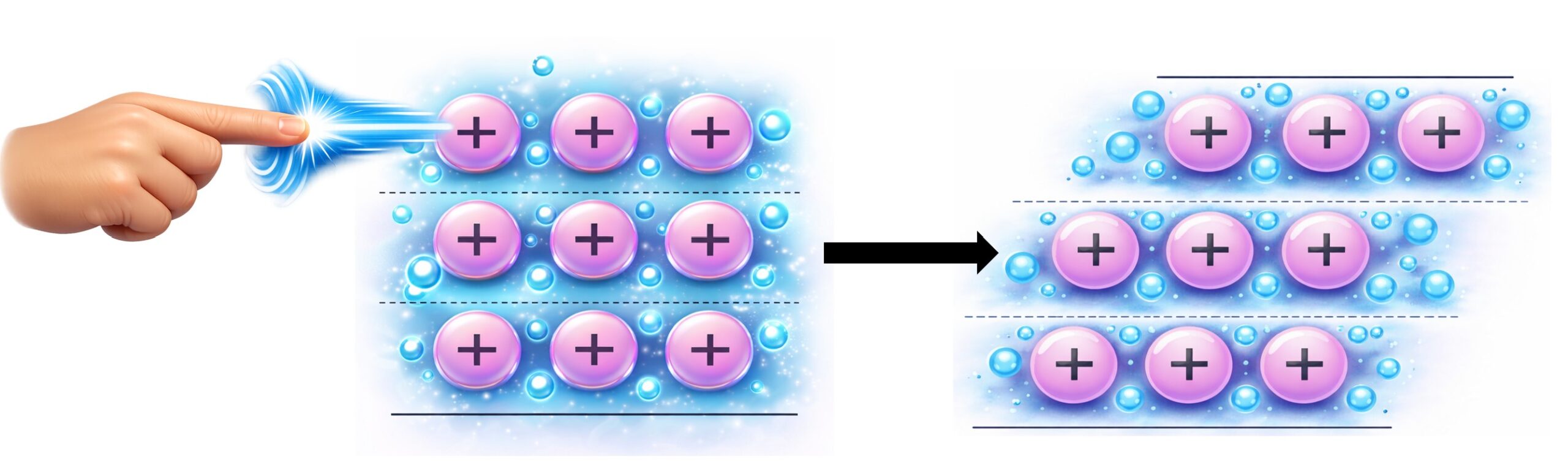
When a force is applied, layers of metal ions can slide while delocalised electrons continue to hold the metallic structure together.
Quick Check: Explain Foil and an Alloy
Write a short explanation, then compare it with the mark points and the model answer.
Quick Check: Which Explanation Is Accurate?
In each round, pick the one statement that explains the property correctly.
Common Exam Points
Exam questions often ask students to explain properties using bonding and structure. The strongest answers use clear cause-and-effect language.
| Property | What to mention | Common mistake |
|---|---|---|
| High melting point | Strong electrostatic attractions between positive metal ions and delocalised electrons require a large amount of energy to overcome. | Saying metals have strong intermolecular forces. Metals do not exist as simple molecules. |
| Electrical conductivity | Delocalised electrons are mobile and can carry charge through the lattice. | Saying the metal ions move to carry charge. In the solid metal, the ions are fixed in lattice positions. |
| Thermal conductivity | Delocalised electrons gain kinetic energy and transfer it rapidly through the lattice. | Only saying particles vibrate. In metals, mobile electrons are a major reason for efficient heat transfer. |
| Malleability and ductility | Layers of positive metal ions can slide while delocalised electrons continue to attract them. | Saying metallic bonds break completely when the metal is bent. The structure can deform without shattering. |
QuickSnap
Use this summary to connect each property to the correct metallic bonding explanation.
High melting points
Strong electrostatic attractions between positive metal ions and delocalised electrons require a large amount of energy to overcome.
Electrical conductivity
Mobile delocalised electrons carry charge through the metal when a potential difference is applied.
Thermal conductivity
Delocalised electrons transfer kinetic energy rapidly through the lattice.
Malleability and ductility
Layers of metal ions can slide while delocalised electrons continue to hold the structure together.
Master Ionic and Metallic Bonding for AQA A Level Chemistry
Continue from these free revision notes into the full 3.1.3 Ionic and Metallic Bonding course. The three guided video lessons are ready now; the AQA MCQ bank, teacher-marked short-answer questions, supplementary lessons and KASP spec-point report are being written, and the course opens for enrolment as soon as they are complete.
Guided video teaching
Learn the chemistry and exam technique through structured video lessons with worked examples and walkthroughs.
Instant MCQ feedback
Auto-marked MCQ quizzes provide immediate diagnostic feedback for every answer choice.
Teacher-marked SAQs
Submit written exam responses and receive chemistry specialist feedback with improvement guidance.
Progress tracking
Identify strengths and weaknesses across the full 3.1.3 specification with targeted reporting.
See how the course works
Click play to start the course preview animation.
Some ionic radii are shown.
| Ion | Ionic radius / nm |
|---|---|
| Na+ | 0.102 |
| K+ | 0.138 |
| F− | 0.133 |
| Cl− | 0.180 |
Which compound has the strongest ionic bonding?
Explain why the metallic bonding in magnesium is much stronger than that in sodium.
FAQs
These are the key points students often confuse when revising the physical properties of metals.
Why do metals have high melting points?
Metals have high melting points because strong electrostatic attractions between positive metal ions and delocalised electrons require a large amount of energy to overcome.
Why do metals conduct electricity?
Metals conduct electricity because delocalised electrons are mobile and can carry charge through the metallic lattice when a potential difference is applied.
Why do metals conduct heat?
Metals conduct heat because delocalised electrons gain kinetic energy and transfer it rapidly through the lattice. Vibrating metal ions can also transfer energy.
Why are metals malleable?
Metals are malleable because layers of positive metal ions can slide over each other while delocalised electrons continue to attract the ions and hold the structure together.
Why is magnesium generally stronger in metallic bonding than sodium?
Magnesium forms Mg2+ ions and contributes two delocalised electrons per atom, whereas sodium forms Na+ ions and contributes one. This gives magnesium stronger electrostatic attractions in the metallic lattice.
Copyright notice: This OLS revision page is written for Online Learning System by Dr. Mohammed Al-Fatah. It is intended for A Level Chemistry revision and should not be copied, reproduced or redistributed without permission.
Keep this note — free
Save your progress across every AQA topic. A free account remembers which topics you have covered, saves your question scores, and syncs across your phone and laptop.
- Track every topic you have finished
- Keep your practice-question scores
- No payment, no card, free forever
Already registered? Log in