Aldehyde
A concise revision guide to aldehyde functional groups, the -al suffix, formyl- prefix, terminal carbonyl groups, dialdehyde naming and priority over alcohols in IUPAC names.
- 6A.4-a
- 17B.6-a
What these spec points say
- 6A.4-a be able to name compounds relevant to this specification using the rules of IUPAC nomenclature
- 17B.6-a be able to identify the aldehyde functional group
GCSE Recap: Counting Carbons with Name Stems
Remind yourself how a name stem tells you the number of carbon atoms.
What Is an Aldehyde?
An aldehyde is an organic compound containing the -CHO functional group. This group contains a carbonyl group, written as C=O, with the carbonyl carbon also bonded to a hydrogen atom.
The aldehyde functional group must occur at the end of a carbon chain. This is because the carbonyl carbon in an aldehyde is bonded to one hydrogen atom and only one carbon atom from the rest of the molecule.
The carbonyl carbon is automatically treated as carbon 1, so a position number is normally not needed for a simple aldehyde suffix.
Key idea: An aldehyde contains a terminal -CHO group. The carbonyl carbon is automatically numbered as carbon 1.
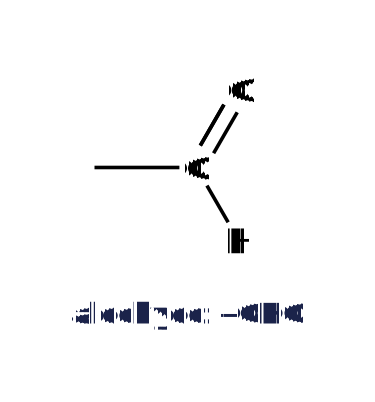
The aldehyde functional group is terminal because the carbonyl carbon is bonded to a hydrogen atom and the rest of the carbon chain.
Quick Check: Spot the Aldehyde
Pick out the aldehyde from four isomers with the same molecular formula.
Watch: drawing an aldehyde from its name
Where must the C=O of an aldehyde go, and which carbon is number 1? Watch the skeleton take shape.
Naming Aldehydes Using the -al Suffix
The name of an aldehyde usually ends in the suffix -al. The final -e of the parent alkane is removed before adding -al.
For example, ethane becomes ethanal. The aldehyde carbon is automatically carbon 1, so the name does not need to be written as ethan-1-al.
| Homologous series | Functional group | Prefix | Suffix | Example |
|---|---|---|---|---|
| Aldehydes | -CHO | formyl- | -al | ethanal |
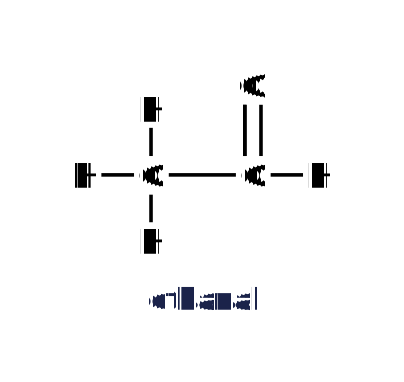
Ethanal has two carbon atoms and a terminal -CHO group, so its name uses eth- and the aldehyde suffix -al.
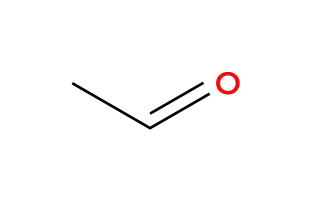
In skeletal formulae, the carbonyl group is shown at the end of the chain to show that the compound is an aldehyde.
Quick Check: Name That Aldehyde
Choose the correct name for each unbranched aldehyde.
Why Aldehydes Do Not Usually Need Position Numbers
For most aldehydes, the C=O group is on the first carbon of the carbon chain. This means the position of the aldehyde group is fixed by the functional group itself.
Because the carbonyl carbon is automatically numbered as carbon 1, a simple aldehyde name uses -al without a location number for the suffix.
Identify the longest chain containing -CHO
Include the carbonyl carbon of the aldehyde group as part of the parent chain.
Number from the aldehyde carbon
The aldehyde carbonyl carbon is carbon 1, so substituents are numbered from this end.
Add the -al suffix
Replace the final -e of the parent alkane name with -al, such as ethane to ethanal.
Exam focus: Do not place the aldehyde group in the middle of the chain. A terminal C=O group with an attached hydrogen is what makes the compound an aldehyde.
Quick Check: Numbering from the CHO Carbon
Choose the accurate statement about how each compound is numbered and named.
Molecules with Two Aldehyde Groups
If a molecule contains two aldehyde groups, the suffix includes di before -al. The parent alkane name keeps the final e before the dial suffix.
For example, a four-carbon chain with aldehyde groups at both ends is named butanedial. The e of butane is kept because the suffix -dial starts with a consonant, so “butandial” is wrong.
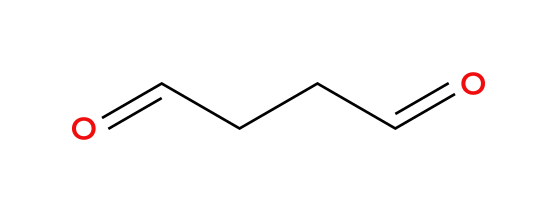
Two terminal aldehyde groups are indicated by the dial ending, with one -CHO group at each end of the carbon chain.
| Number of aldehyde groups | Name ending | Meaning |
|---|---|---|
| One | -al | One terminal -CHO group is present. |
| Two | -dial | Two terminal -CHO groups are present. |
Quick Check: Two Aldehyde Groups
Name a molecule that has an aldehyde group at each end of the chain.
Aldehydes Have Higher Priority Than Alcohols
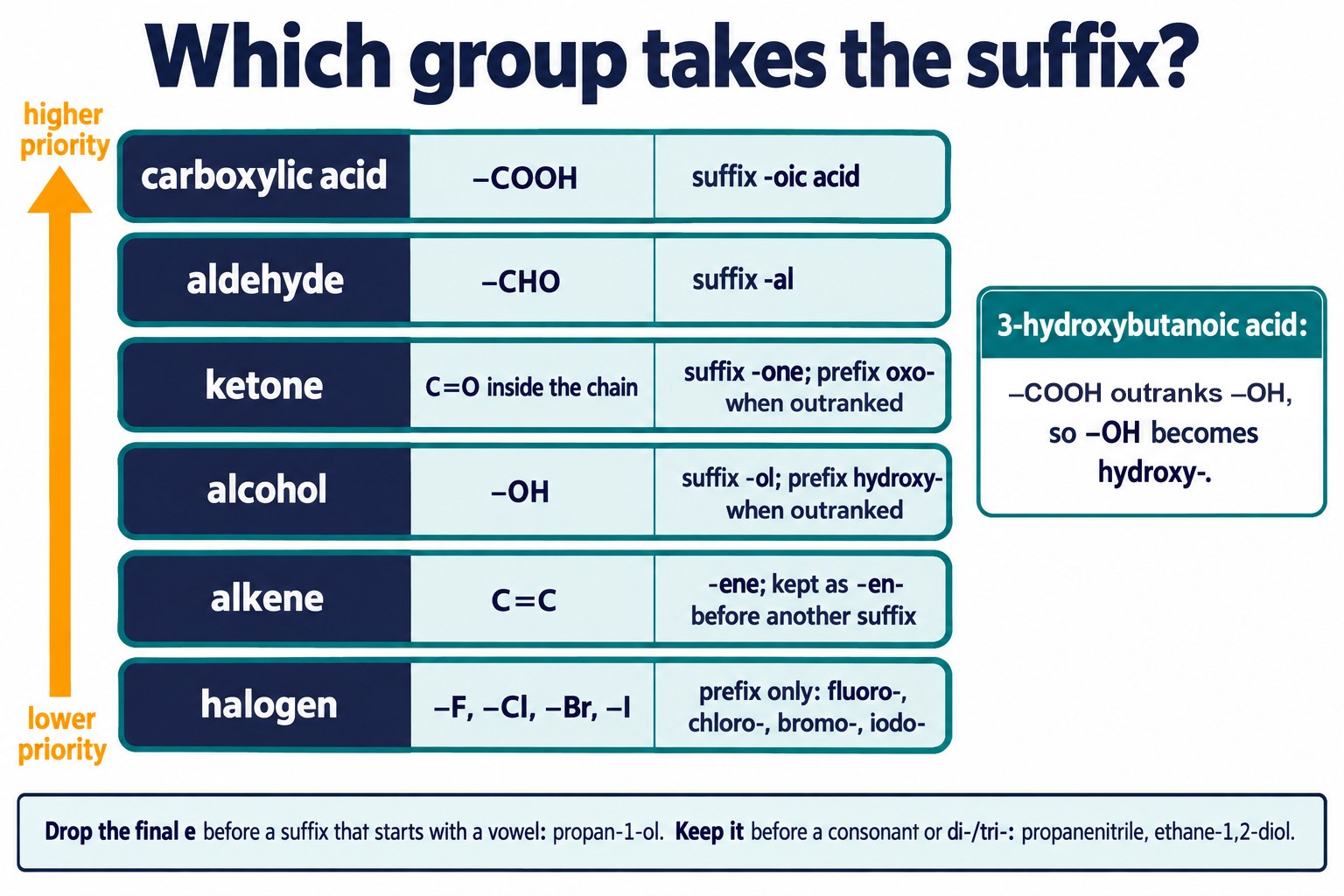
Aldehydes have a higher priority than alcohols in IUPAC naming. If a molecule contains both an aldehyde group and an -OH group, the aldehyde normally provides the main suffix -al.
The alcohol group is then named as a substituent using the prefix hydroxy-, rather than using the alcohol suffix -ol.
For example, 4-hydroxybutanal contains an aldehyde group at carbon 1 and an -OH group on carbon 4.
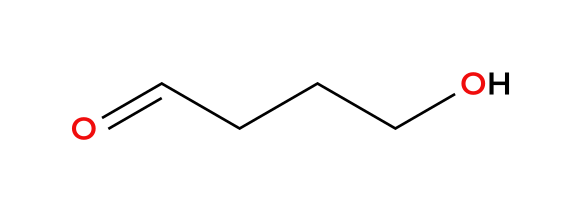
The aldehyde group controls the suffix, while the -OH group is named using the hydroxy- prefix because it has lower naming priority here.
Remember: If -CHO and -OH are both present, use -al for the aldehyde and hydroxy- for the alcohol group.
Quick Check: Aldehyde and Alcohol Together
Build the name of a molecule that contains both an aldehyde group and an -OH group.
Quick Check: Aldehyde Naming Round-Up
Finish by applying all of the aldehyde naming rules to four new molecules.
FAQs
These questions cover the aldehyde naming points that cost marks.
Why is it ethanal and not ethan-1-al?
The aldehyde carbon is always carbon 1, so the number adds nothing and is left out.
Is the CHO carbon counted in the chain length?
Yes. Propanal, CH₃CH₂CHO, has three carbons including the carbonyl carbon.
How do I tell an aldehyde from a ketone?
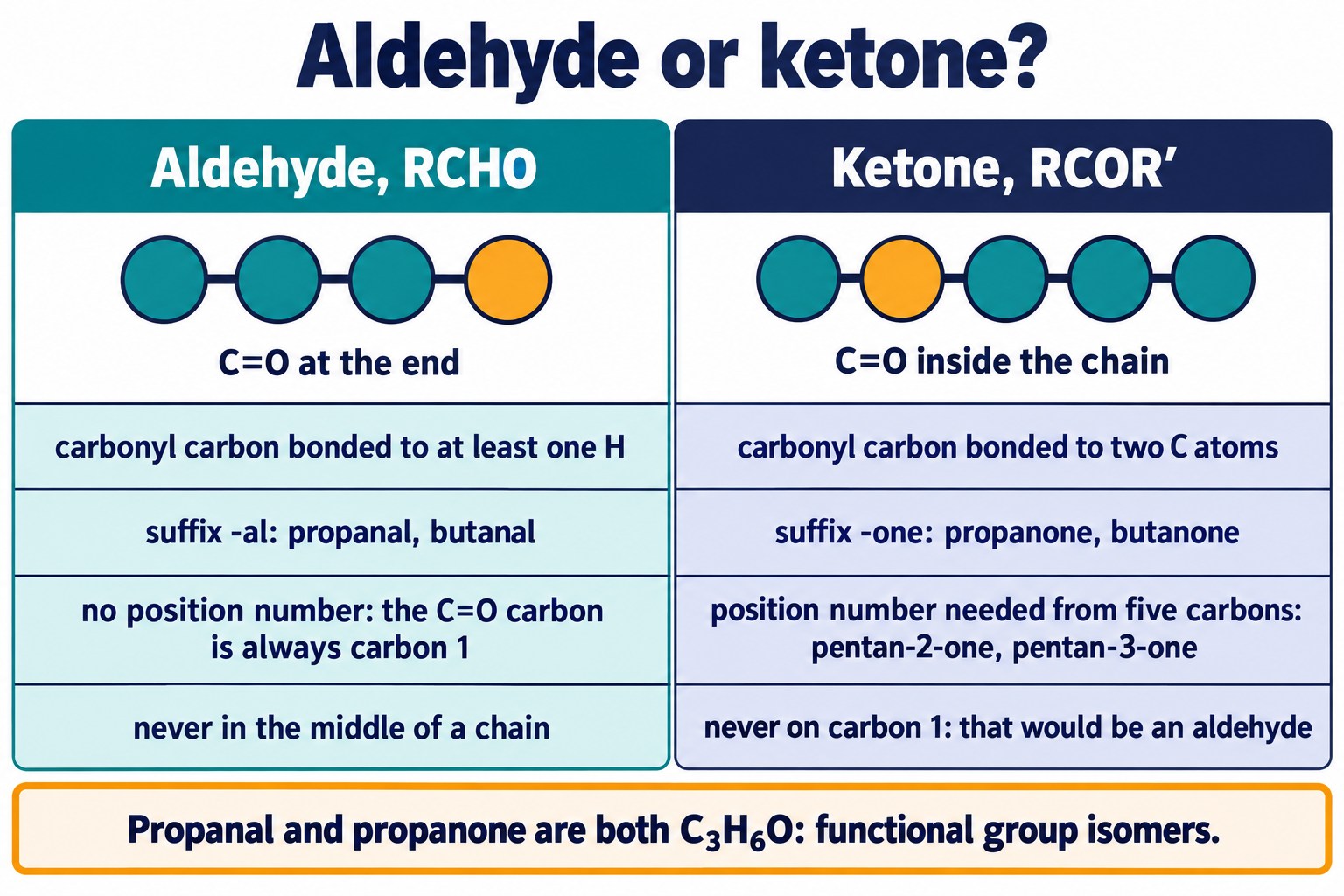
Look at the carbonyl carbon. In an aldehyde it carries a hydrogen atom and sits at the end of the chain. In a ketone it is bonded to two carbon atoms.
Why is it butanedial and not butandial?
The suffix -dial starts with a consonant, so the e of butane is kept.
What is HOCH₂CH₂CHO called?
3-hydroxypropanal. The aldehyde takes the suffix and carbon 1, so the -OH group becomes the prefix hydroxy- on carbon 3.
Copyright notice: This OLS revision content, including the explanations, layout, diagrams, tables and embedded learning structure, is authored for Online Learning System by Dr. Mohammed Al-Fatah. It may not be copied, reproduced, redistributed or adapted without written permission.
Keep this note — free
Save your progress across every Edexcel topic. A free account remembers which topics you have covered, saves your question scores, and syncs across your phone and laptop.
- Track every topic you have finished
- Keep your practice-question scores
- No payment, no card, free forever
Already registered? Log in