Geometric Isomerism
A concise revision guide to stereoisomerism in alkenes, restricted rotation around C=C bonds, E-Z naming, priority groups and the link between E-Z and cis-trans isomerism.
- 6A.7-a
- 6A.7-b
What these spec points say
- 6A.7-a understand stereoisomerism as illustrated by E/Z isomerism
- 6A.7-b understand stereoisomerism as illustrated by cis-trans isomerism where two substituent groups are the same
Free and Restricted Rotation: Why E/Z Isomers Exist
Choose a step to watch butane turn freely about its C–C σ bond, then see how the π bond locks but-2-ene into separate Z and E isomers.
© Dr. Mohammed Al-Fatah – onlinelearningsystem.net
Before You Start
This page builds on alkene bonding and on structural isomers.
- An alkene contains a C=C double bond made of one σ bond and one π bond.
- Structural isomers have the same molecular formula but atoms joined in a different order.
- Atoms around each C=C carbon lie in one plane at about 120°.
- Atomic number increases across and down the Periodic Table: Cl (17) beats C (6) and H (1).
GCSE Recap: Isomers and Atomic Number
Four quick GCSE questions on isomers, alkene formulae and atomic number before you meet stereoisomers.
Watch: why these two molecules can never be the same
Two models of 1,2-dichloroethene. They look almost the same, but no amount of twisting turns one into the other. Why not?
What Are Stereoisomers?
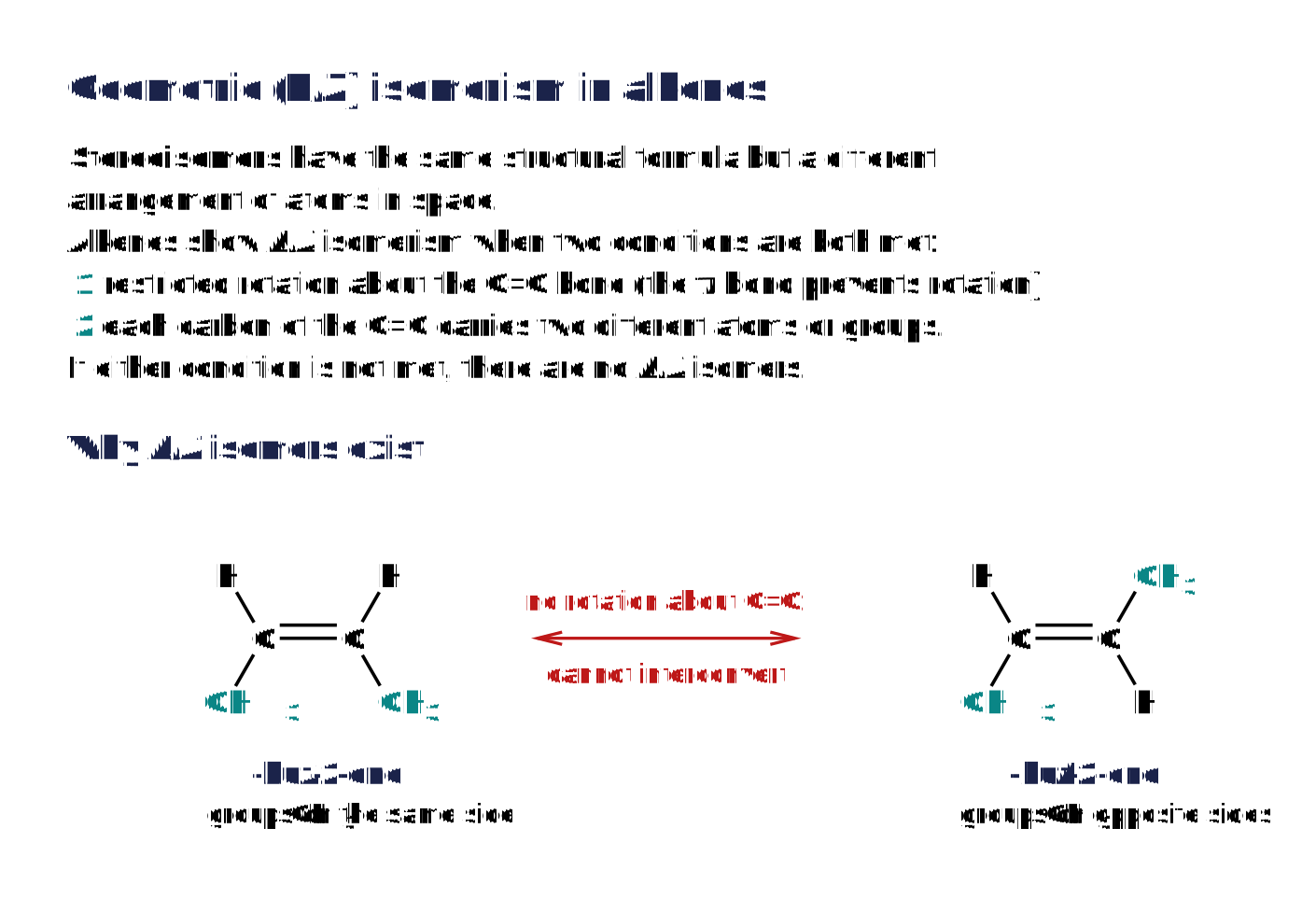
Stereoisomers are compounds with the same structural formula but a different three-dimensional arrangement of atoms in space.
In alkenes, this matters because the C=C double bond restricts rotation. The atoms or groups attached to the double bond cannot freely rotate into a new arrangement without breaking the pi bond.
This produces a type of stereoisomerism called E-Z stereoisomerism, also called geometric isomerism.
Key idea: E-Z isomers are not structural isomers. They have the same connectivity, but different spatial arrangement around the carbon-carbon double bond.
Quick Check: Structural Isomer or Stereoisomer?
Complete a comparison of three alkenes that are not on this page.
Why E-Z Isomerism Occurs
E-Z isomerism occurs because the carbon-carbon double bond contains a pi bond. Rotation around the C=C bond is restricted because rotating one carbon would break the sideways overlap of the p orbitals.
By contrast, a carbon-carbon single bond can rotate freely. This is why simple alkanes do not usually produce this type of fixed geometric arrangement.
Exam focus: Always link E-Z isomerism to restricted rotation around the C=C double bond.
Quick Check: Explain Two Forms Against One
Write a short explanation, then compare it with the mark points and the model answer.
Conditions for E-Z Stereoisomerism
For an alkene to show E-Z stereoisomerism, two conditions must both be met:
- There must be restricted rotation about the carbon-carbon double bond.
- Each carbon atom of the C=C bond must be attached to two different atoms or groups.
If either carbon in the C=C bond has two identical groups attached, E-Z isomerism is not possible.
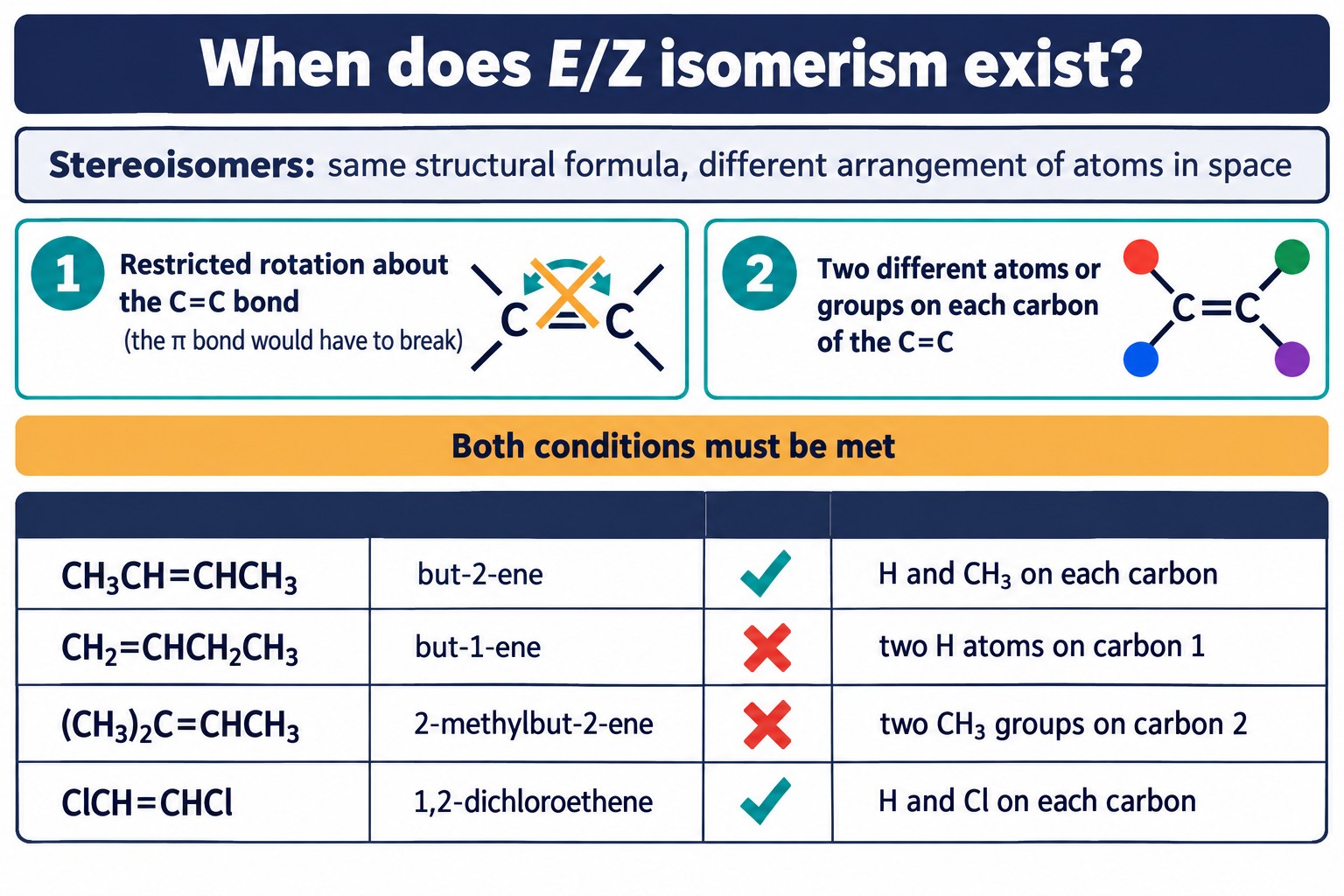
E/Z isomers need restricted rotation and two different groups on each carbon of the C=C.
Quick Check: Which Alkenes Show E-Z Isomerism?
Sketch each alkene, then click every one that has E and Z isomers.
Assigning E and Z
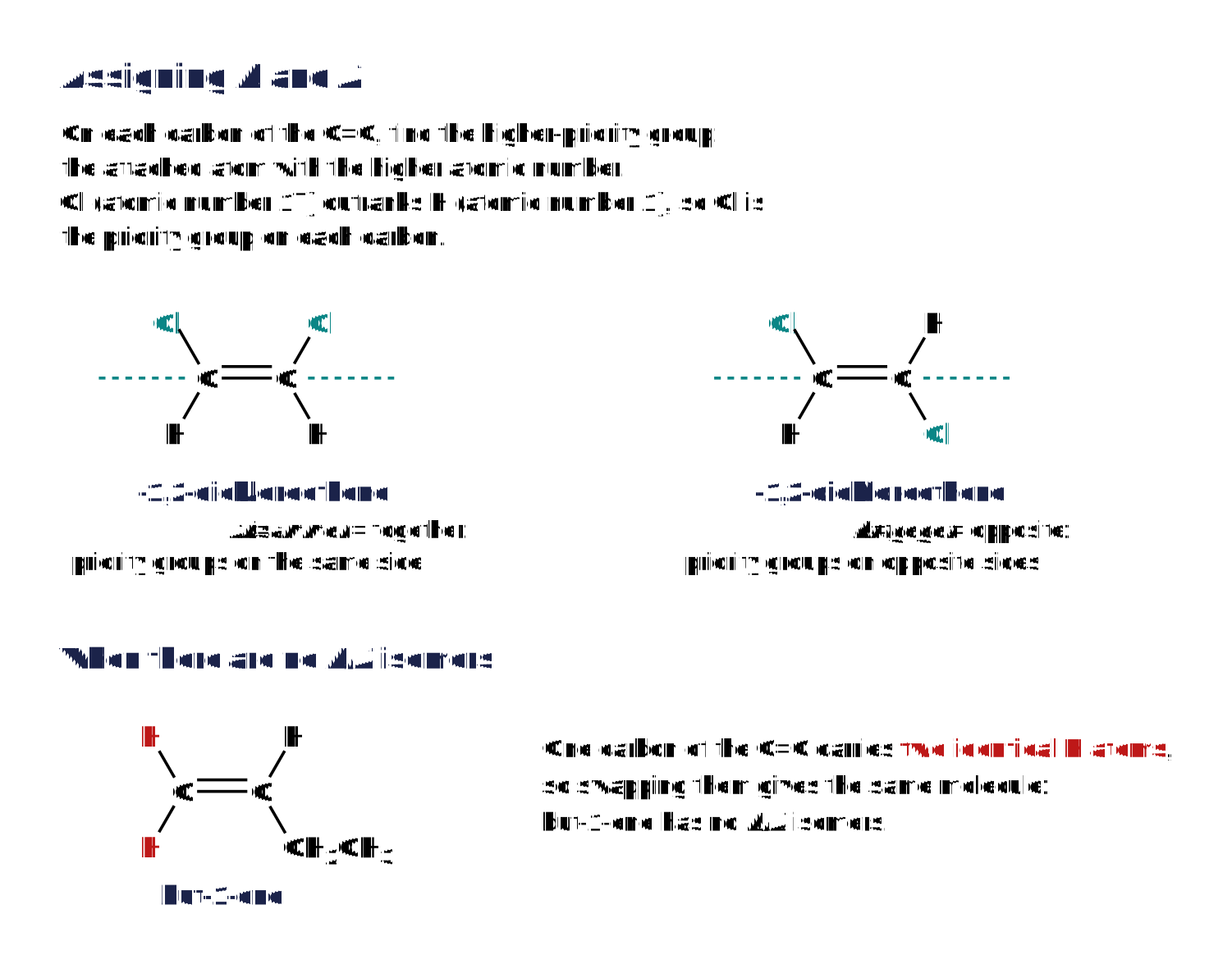
To name an alkene with E-Z stereoisomerism, first identify the priority group on each carbon atom of the double bond.
The priority group is found by comparing the atoms directly attached to each double-bond carbon. The atom with the higher atomic number has higher priority.
| Arrangement of priority groups | Name used | Memory aid |
|---|---|---|
| Priority groups on the same side of the C=C bond | Z | Z comes from zusammen, meaning together. |
| Priority groups on opposite sides of the C=C bond | E | E comes from entgegen, meaning opposite. |
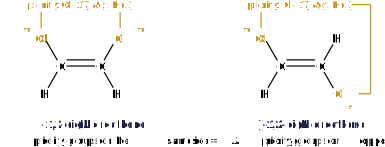
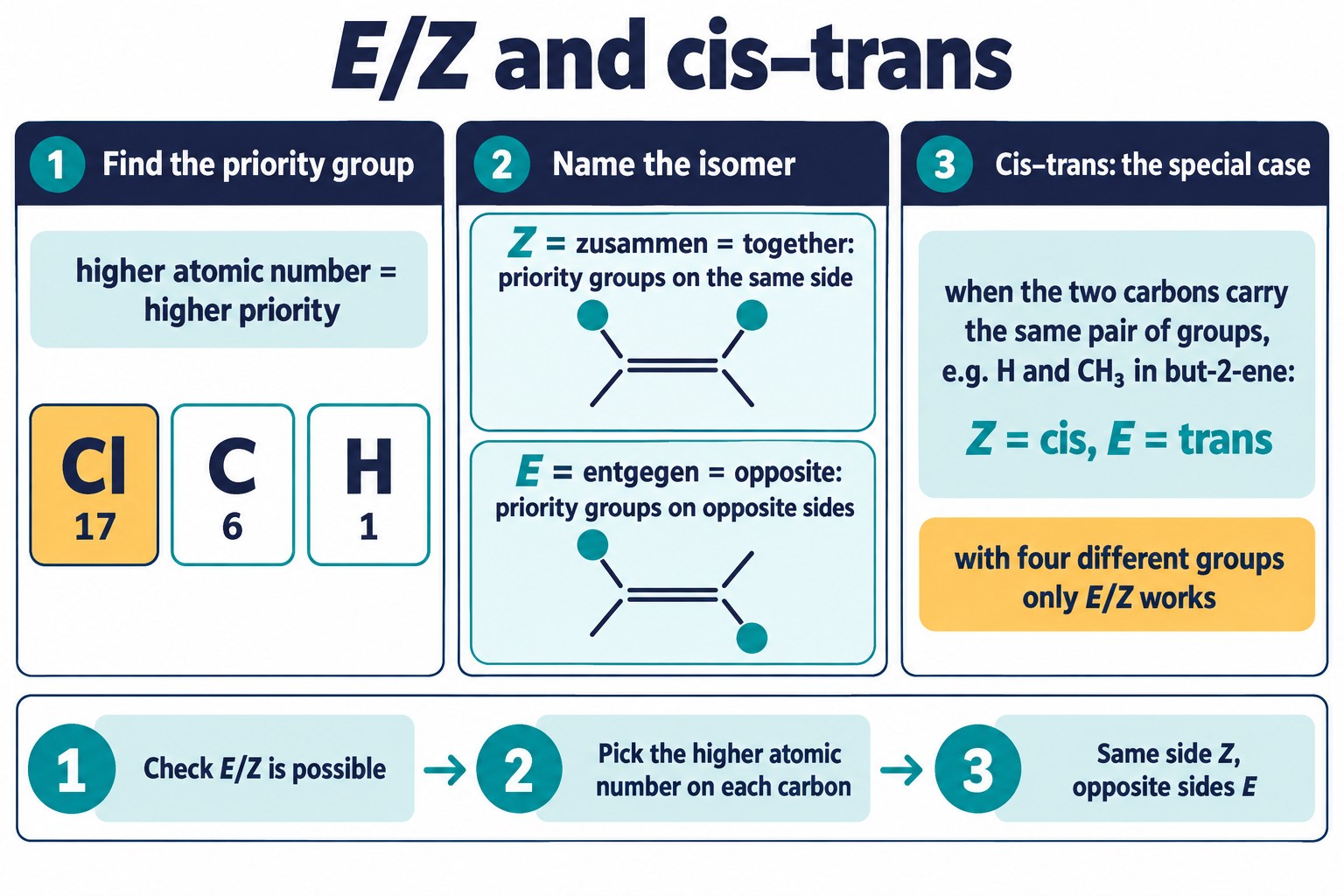
The higher atomic number on each carbon is the priority group: same side Z, opposite sides E.
Quick Check: E, Z or Neither?
Find the priority group on each carbon atom, then decide quickly.
Cis-Trans Isomerism
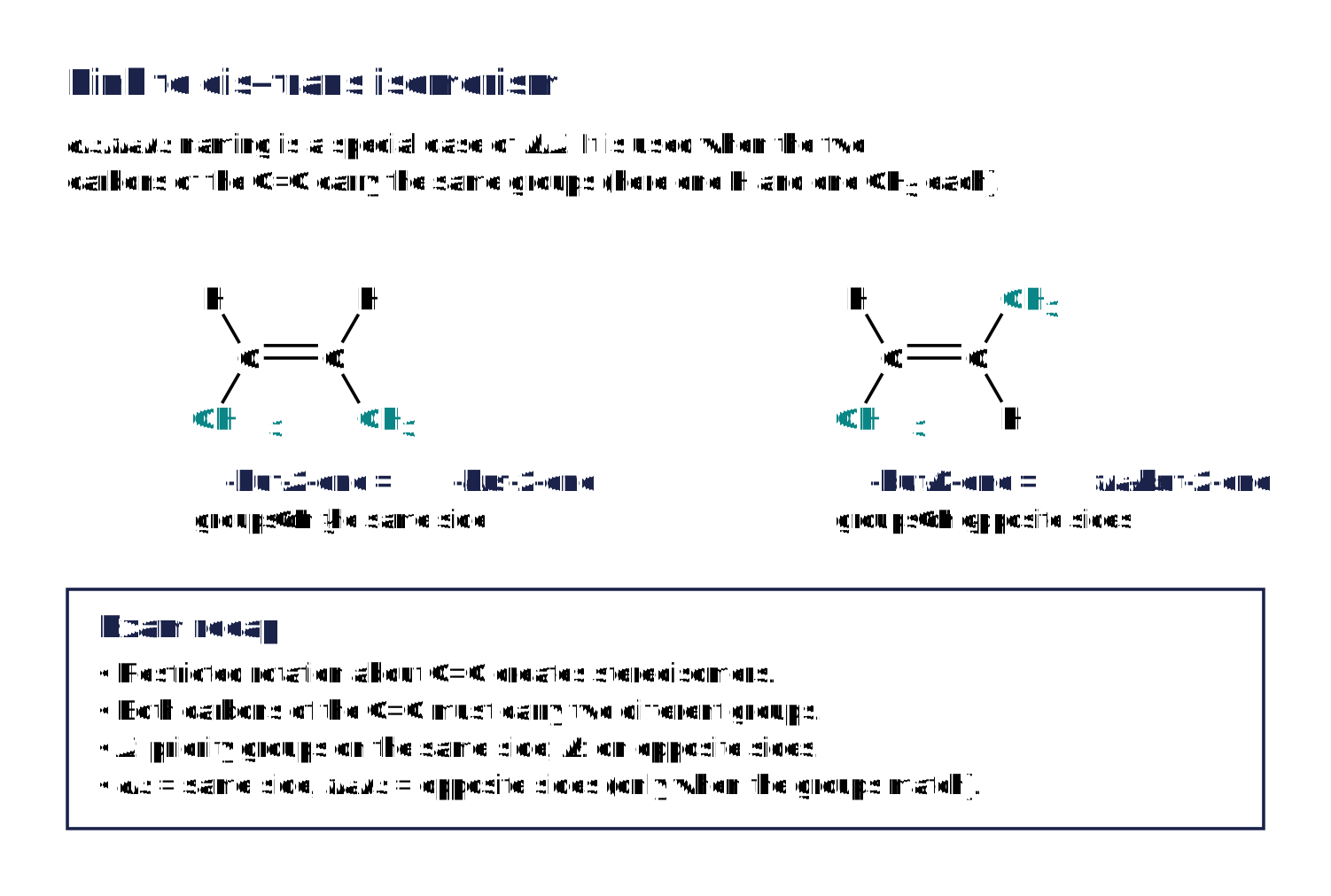
Cis-trans isomerism is a simpler special case of E-Z isomerism. It can be used when two of the substituent groups attached to the double bond are identical.
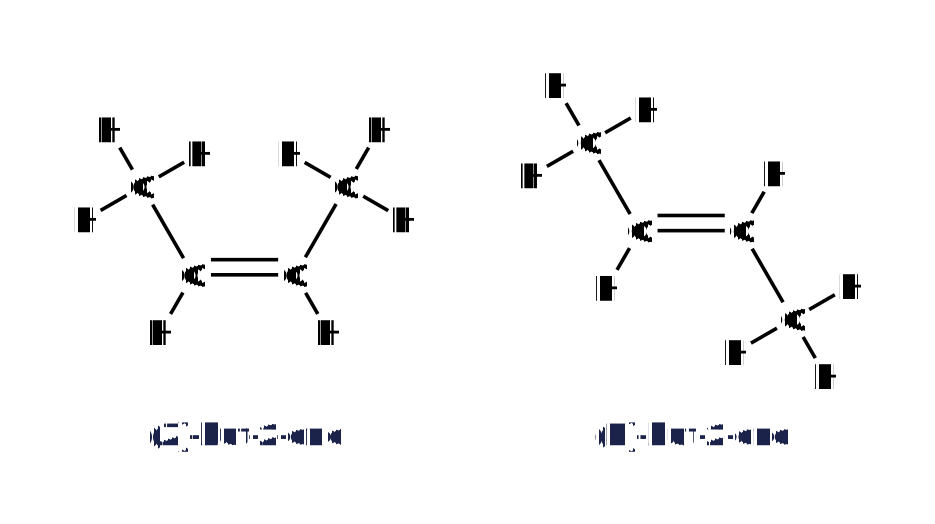
For but-2-ene, the two CH3 groups can be on the same side or on opposite sides of the double bond.
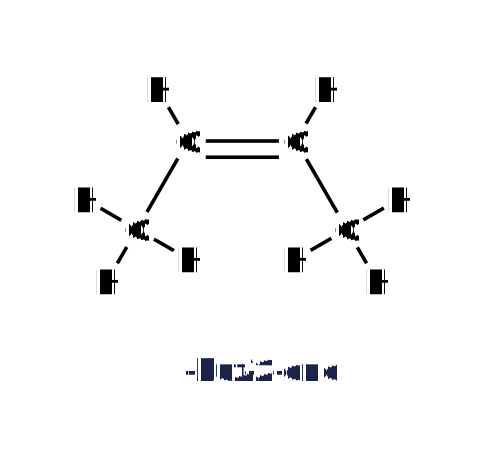
Z-but-2-ene
The two CH3 groups are on the same side, so this can also be called cis-but-2-ene.
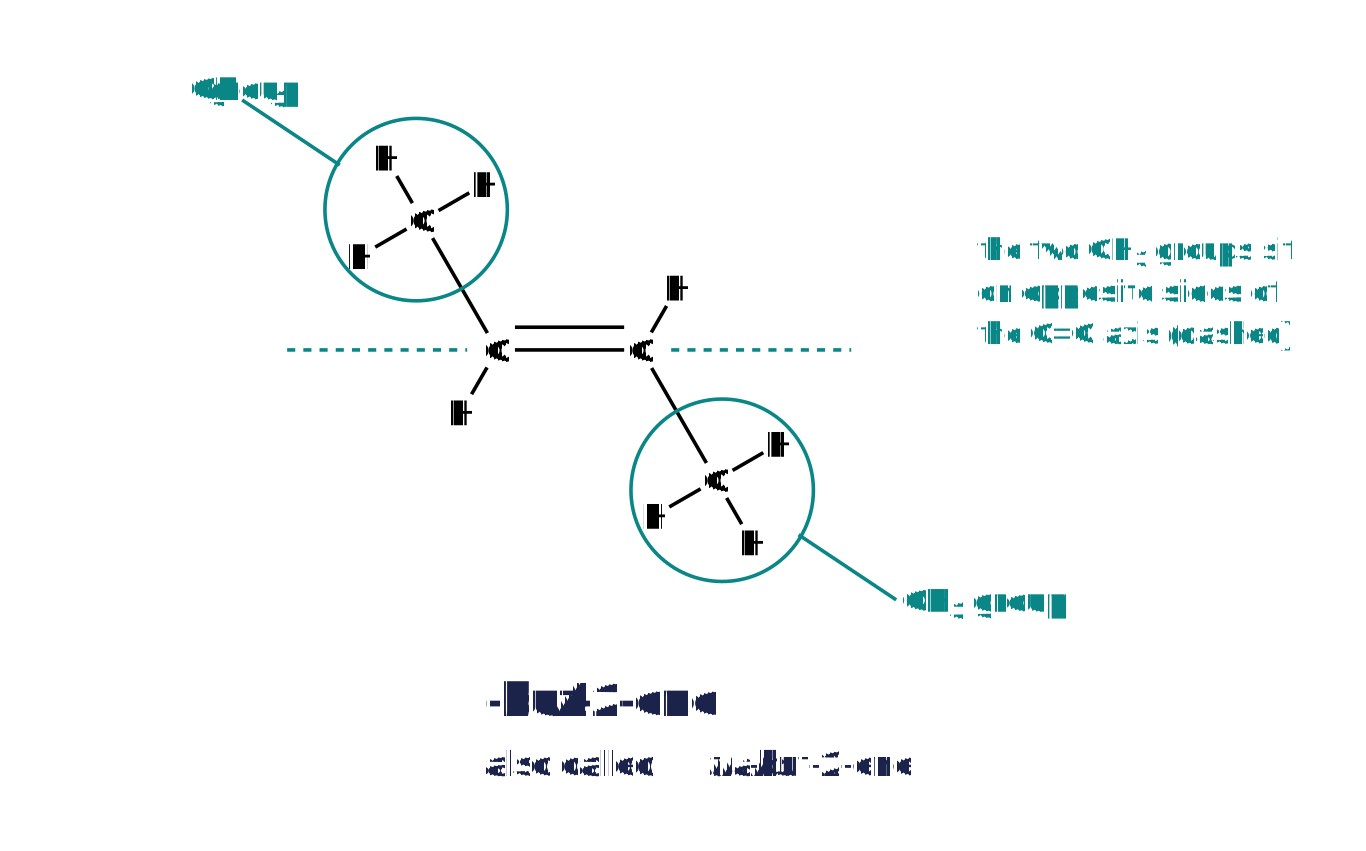
E-but-2-ene
The two CH3 groups are on opposite sides, so this can also be called trans-but-2-ene.
Important: E-Z notation is the more general and accurate naming system, especially when the groups attached to the C=C bond are not identical.
Quick Check: Pick the Accurate Statement
Each round puts a common mistake next to the correct idea, in a molecule you have not met on this page.
Common Exam Mistakes
- Do not call E-Z isomers structural isomers. They have the same structural formula.
- Do not assign E or Z by only looking at the largest group visually. Use atomic number priority.
- Do not assume every alkene shows E-Z isomerism. Each carbon in the C=C bond must have two different groups attached.
- Do not say the molecule rotates around the double bond. The whole point is that rotation around C=C is restricted.
FAQs
These questions cover the E-Z decisions students most often get wrong.
Does but-1-ene have E-Z isomers?
No. Carbon 1 carries two hydrogen atoms, so swapping them gives the same molecule. Each C=C carbon needs two different groups.
Do I compare the whole group or the first atom?
Compare the atoms bonded directly to the C=C carbon first. The one with the higher atomic number has priority; look further along only if they tie.
Is Z always the same as cis?
Not always. They agree when the same group sits on each carbon, as in but-2-ene, but can differ when the priority groups are not the ones being called cis.
Are E-Z isomers structural isomers?
No. They are stereoisomers: same structural formula, different arrangement in space.
Why do alkanes not show E-Z isomerism?
A C-C single bond can rotate freely, so any arrangement turns into any other. Only the π bond of a C=C bond locks the groups in place.
Copyright notice: This OLS revision content, including the explanations, layout, diagrams, tables and embedded learning structure, is authored for Online Learning System by Dr. Mohammed Al-Fatah. It may not be copied, reproduced, redistributed or adapted without written permission.
Keep this note — free
Save your progress across every Edexcel topic. A free account remembers which topics you have covered, saves your question scores, and syncs across your phone and laptop.
- Track every topic you have finished
- Keep your practice-question scores
- No payment, no card, free forever
Already registered? Log in